
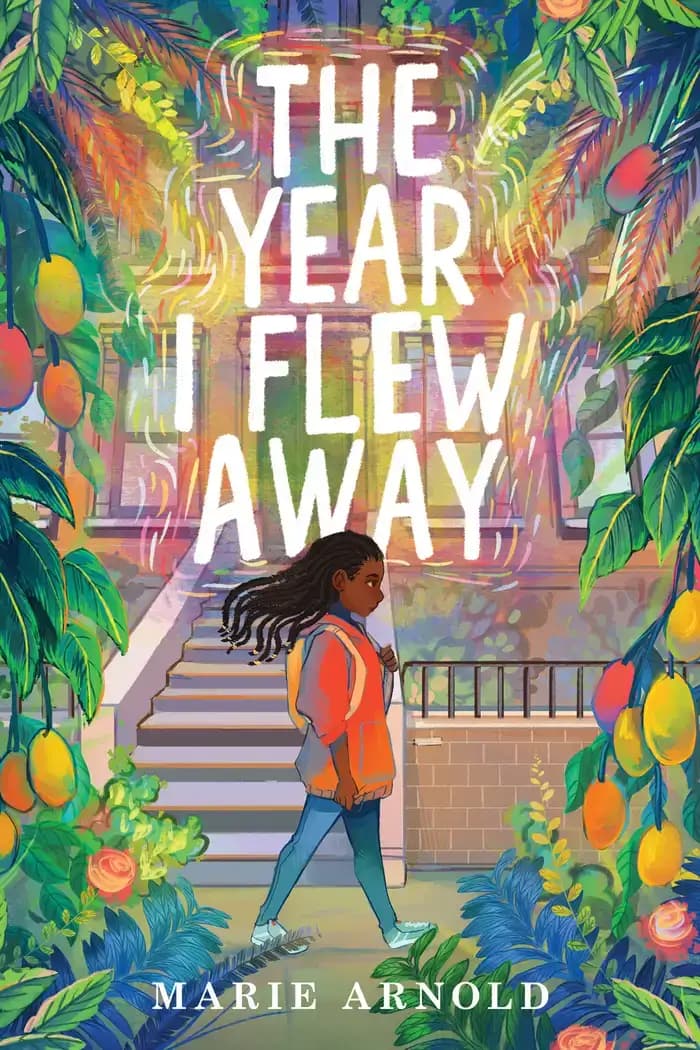
The Year I Flew Away
on Goodreads (1,150)
What’s inside...
In this magical middle-grade novel, ten-year-old Gabrielle finds out that America isn’t the perfect place she imagined when she moves from Haiti to Brooklyn. With the help of a clever witch, Gabrielle becomes the perfect American—but will she lose herself in the process? Along the way, she faces challenges like learning the language, feeling out of place, and dealing with bullies. She makes a deal with the witch to become the 'perfect American', but soon realizes the cost of fitting in and decides to fight back with the help of her new friends, one of whom is a talking rat. This sweet and lyrical novel, perfect for fans of HURRICANE CHILD and FRONT DESK, features a funny and engaging heroine and a story of self-discovery and acceptance.
Age
8-12
Length
256 pages
Text complexity
Character compass
Gabrielle
Ms. Tille
Lydia
Discussion points
How do you think Gabrielle felt when she moved to a new country? Have you ever felt similar?
What are some ways Gabrielle tried to fit in at her new school? Do you think these were good strategies?
Gabrielle makes a magical deal to fit in better. What would you do if you were in her situation?
How does Gabrielle's understanding of friendship and family change throughout the story?
What did you learn about Haitian culture from this book?
Tip: Role play these questions
Start the conversation by sharing a personal story of a time you felt out of place or needed to make new friends, to help your child relate to Gabrielle’s experiences.
Encourage your child to think critically about the decisions Gabrielle makes by asking what they might have done differently in her situation.
Discuss the importance of staying true to oneself, prompted by Gabrielle's journey in the story.
Explore together how friendships can evolve and the importance of understanding and accepting different cultures.
Key lessons
Example Lesson: The importance of embracing cultural diversity
Explanation: In 'The Year I Flew Away,' the protagonist Gabrielle navigates the challenges of moving from Haiti to America, highlighting the richness of different cultures and the need for inclusion.
Real-World Application: Children can learn to appreciate diverse cultures in their community, school, or through media, helping them become more empathetic and inclusive individuals.
Example Lesson: The power of resilience and adapting to change
Explanation: Gabrielle faces significant changes and challenges in a new country. Her journey demonstrates how resilience and flexibility are crucial in overcoming obstacles.
Real-World Application: Children can apply this lesson by developing coping strategies for changes in their lives such as moving to a new place or changing schools, making them more adaptable.
Example Lesson: The value of friendship and support networks
Explanation: Throughout the story, Gabrielle learns the importance of making friends and building support networks that help her navigate her new environment.
Real-World Application: Children can understand the importance of nurturing relationships and seeking support from friends and family during challenging times.
Example Lesson: Self-acceptance and authenticity
Explanation: As Gabrielle tries to fit into American society, she learns the importance of being true to herself and accepting her unique identity.
Real-World Application: This lesson encourages children to embrace their individuality and be proud of who they are, regardless of peer pressure or societal expectations.
Example Lesson: Understanding and addressing language barriers
Explanation: Gabrielle's struggle with English upon her arrival in America underscores the difficulties of language barriers and the importance of communication.
Real-World Application: This can help children recognize the challenges faced by peers who speak different languages and inspire them to be patient and assistive in such interactions.