
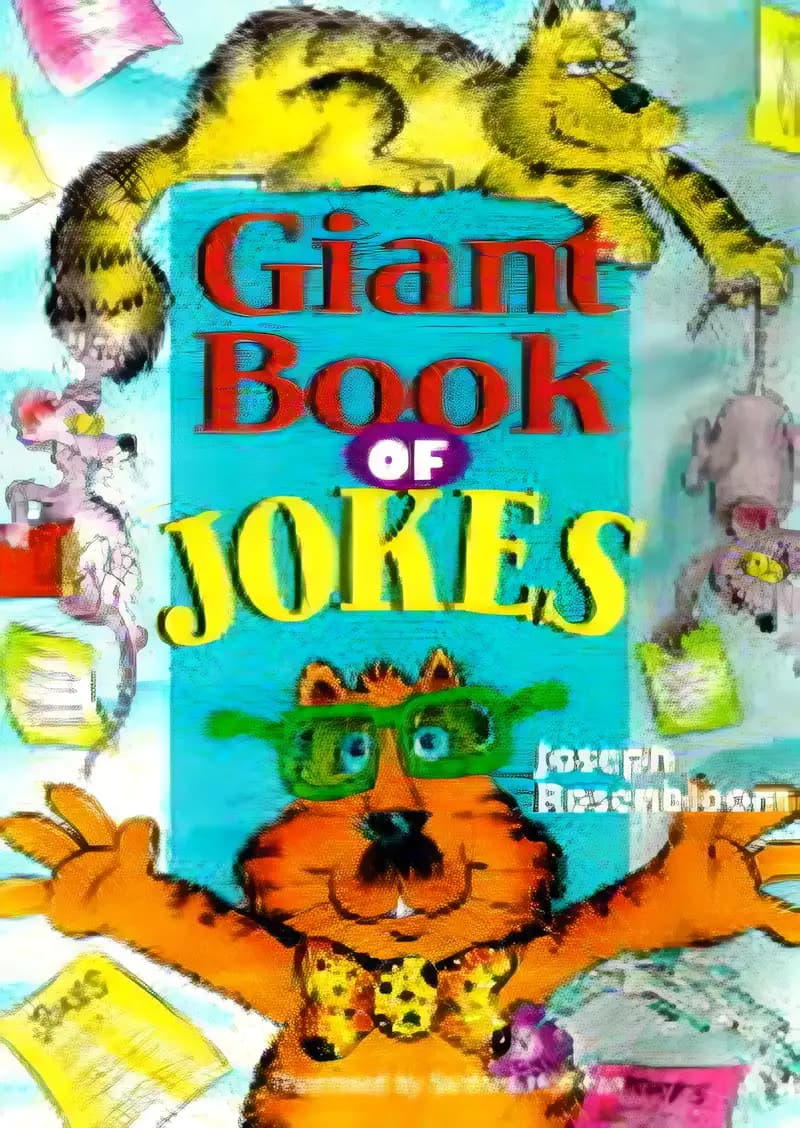
The gigantic joke book
on Goodreads (18)
What’s inside...
This collection of 1,090 jokes is organized into themes such as tots talk back, unfriendly advice, disasters, whoppers, monkey business, sick, and love and kisses. The book features over 1,000 jokes and 96 drawings, and includes an index. Recommended for grades 4-6, this comprehensive compilation of jokes spans 256 pages with black and white illustrations throughout, and measures 5 3/8 x 8 1/4 inches. It offers clever, witty one-liners, puns, funny stories, and put-downs that appeal to kids.
Age
8-12
Length
256 pages
Text complexity
Discussion points
What was your favorite joke from the book and why did it make you laugh?
How do you think the characters felt when they heard the jokes?
If you could create your own joke, what would it be about?
Why do you think joking and laughter is important in our lives?
Can you think of a time when a joke made a situation better for you or someone else?
Tip: Role play these questions
Share your own favorite jokes from childhood to create a bonding experience.
Encourage your child to tell some of the jokes they enjoyed to other family members to boost their confidence.
Discuss the importance of humor and how it can be used positively to influence emotions and social interactions.
Create a 'joke of the day' routine where both you and your child share a new joke every day, enhancing their recall skills and understanding of humor.
Use exaggerated expressions or voices when discussing jokes to make the sharing experience more engaging and fun.
Key lessons
Example Lesson: Understanding humor
Explanation: The Gigantic Joke Book, penned by Joseph Rosenbloom, is filled with a wide variety of jokes, riddles and puns that teach children the nuances of humor.
Real-World Application: Learning what makes something funny helps children interact more positively with peers, enhancing their social skills and easing social anxieties.
Example Lesson: Reading comprehension
Explanation: As children read the jokes and riddles, they must comprehend the setup and the punchline, which can enhance their ability to understand context and language structure.
Real-World Application: Improved reading comprehension aids in academic performance across all subjects, fostering better overall learning experiences.
Example Lesson: Creative thinking
Explanation: The jokes challenge readers to think outside the box to understand the humor, which can stimulate creative thinking and mental flexibility.
Real-World Application: Creative thinking is vital in problem-solving and can help children in adapting to new situations or challenges in school and everyday life.
Example Lesson: Memory skills
Explanation: Memorizing jokes and their punchlines can be an effective, fun way to improve memory.
Real-World Application: Enhanced memory skills can lead to better recall in academic settings, making learning more efficient and less stressful for children.