
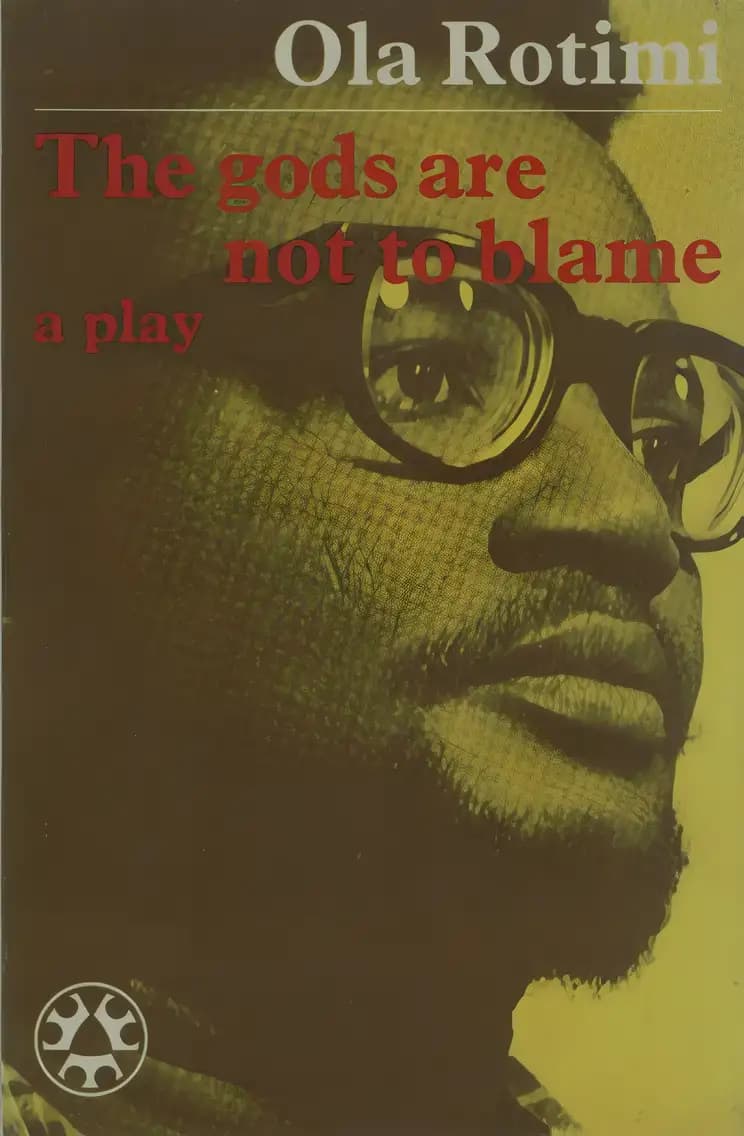
The gods are not to blame
Three Crowns Books Series
What’s inside...
In this play the theme of Sopocles' Oedipus Rex is skillfully transplanted to African soil. King Odewale's progress towards knowledge of the murder and incest that must be expiated before his kingdom can be restored to health is unfolded with a dramatic intensity heightened by the richness of the play's Nigerian setting. It had its first performance in Nigeria at the Ife Festival of the Arts in 1968, has since been staged with great success in other West African countries, and was awarded the first prize in the African Arts/Arts d'Afrique playwriting contest in 1969.
Series reading
Non-Sequential
Age
12-14
Length
80 pages
Text complexity
Character compass
Odewale
Ojuola
Aderopo
Discussion points
What feelings did you experience when reading about the challenges the characters faced?
How do you think the story would change if the characters made different decisions?
Why is it important to understand the consequences of our actions, as shown in the book?
What can we learn about forgiveness and responsibility from the characters?
How do the gods influence the characters and their decisions? Do you think this is fair?
Tip: Role play these questions
Start by sharing your own thoughts on the book's theme and ask your child to express theirs; this encourages open communication.
Use real-life examples to relate the consequences of actions as depicted in the story, which can make the discussion more relatable.
Encourage empathy by discussing how each character might have felt in their situations, fostering emotional intelligence.
Discuss the cultural aspects and setting of the story to broaden your child’s understanding of different worldviews and historical contexts.
Acknowledge tough topics and reassure your child that it’s okay to discuss heavy themes, setting a supportive environment for conversation.
Key lessons
Example Lesson: Responsibility for one's actions
Explanation: The protagonist, Odewale, grapples with the consequences of his actions throughout the narrative. His journey highlights the importance of taking ownership of one's decisions.
Real-World Application: Children learn the value of accountability and the impact their choices have on themselves and others. Teaching kids to own their actions can foster a sense of responsibility and maturity.
Example Lesson: The importance of self-awareness
Explanation: Odewale’s quest for the truth about his past, despite the painful revelations, underscores the significance of self-discovery and understanding one's origins.
Real-World Application: Helps children understand the importance of knowing themselves and learning from their personal history to shape a better future.
Example Lesson: The impact of destiny and free will
Explanation: The story navigates the complex interplay between predetermined destiny and the choices characters make, encouraging a dialogue on fate versus free will.
Real-World Application: Encourages children to ponder on how their decisions can shape their lives, while also understanding factors beyond their control.
Example Lesson: Learning from mistakes
Explanation: Odewale's tragic errors serve as a cautionary tale about the consequences of flawed choices and the potential for redemption through acknowledgement and correction of those mistakes.
Real-World Application: Instills in children the understanding that errors are a part of life and the importance of correcting them to foster personal growth and learning.
Example Lesson: The value of truth
Explanation: The unraveling of Odewale’s true identity and his reactions to it reveal the painful yet liberating power of truth.
Real-World Application: Teaches children the importance of honesty and the courage it takes to face the truth, even when it's difficult.