
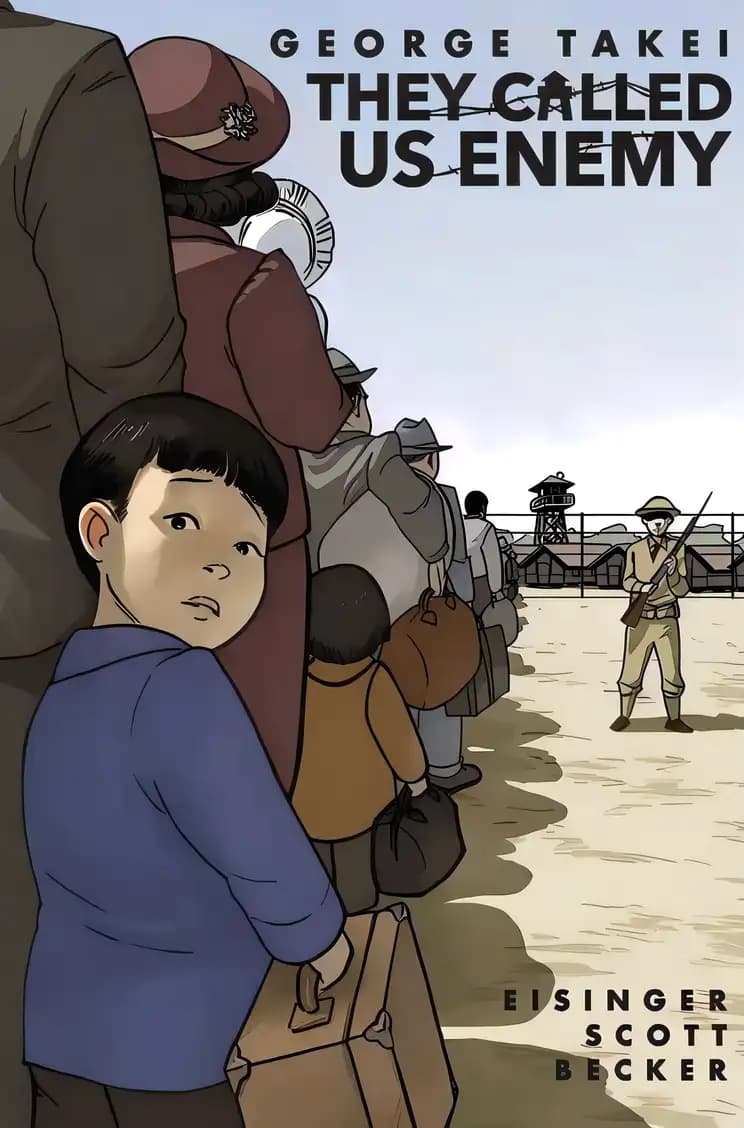
They Called Us Enemy
They Called Us Enemy Series
What’s inside...
A graphic memoir recounting actor/author/activist George Takei's childhood imprisoned within American concentration camps during World War II. Experience the forces that shaped an American icon -- and America itself. Long before George Takei braved new frontiers in Star Trek, he woke up as a four-year-old boy to find his own birth country at war with his father's -- and their entire family forced from their home into an uncertain future. In 1942, at the order of President Franklin D. Roosevelt, every person of Japanese descent on the west coast was rounded up and shipped to one of ten 'relocation centers,' hundreds or thousands of miles from home, where they would be held for years under armed guard. They Called Us Enemy is Takei's firsthand account of those years behind barbed wire, the joys and terrors of growing up under legalized racism, his mother's hard choices, his father's faith in democracy, and the way those experiences planted the seeds for his astonishing future. New York Times Bestseller!
Series reading
Non-Sequential
Age
10-13
Length
204 pages
Text complexity
Character compass
George Takei
Fumiko Emily (Nakamura) Takei
Takekuma Norman Takei
Discussion points
How do you think George felt when his family had to leave their home? What would you do in his situation?
Why is it important to remember and talk about difficult times in history like the Japanese American internment?
What can we learn from George’s story about resilience and courage in the face of injustice?
How do you think storytelling helps people understand experiences that are different from their own?
Can you think of a time when you had to stand up for what is right, like George did? How did it make you feel?
Tip: Role play these questions
Encourage your child to express their feelings and thoughts as they relate to the book’s themes. Listen actively and validate their emotions to create a safe space for discussion. Highlight the historical context of the story to help them understand the gravity of the events. Draw parallels between past and present social issues to enhance their critical thinking about justice and equity. Share personal experiences or family stories of overcoming adversity to make the conversation more relatable and impactful.
Key lessons
Example Lesson: Resilience in adversity
Explanation: The story showcases how George Takei and his family, along with many other Japanese Americans, were forced into internment camps during WWII. Despite the harsh conditions, they found ways to maintain dignity and hope.
Real-World Application: Children can learn to face challenges with strength and not give up easily, understanding that tough times are part of life but can be overcome with perseverance.
Example Lesson: Importance of forgiveness
Explanation: George learns to forgive those who wronged him and his community during the internment. He emphasizes the power of forgiveness in healing and moving forward.
Real-World Application: This teaches children the value of letting go of grudges and bitterness to lead a more peaceful and productive life.
Example Lesson: Understanding history to prevent repetition
Explanation: The book provides a detailed historical account of a dark chapter in American history, highlighting the consequences of prejudice and fear-driven policies.
Real-World Application: Children can learn the importance of learning from the past to ensure such injustices are not repeated. It encourages critical thinking about history and its impacts on the present and future.
Example Lesson: Empathy for others' experiences
Explanation: Through George's personal stories and emotional recount, readers gain an insight into the struggles faced by the interned families, fostering a deeper understanding and empathy.
Real-World Application: This can help children develop a more empathetic outlook towards people who have different life experiences, promoting a more inclusive attitude.
Example Lesson: Standing up for justice
Explanation: George Takei actively speaks against injustice and advocates for the rights of marginalized communities, inspired by his own experiences.
Real-World Application: Children learn the importance of advocating for what is right and standing up against injustices, big or small, in their daily lives.