
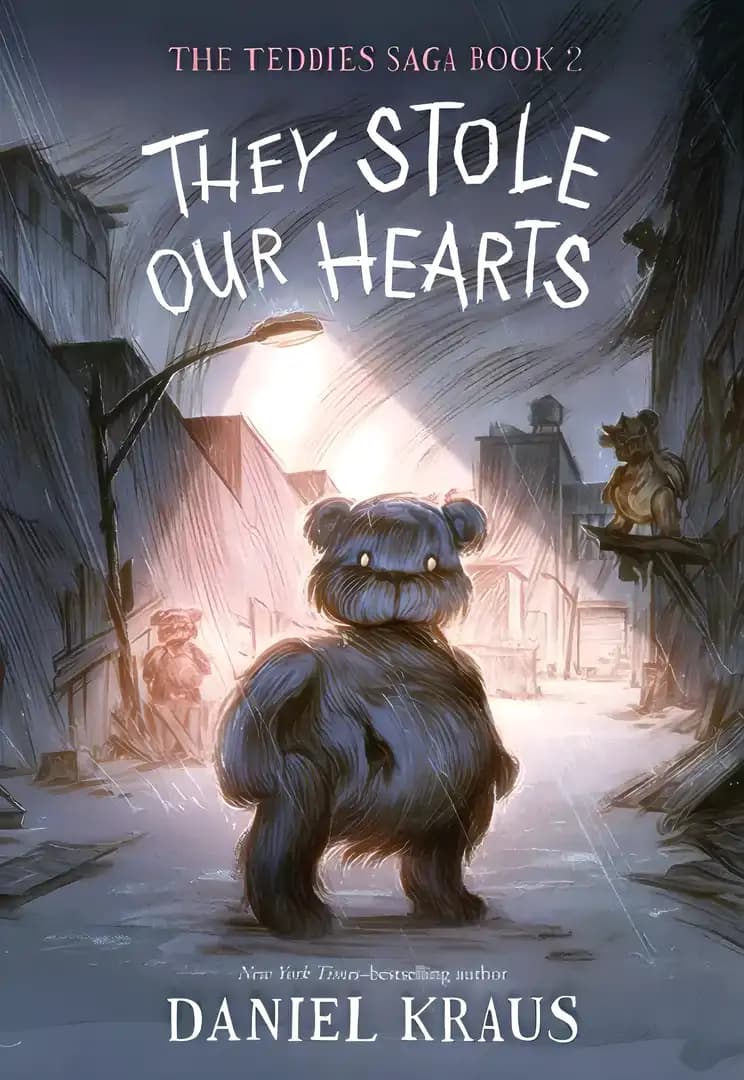
They Stole Our Hearts
#2 of 3 in The Teddies Saga Series
What’s inside...
The heart-pounding sequel to They Threw Us Away, about a group of teddy bears seeking a home and answers to life's biggest questions. The teddies—Buddy, Sunny, Sugar, and Reginald—find a child named Darling and life seems better, until Darling’s mother discovers and destroys one of them. The remaining teddies escape and set out on a journey to the factory where they were created. Along the way, they find a civilization of discarded teddy bears but soon realize something is amiss. They must decide whether to conform or seek the truth about why they were thrown away.
Discussion points
How did you feel about the characters' actions when they discovered their hearts were stolen?
What would you do if you were in the same situation as the main characters?
Why do you think the thief decided to steal their hearts?
What does the heart represent in this story?
How do the characters change by the end of the book?
Tip: Role play these questions
Encourage your child to express their emotions about the story, affirming that all feelings are valid.
Ask your child to draw parallels between the characters’ experiences and their own, fostering empathy and self-reflection.
Discuss the moral of the story and what lesson they think the author wanted to impart.
Use open-ended questions that require more than a yes or no answer to encourage critical thinking and detailed responses.
Key lessons
Example Lesson: Empathy
Explanation: In 'They Stole Our Hearts,' children learn about empathy as they witness characters understanding and sharing the feelings of others in complex situations.
Real-World Application: By identifying with the characters, children can better navigate their own emotions and relationships, fostering a more understanding approach towards their peers and family members.
Example Lesson: Courage
Explanation: The story highlights acts of bravery as characters face challenging scenarios and make tough decisions. This helps children understand the importance of courage in overcoming fears.
Real-World Application: Children are encouraged to stand up for what they believe in and face their own fears, whether in school, social situations, or while trying new activities.
Example Lesson: The value of teamwork
Explanation: Throughout the book, characters collaborate to solve problems, emphasizing that teamwork often leads to success.
Real-World Application: This lesson highlights for children the importance of working with others, teaching them to cooperate and achieve common goals in group settings like school projects or sports.
Example Lesson: Responsibility
Explanation: Characters in the story learn to take responsibility for their actions and understand the consequences that follow, teaching children accountability.
Real-World Application: Kids learn to accept responsibility for their own actions and understand how their behavior can impact others around them.
Example Lesson: Resilience
Explanation: As characters encounter setbacks, they learn to persevere, illustrating resilience. This teaches children that persistence is key to overcoming difficulties.
Real-World Application: This encourages children to not give up easily, whether dealing with academic challenges or personal obstacles, fostering a resilient mindset.