
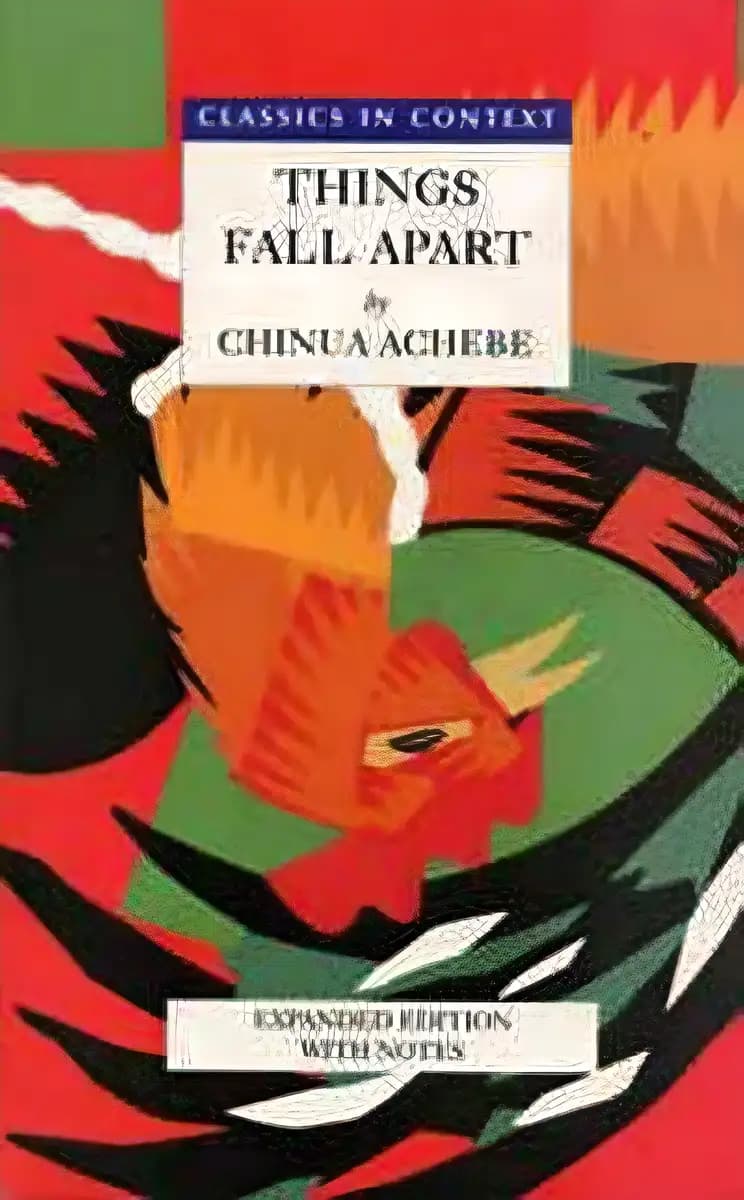
Things Fall Apart (African Trilogy, Book 1)
#1 of 3 in The African Trilogy Series
on Goodreads (394,832)
What’s inside...
One of a series of fiction titles for schools, 'Things Fall Apart' tells two intertwining stories centered around Okonkwo, a man of the Ibo tribe in Nigeria at the end of the last century. Okonkwo is a person of substance, character, and promise, but he and his people are doomed to be destroyed both from within the tribe and by the arrival of the white man. The first story traces Okonkwo's fall from grace with the tribal world, while the second story concerns the clash of cultures and the destruction of Okonkwo's world with the arrival of aggressive European missionaries. The novel, which is the most widely read book in modern African literature and presented here in stunning hardcover, is enriched by an awareness that encompasses the life of nature, human history, and the mysterious compulsions of the soul. It is considered a cornerstone of African literature and its importance is echoed by Toni Morrison who stated, 'African literature is incomplete and unthinkable without the works of Chinua Achebe.' Nominated as one of America’s best-loved novels by PBS’s The Great American Read.
Character compass
Okonkwo
Ezinma
Ikemefuna
Nwoye
Obierika
Reverend James Smith
Mr. Brown
Discussion points
How do you think Okonkwo feels about the changes in his village? What would you feel in his place?
Why do you think understanding our history and culture is important based on Okonkwo’s story?
What can we learn from Okonkwo’s relationship with his family and community?
How do the characters in the book deal with conflict and what can we learn from them?
If you could speak to Okonkwo, what advice would you give him?
Tip: Role play these questions
Discuss with your child the significance of cultural heritage and traditions showcased in the book. Share your own family traditions and how they shape your identity. Acknowledge the complexity of emotions and decisions faced by characters, relating them to real-life situations. Encourage your child to express their thoughts on how they would handle similar challenges faced by the characters. Reinforce the idea that understanding different perspectives can lead to better outcomes in conflicts.
Key lessons
Example Lesson: The importance of understanding diverse cultures.
Explanation: The story is set in a tribal village in Nigeria, offering insights into the Igbo culture, customs, and traditions.
Real-World Application: Children can learn to appreciate and respect cultural differences, promoting inclusivity and empathy in their interactions with others from diverse backgrounds.
Example Lesson: The consequences of inflexible beliefs.
Explanation: The protagonist, Okonkwo, clings rigidly to traditional beliefs, leading to personal and communal tragedy.
Real-World Application: This can teach children the importance of adaptability and the risks of not considering alternative views or solutions in daily interactions.
Example Lesson: The impact of colonization.
Explanation: The narrative shows the disruptive impact of European colonialism on the tribe's way of life.
Real-World Application: Children can learn about the effects of historical events on different communities and understand the importance of political and social awareness.
Example Lesson: Coping with personal failure.
Explanation: Okonkwo's life is marked by his efforts to overcome perceived personal failures and societal expectations.
Real-World Application: This can help children understand that failure is a natural part of life and learning to cope with setbacks is crucial for personal growth.
Example Lesson: The strength of community.
Explanation: Despite various conflicts, the story showcases the significant role of community in supporting individuals.
Real-World Application: Children can learn the value of belonging to a community and how mutual support can help overcome challenges.