
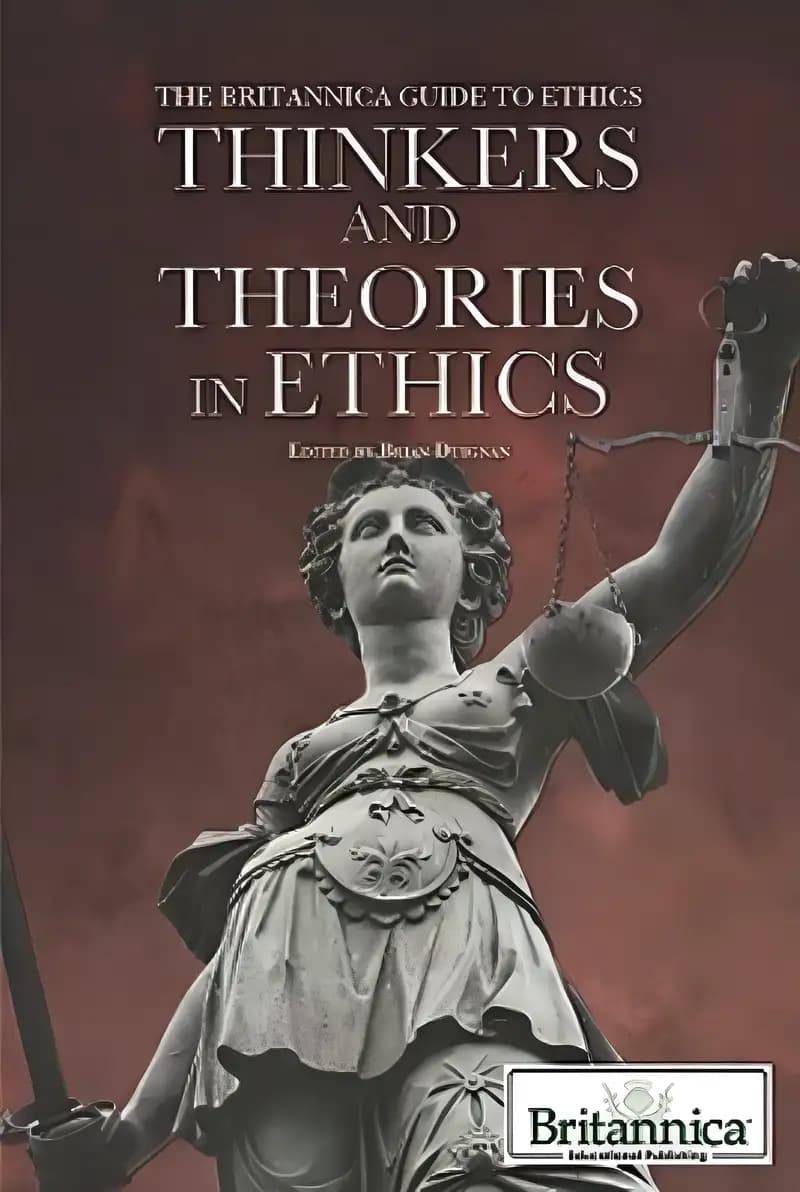
Thinkers and Theories in Ethics (The Britannica Guide to Ethics)
The Britannica Guide To The World'S Most Influential People Series
on Goodreads (7)
What’s inside...
This volume surveys the major theories that form the basis of ethical thought, highlighting the diverse perspectives on moral behavior and ethical action. It explores how echoes of Enlightenment and ancient Greek thinking continue to resonate in modern times, and how various thinkers have adapted these ideas to address new social, cultural, political, and technological developments and moral dilemmas. Detailed images and sidebars illuminate the vacillating world of ethics and highlight seminal works by influential individuals.
Series reading
Non-Sequential
Age
14-17
Length
176 pages
Text complexity
Discussion points
What is ethics and why do you think it is important to study it?
Can you think of a situation where you had to decide between right and wrong? What did you choose and why?
How do the theories presented in the book help us understand what makes actions good or bad?
Do you think everyone should follow the same ethical rules, or can they be different for each person?
Which thinker or theory in the book did you find most interesting, and what did you learn from it?
Tip: Role play these questions
Start by explaining the basics of ethics in simple terms and relate them to everyday decisions to make the concepts more relatable. Encourage your child to express their thoughts and feelings about ethical dilemmas they may have faced or heard about. Use examples from the book to discuss how different thinkers approach ethical problems, and ask your child their opinions on these approaches. Promote a judgment-free environment where all opinions are respected, fostering an open and honest dialogue. Conclude conversations with real-life applications that can help reinforce the theoretical knowledge gained from the book.
Key lessons
Example Lesson: Understanding Right from Wrong
Explanation: The book discusses various ethical theories which help in distinguishing between moral choices.
Real-World Application: Children can apply these principles to everyday situations, such as sharing toys or choosing honesty over deceit.
Example Lesson: Respect for Different Perspectives
Explanation: Through the exploration of different ethical theories, the book teaches that there are multiple ways to view a situation.
Real-World Application: This lesson helps children in appreciating diverse opinions among peers and promotes empathy.
Example Lesson: Importance of Responsibility
Explanation: The book emphasizes the role of personal responsibility in ethical decision-making.
Real-World Application: Encourages children to take accountability for their actions, whether it's in completing homework or resolving conflicts.
Example Lesson: Value of Justice
Explanation: It outlines principles of justice as central to ethical behavior, discussing how fairness is crucial in dealings.
Real-World Application: Children can learn to ensure fairness in their interactions, like taking turns while playing games or sharing equally.
Example Lesson: Empathy and Compassion
Explanation: The guide highlights the importance of considering others' feelings and situations in making ethical choices.
Real-World Application: Kids can practice empathy by helping friends in distress or understanding different familial backgrounds among classmates.