
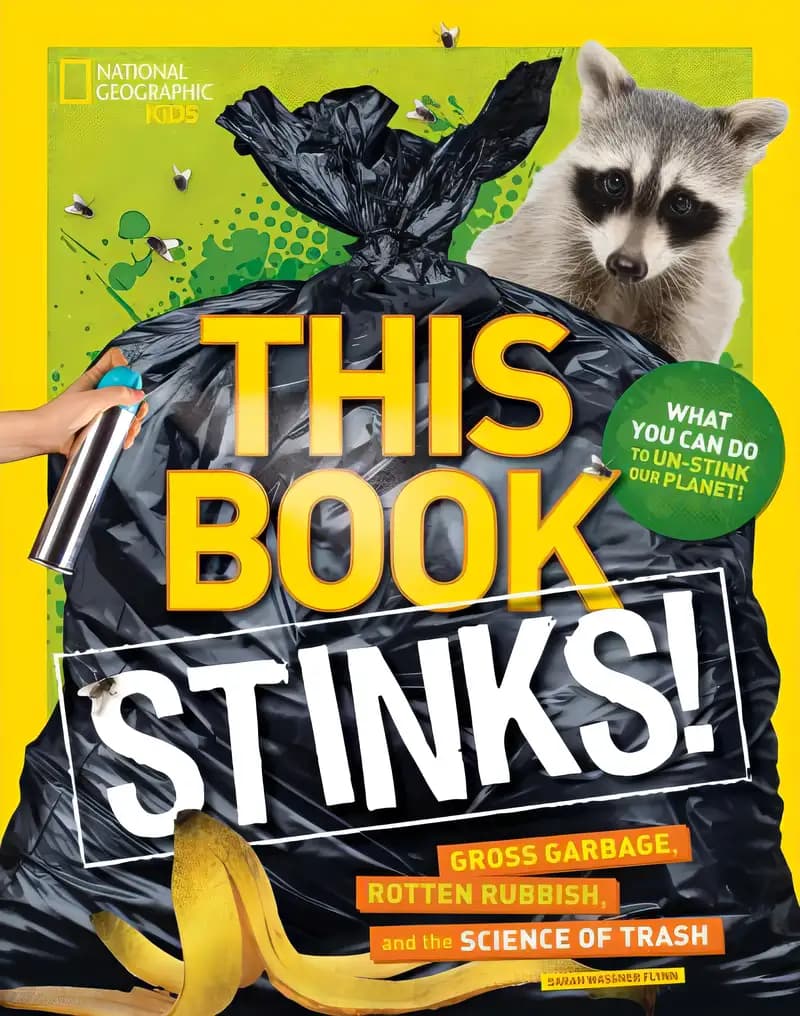
This Book Stinks!: Gross Garbage, Rotten Rubbish, and the Science of Trash
National Geographic Kids Chapters Series
on Goodreads (40)
What’s inside...
Get up close and personal with a wonderful world of waste. From composting and recycling, to landfills and dumps, to how creative people are finding new ways to reuse rubbish. It's fun to talk trash when it's jam-packed with infographics, thematic spreads, wow-worthy photos, sidebars, serious stats, and fabulous facts. Also included are quizzes and activities to inspire kids to take action, be proactive, and rethink the things we throw away.
Series reading
Non-Sequential
Age
8-12
Length
128 pages
Text complexity
Discussion points
How do you think reducing waste can help our planet?
What are some things that you learned about recycling and composting that surprised you?
Why do you think it's important for everyone to understand what happens to our trash?
Can you think of new ways we can help reduce garbage at home or at school?
What role do you believe you can play in managing waste better?
Tip: Role play these questions
Start the conversation by sharing something new you learned from the book to spark your child’s interest.
Relate the book’s content to your child’s everyday experiences, such as how you manage waste at home or the recycling bins at school.
Encourage your child to think about how they can apply the lessons from the book in their own life, perhaps by starting a small recycling project together.
Praise your child’s ideas on reducing waste and discuss possible steps you could take together to implement these ideas.
Ask follow-up questions based on your child’s responses to deepen the conversation and encourage them to think critically about environmental responsibilities.
Key lessons
Example Lesson: Importance of Recycling
Explanation: The book educates children on how different materials decompose and the significance of recycling to manage waste.
Real-World Application: Children can practice sorting trash into recyclable and non-recyclable bins at home and school.
Example Lesson: Environmental Responsibility
Explanation: Through engaging discussions about garbage and its impact, the book instills a sense of responsibility towards maintaining a cleaner environment.
Real-World Application: Encourages children to participate in local clean-up drives and be mindful of their daily waste production.
Example Lesson: Creativity in Waste Management
Explanation: The book highlights innovative methods of reusing and upcycling materials that open up creative avenues for managing waste.
Real-World Application: Children can engage in DIY projects using old materials, promoting both creativity and sustainability.
Example Lesson: The Science of Decomposition
Explanation: It provides a detailed exploration of how different materials break down over time, integrating basic scientific principles with everyday observations.
Real-World Application: Children learn to observe changes in composting bins or school science projects, understanding natural processes more deeply.