
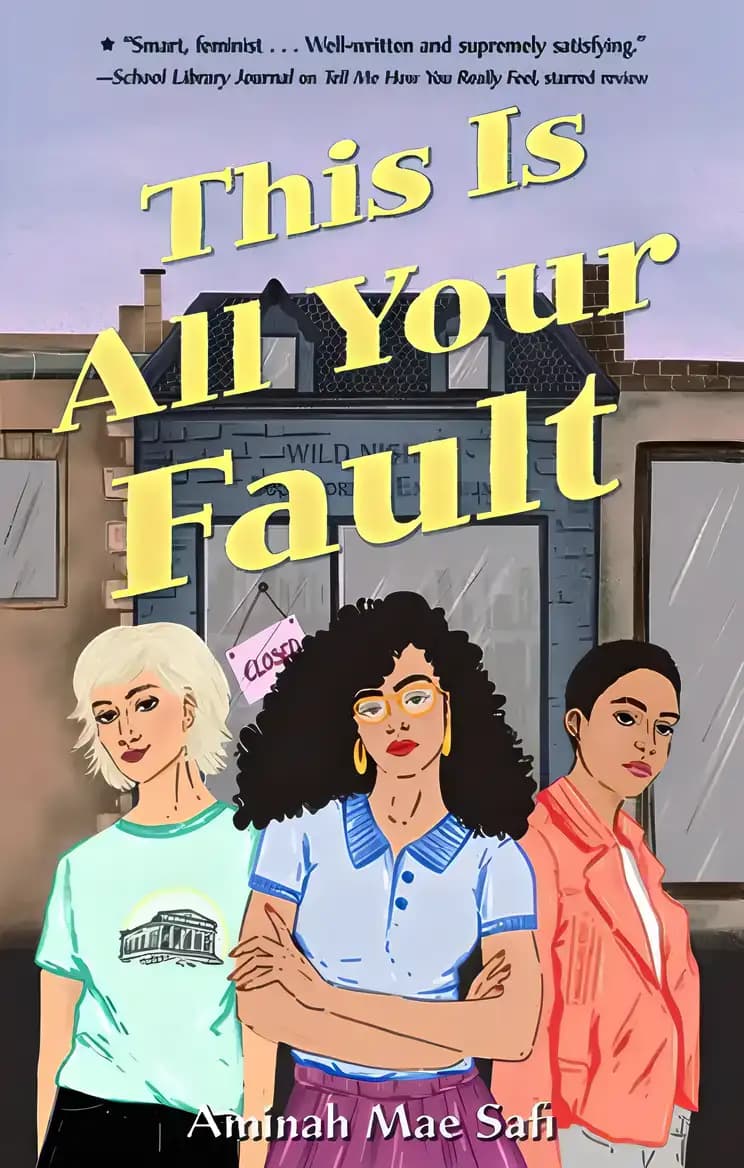
This Is All Your Fault
on Goodreads (773)
What’s inside...
Set over the course of one day, Aminah Mae Safi's This Is All Your Fault is a smart and voice-driven YA novel that follows three young women determined to save their indie bookstore. Rinn Olivera is finally going to tell her longtime crush AJ that she’s in love with him. Daniella Korres writes poetry for her own account, but nobody knows it’s her. Imogen Azar is just trying to make it through the day. When Rinn, Daniella, and Imogen clock into work at Wild Nights Bookstore on the first day of summer, they’re expecting the hours to drift by the way they always do. Instead, they have to deal with the news that the bookstore is closing. Before the day is out, there’ll be shaved heads, a diva author, and a very large shipment of Air Jordans to contend with. And it will take all three of them working together if they have any chance to save Wild Nights Bookstore.
Age
13-18
Length
320 pages
Text complexity
Character compass
Rinn Olivera
Imogen Azar
Daniella Korres
Discussion points
What did you think about the choices the characters made in the story? How would you have reacted in their situation?
How do the characters in the book handle challenges and conflicts? What can we learn from them?
Which character did you relate to the most and why?
What do you think is the main message of the book? How can we apply this message in our daily lives?
How do you think the story would change if it was set in a different place or time?
Tip: Role play these questions
Start the conversation by sharing your own thoughts on the book’s themes, which can make your child feel more at ease to express their perspectives.
Encourage your child to describe their favorite parts of the book, and ask why those sections stood out to them, helping them to engage more deeply with the material.
Connect the book's scenarios or moral lessons with real-life situations your child might encounter, which can help them relate to the characters and their decisions better.
Praise your child's responses and insights, even if they differ from your own views, to foster an open and supportive environment for discussion.
Ask your child how they might have written the story differently, encouraging creative thinking and active engagement with the book's content.
Key lessons
Example Lesson: Responsibility
Explanation: The characters in the story face various challenges that require them to take responsibility for their actions and decisions.
Real-World Application: Children can learn to own their choices and actions, understanding the impact they have on others and their own lives.
Example Lesson: Teamwork
Explanation: Throughout the book, characters must work together to solve problems, showcasing the power of cooperation.
Real-World Application: This story illustrates the importance of collaboration, encouraging children to value and participate in teamwork in school projects or team sports.
Example Lesson: Resilience
Explanation: The characters encounter setbacks but learn to persevere and adapt, highlighting the importance of resilience.
Real-World Application: Children are encouraged to keep trying in the face of difficulties, whether it's learning a new skill or dealing with personal challenges.
Example Lesson: Empathy
Explanation: The narrative fosters understanding and compassion as characters learn about each other’s struggles and perspectives.
Real-World Application: Kids can apply this lesson by showing empathy towards their peers, understanding different emotions, and learning to support others.
Example Lesson: Problem-Solving
Explanation: The book presents various conflicts that require creative thinking and decision-making to resolve.
Real-World Application: Children can enhance their critical thinking skills by applying problem-solving strategies in their everyday interactions and academic challenges.