
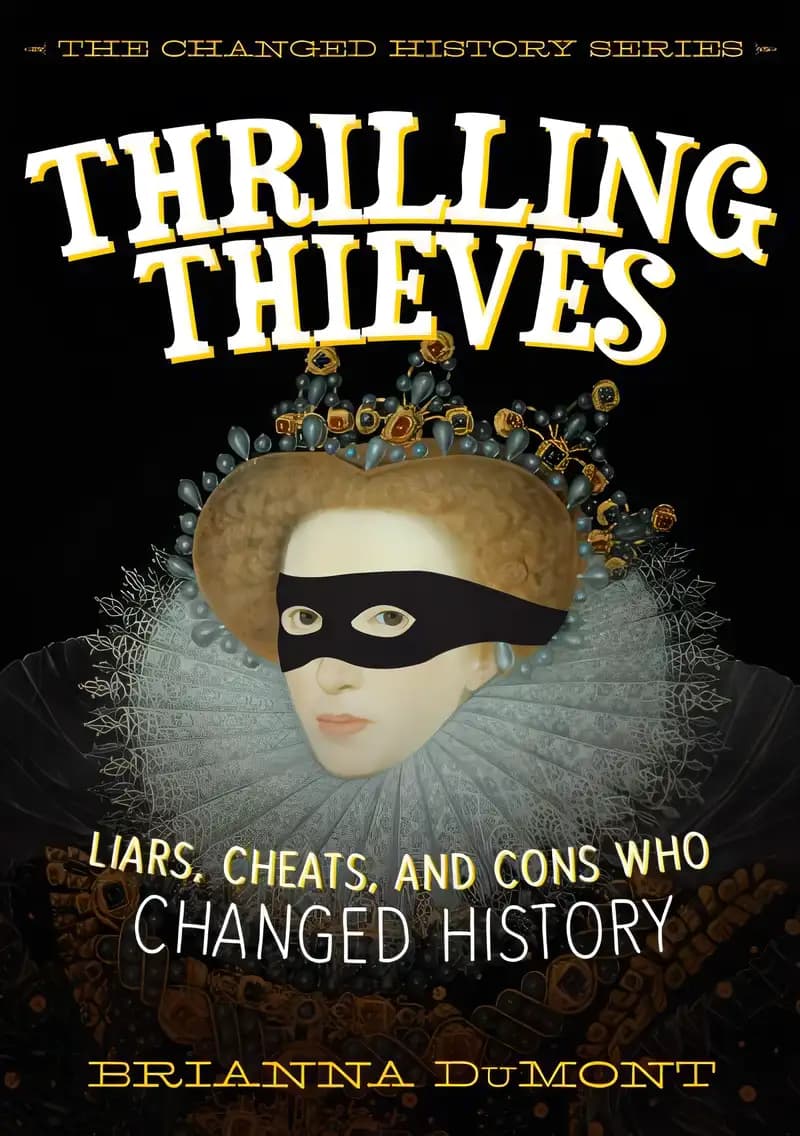
Thrilling Thieves: Thrilling Thieves: Liars, Cheats, and Cons Who Changed History (Changed History Series)
#3 of 3 in Changed History Series
on Goodreads (115)
What’s inside...
This book reveals the darker side of some of history's most famous figures, from Queen Elizabeth I to Thomas Edison. It explores the cunning and deceitful actions they took to achieve their success, and uncovers the significant impact that crooks and criminals have had on shaping the world. From the true story behind the Mona Lisa to the rise and fall of empires, this book offers a fresh perspective on historical events by highlighting the role of those who operated on the dark side. It’s the thieves, pirates, and rogues who alter history. Inside you’ll find fascinating stories about various historical figures like Saint Columba, The Venetians, Tamerlane, Napoleon, Madame Cheng, President Andrew Jackson, Robert Fortune, Robert Smalls, Boss Tweed, and Vincenzo Peruggia. The book uncovers the dishonest origins of copyright laws, the modernization of New York City, the Louvre museum in Paris, and the light bulb.
Discussion points
What do you think motivates the characters in 'Thrilling Thieves' to make the choices they do?
How do you feel about the actions of the thieves in the stories? Are there any consequences that you think are fair or unfair?
If you could ask any of the historical figures in the book a question, what would it be?
What lessons can we learn from the stories of these thieves about honesty and integrity?
How might the world be different if these events had never occurred?
Tip: Role play these questions
Start by sharing your own thoughts on a specific story from the book to encourage open dialogue.
Ask your child to compare and contrast two characters from the book, discussing their actions and motivations.
Encourage your child to imagine alternative endings for the stories, discussing how different choices could lead to different outcomes.
Link the stories to current events or familiar situations to make the themes more relatable and understandable.
Praise your child for thoughtful responses and encourage them to ask questions about the stories and characters.
Key lessons
Example Lesson: The importance of honesty
Explanation: Through stories of various historical figures who resorted to deceit, the book underscores the consequences and moral dilemmas associated with dishonesty.
Real-World Application: Children can understand the value of truthfulness in their daily interactions and the potential negative outcomes of lying.
Example Lesson: Critical thinking and skepticism
Explanation: By examining the strategies and ploys used by historical con artists, children learn to evaluate information critically and question its validity.
Real-World Application: This skill helps children discern truth from deception in advertising, media, and everyday discussions, promoting informed decision-making.
Example Lesson: Learning from past mistakes
Explanation: The book provides an analysis of historical events and figures who failed due to unethical choices, highlighting the importance of learning from past errors.
Real-World Application: Children can apply this understanding in their personal development, recognizing and rectifying their mistakes for better future outcomes.
Example Lesson: The impact of one's actions on others
Explanation: Narratives about thieves and con artists reveal how their actions adversely affected others around them, teaching empathy and responsibility.
Real-World Application: Kids can relate this to their actions at school or home, understanding how their behavior can influence their friends and family members.
Example Lesson: Resilience against peer pressure
Explanation: Characters in the book often faced social pressures to conform to dishonest behaviors; the stories show the value of resisting such influences.
Real-World Application: Children learn to uphold their moral values and make ethical choices despite what others around them might be doing.