
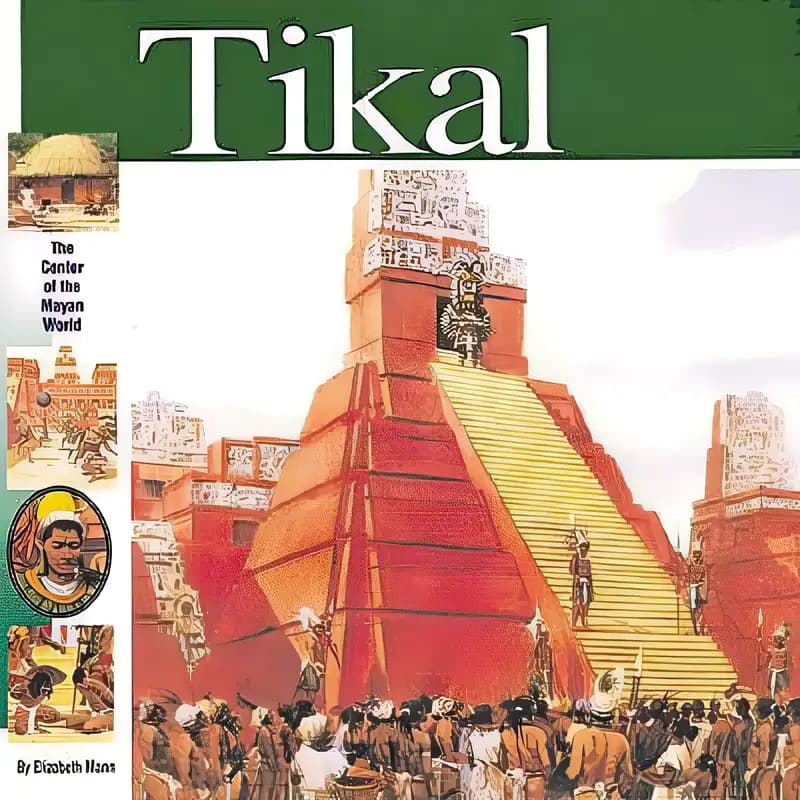
Tikal: The Center of the Maya World (Wonders of the World Book)
Wonders Of The World Book Series
What’s inside...
During the first millennium AD, the Maya civilization thrived in the dense jungles of Mesoamerica, particularly across the Yucatan Peninsula. They developed advanced knowledge in mathematics, architecture, agriculture, and astronomy, establishing numerous powerful city-states. The largest and most prosperous of these was Tikal, located in the heart of the Yucatan near vital trade rivers. Tikal's rulers capitalized on the city's wealth to construct palaces, grand plazas, and immense stone pyramids. The history of Tikal, from its inception to its golden age, provides a profound insight into the Maya culture and its many achievements. The Wonders of the World series, to which this account of Tikal belongs, is celebrated for its captivating and informative approach to history, geography, and architecture, making it an appealing resource for young readers.
Series reading
Non-Sequential
Age
9-13
Length
48 pages
Text complexity
Discussion points
What do you think daily life was like for the Maya living in Tikal?
Why do you think the Maya chose Tikal as a significant place for their civilization?
How do you think the architecture and art in Tikal reflect the values and beliefs of the Maya people?
What similarities and differences can you see between the Maya civilization and our world today?
Tip: Role play these questions
Encourage your child to imagine being a part of the Maya civilization, asking them how they might feel living in Tikal during its peak.
Discuss the importance of historical preservation and what we can learn from studying places like Tikal.
Use a map or globe to locate Tikal and explore its geographical significance to better understand why it was chosen as a center.
Link themes from the book to your child's current studies or interests to make the conversation more relevant and engaging.
Key lessons
Example Lesson: Understanding Cultural Diversity
Explanation: Through exploring the ancient city of Tikal and its Mayan inhabitants, the book educates children about the diversity of cultures and the complexities of different societies.
Real-World Application: This awareness of cultural diversity can foster more inclusive behavior in children, encouraging them to appreciate and respect people from various backgrounds in their everyday interactions.
Example Lesson: Importance of History and Heritage
Explanation: The book details the archaeological significance of Tikal and its value in understanding Mayan heritage, emphasizing the importance of preserving historical sites.
Real-World Application: Children can apply this lesson by showing interest in their own family history or participating in community activities that promote historical awareness and conservation.
Example Lesson: Resilience and Innovation
Explanation: The story highlights how the Mayans used their knowledge and resources to build a thriving civilization in challenging environments, demonstrating resilience and innovation.
Real-World Application: This message can inspire children to use their skills and creativity to solve problems and overcome obstacles in their academic and personal lives.
Example Lesson: The Power of Curiosity
Explanation: By showcasing the archaeological exploration of Tikal, the book encourages curiosity about exploring unknowns and learning about the world beyond one's immediate surroundings.
Real-World Application: Children can be encouraged to ask questions, seek out new experiences, and delve deeper into subjects that pique their interest, promoting a lifelong love of learning.
Example Lesson: Respect for the Environment
Explanation: The text illustrates how the ancient Mayans interacted with their environment, using natural resources wisely which eventually impacted their survival.
Real-World Application: This can teach children the importance of environmental conservation and encourage sustainable practices such as recycling and conservation in their daily actions.