
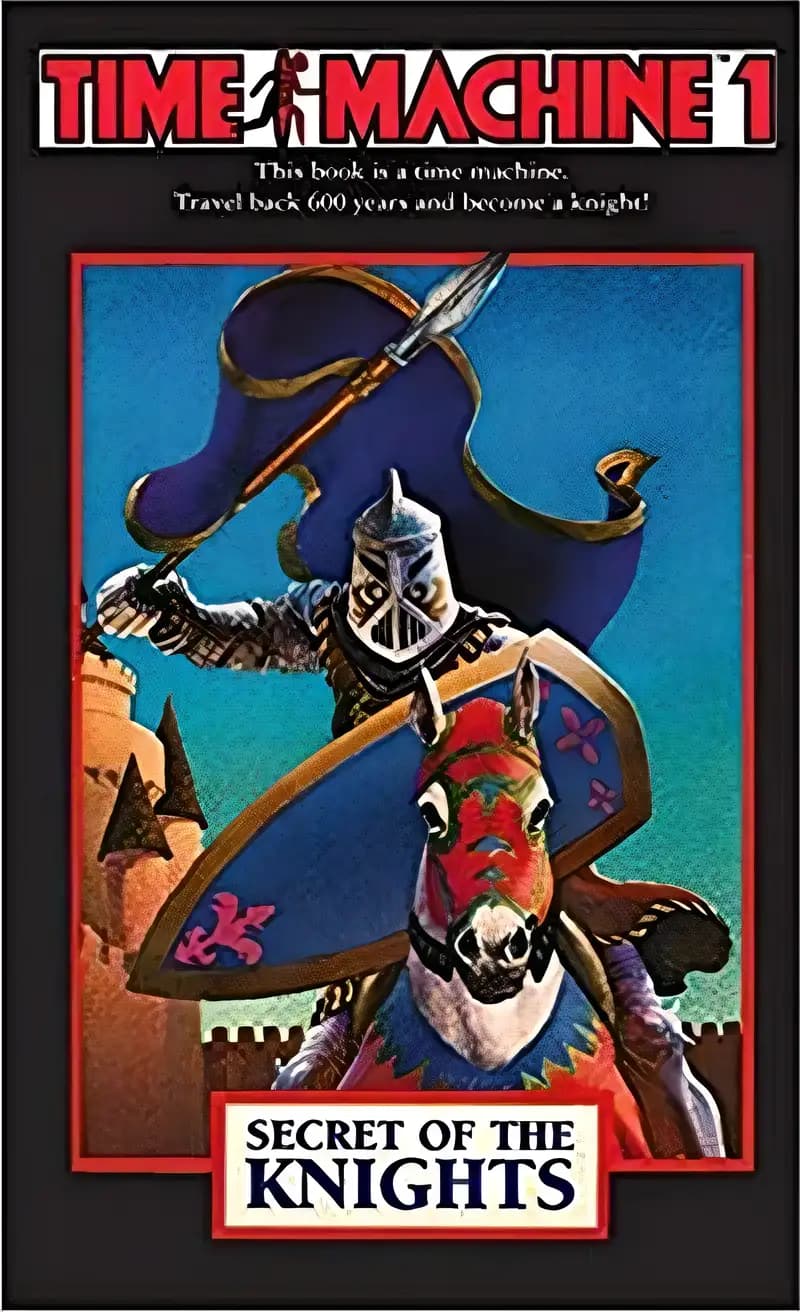
Time Machine 1: Secret of the Knights
#1 in Time Machine Series
What’s inside...
For six hundred years, the highest honor in England has been to be made a knight of the Order of the Garter, started by King Edward III in the 1340s. Members of this order wear a blue garter with the motto 'Honi soit qui mal y pense,' which reflects the secretive nature of the knights. The meaning behind this symbol and motto remains a mystery hidden in the past, and uncovering it requires one to become a knight and journey back six centuries.
Discussion points
What do you think it would be like to travel back in time to the days of the knights?
How do you think the character's feelings changed throughout their adventure?
If you had a time machine, what time period would you visit and why?
What did the knights teach the main character about bravery?
How can we apply the lessons learned from the knights to our daily life?
Tip: Role play these questions
Encourage your child to imagine themselves in the story, asking how they would react in similar situations.
Discuss the historical context of the time period to enhance understanding and appreciation of the story's setting.
Use the book as a gateway to teach about the concept of time and history.
Highlight the virtues shown by the characters, such as bravery and curiosity, and relate them to real-life scenarios your child might encounter.
After reading, consider watching a movie or documentary about knights to reinforce the themes discussed in the book.
Key lessons
Example Lesson: Understanding historical context
Explanation: As the protagonist travels back in time to the Middle Ages, children are introduced to the way of life, traditions, and societal norms of that era.
Real-World Application: Kids can apply this knowledge by appreciating the differences and evolution of societies when they learn history in school or visit museums.
Example Lesson: Importance of courage and resourcefulness
Explanation: The main character faces various challenges in a new and unfamiliar environment, showcasing bravery and clever problem-solving.
Real-World Application: Children learn to be adaptable and brave when facing new situations or obstacles in school, sports, or social interactions.
Example Lesson: Value of friendship and teamwork
Explanation: Throughout the journey, the protagonist relies on and builds friendships that play a crucial role in overcoming difficulties, highlighting the power of collaboration.
Real-World Application: Promotes the development of strong interpersonal skills and teaches children the importance of working together to achieve common goals.
Example Lesson: Ethical decision-making
Explanation: The character encounters moral dilemmas that require making tough choices, illustrating the complexities of right and wrong.
Real-World Application: Children learn to think critically about the consequences of their actions and to make decisions that reflect their values and ethics.
Example Lesson: Respect for diversity and different cultures
Explanation: Interactions with people from the Middle Ages expose the protagonist—and through him, the reader—to diverse perspectives and ways of life.
Real-World Application: Encourages children to be open-minded and respectful towards people from different cultural backgrounds they meet in their community and school.