
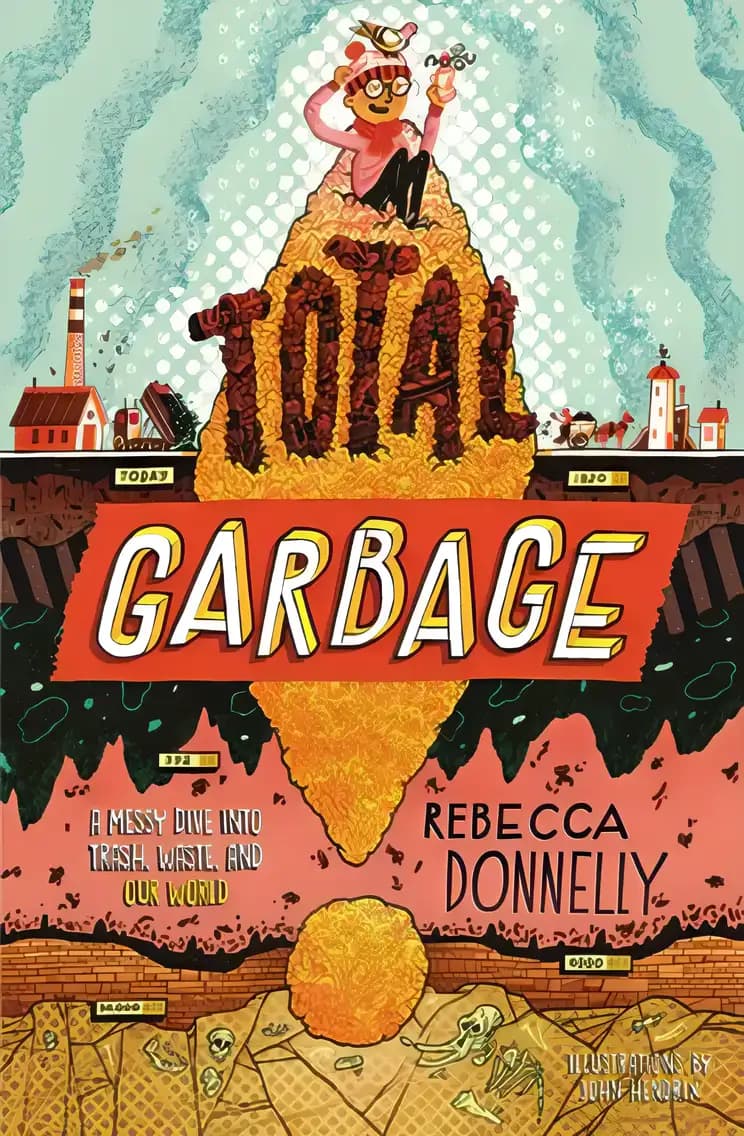
Total Garbage
What’s inside...
Total Garbage by Rebecca Donnelly explores the history and impact of trash, garbage, and waste on human societies and our planet. Filled with fascinating facts and illustrated for middle-grade readers, the book dives into the roles and consequences of waste through historical examination and present-day STEM innovations. It addresses questions about the origins, reasons behind, and future of garbage, highlighting how personal and societal choices affect the environment. The book includes a timeline of waste management history, bibliography, and index, urging readers to consider changes for a better future.
Age
8-12
Length
160 pages
Text complexity
Discussion points
What do you think is the main message of 'Total Garbage' and why?
How do the characters in the book handle challenges and what can we learn from them?
Can you think of a time when you felt like something was 'total garbage'? How did you deal with that feeling?
What are some ways the story could continue? What adventures might the characters have next?
Who was your favorite character and what qualities did you admire about them?
Tip: Role play these questions
Encourage your child to relate the story to their own experiences, fostering a deeper connection to the themes. Ask open-ended questions to prompt critical thinking and personal reflection. Use the book's scenarios to discuss the value of perseverance and optimism in facing everyday challenges. Highlight how characters in the book grow and learn from their mistakes, reinforcing the concept of personal development.
Key lessons
Example Lesson: Resilience through adversity
Explanation: The story charts a character who faces numerous challenges but ultimately overcomes them with determination and grit.
Real-World Application: Children can learn to persevere in the face of difficulties, whether it's solving a tough math problem or learning a new skill.
Example Lesson: Importance of honesty
Explanation: Characters in the book learn valuable lessons when they choose truth over deceit, demonstrating the positive outcomes of being honest.
Real-World Application: Kids are encouraged to practice honesty in their daily interactions, fostering trust and respect in their relationships.
Example Lesson: Value of teamwork
Explanation: The plot emphasizes how characters achieve more by working together than by working alone.
Real-World Application: This lesson can inspire children to collaborate with others, whether on school projects or in team sports, highlighting that collective effort often leads to greater success.