
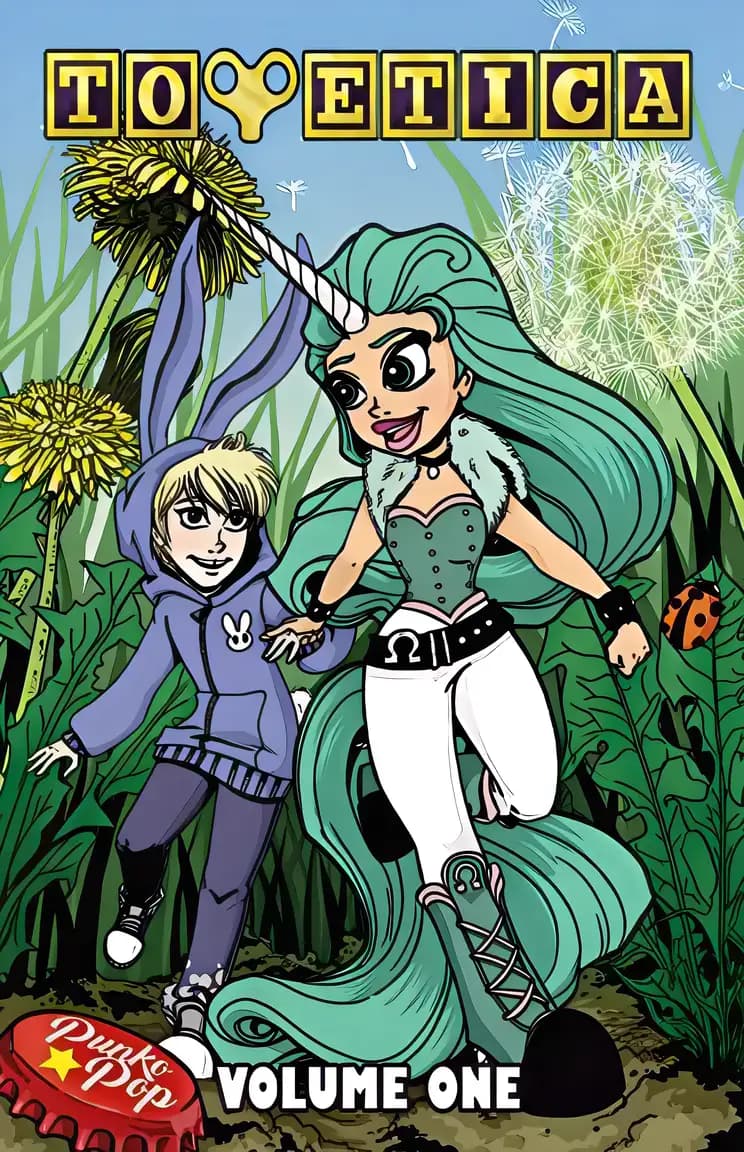
Toyetica
on Goodreads (22)
What’s inside...
In a world where the hottest kid's toys are based on real people, a ragtag class of students must prove they're the best toys for the job, competing against friends and enemies at Dollington Academy to achieve action figure fame...all while being just 6 inches tall. * * * When a new student named Minky arrives at Dollington Academy, Trixie Tangle is determined to make her feel welcome. But when Minky turns out to be a mermaid, Trixie's not so sure she can help this fish out of water feel at home on land.
Why read this book
- Exciting adventure in a toy and human world.
- Encourages creativity and friendship values.
- Supports developmental milestones in problem-solving skills.
- Engaging, age-appropriate content for young readers.
Age
9-12
Length
113 pages
Text complexity
Discussion points
What do you think makes the toys in Toyetica special or different from the toys you have?
How do the characters in Toyetica help each other? Can you think of a time when you helped a friend or a friend helped you?
If you could be friends with any character from the book, who would you choose and why?
What lessons do you think the toys in Toyetica learn throughout their adventures?
How do you feel about the way the story ended? What different ending can you imagine?
Tip: Role play these questions
Start by sharing your own favorite toy from childhood, and ask your child about their favorite toy to create a connection to the characters.
During reading, pause at exciting moments and ask your child to predict what might happen next. This stimulates their imagination and analytical thinking.
Encourage your child to express their thoughts and feelings about the characters' decisions, fostering empathy and moral reasoning.
After finishing the book, ask your child to draw their favorite scene or character. Discuss why they chose that particular scene or character, deepening their understanding and engagement.
Share your perspectives on the story's morals and encourage your child to do the same, which enhances their ability to articulate and defend their viewpoints.
Key lessons
Example Lesson: Acceptance of Differences
Explanation: Toyetica explores the theme of diversity and acceptance through its characters, who are toys come to life with unique abilities and appearances. The story emphasizes understanding and embracing each individual's uniqueness.
Real-World Application: Children can learn to appreciate and celebrate the differences among their peers, fostering a more inclusive environment at school and in social settings.
Example Lesson: Importance of Teamwork
Explanation: Throughout the book, characters must collaborate to solve problems and overcome obstacles, highlighting the importance of teamwork and cooperation.
Real-World Application: This lesson can encourage children to work collaboratively in group activities and projects, understanding that combined efforts often lead to greater success.
Example Lesson: Perseverance in Face of Challenges
Explanation: The characters in Toyetica face various challenges but persist in their goals, teaching the value of determination and hard work.
Real-World Application: Children can apply this lesson by not giving up easily when faced with difficulties in their studies, sports, or other activities, learning resilience and grit.
Example Lesson: Creativity and Imagination
Explanation: The imaginative setting and storyline encourage creative thinking, as characters use their unique abilities in inventive ways to navigate their world.
Real-World Application: This can inspire children to use their imagination more freely in creative tasks such as art, storytelling, or problem-solving scenarios.
Example Lesson: Understanding Emotional Expressions
Explanation: Toyetica delves into the emotional lives of its characters, illustrating how they express feelings and respond to others' emotions.
Real-World Application: This lesson aids in enhancing emotional intelligence, helping children to better identify, express, and manage their emotions and empathize with others.