
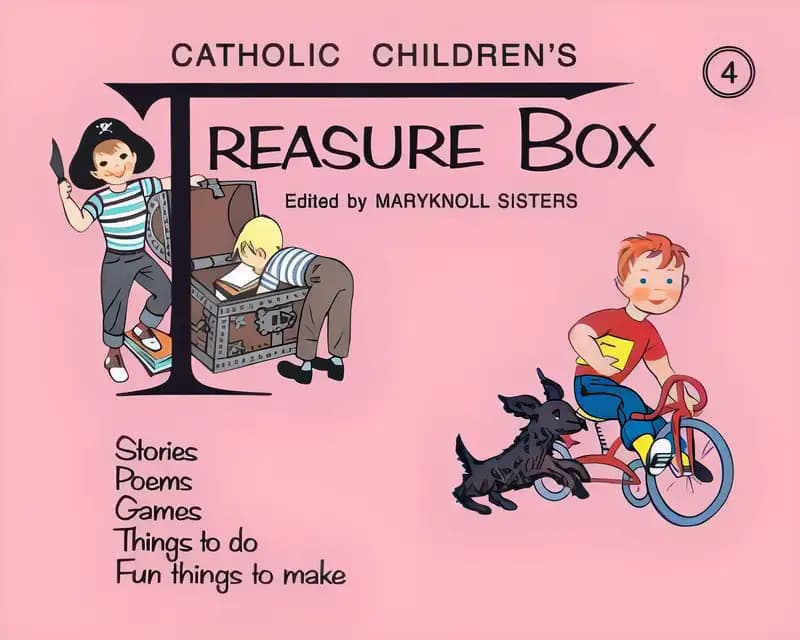
Treasure Box: Book 4
What’s inside...
The Treasure Box books present a wonderful combination of fun, innocence and the Catholic Faith. They teach the Faith in a simple way, and they inspire children's hearts to love God. The pictures are truly beautiful, unlike the cartoon illustrations found in many children's books today. These books are full of Catholic doctrine, presented reverently and simply at a young child's level, in a manner to capture the child's interest and raise the heart to God.
Why read this book
- Enhances vocabulary through engaging storytelling.
- Encourages cultural awareness and global understanding.
- Strengthens reading comprehension and retention.
- Supports social and emotional development.
Age
3-7
Length
32 pages
Text complexity
Discussion points
What was your favorite part of the story, and why did it stand out to you?
How did the characters' actions help you understand the message of the story?
If you were in the story, what would you have done differently?
How do you think the treasure box changed the characters' lives?
What do you think is the most important value the story teaches us?
Tip: Role play these questions
Encourage your child to express their thoughts and feelings about the story, showing genuine interest in their ideas.
Relate the themes of the book to your child’s real-life experiences to deepen their understanding.
Ask your child to draw their favorite scene from the book, then discuss what they've drawn.
Create a fun atmosphere by using different voices for different characters during discussions.
After discussing the book, work together to build or decorate a small 'treasure box', reinforcing the themes of the story.
Key lessons
Example Lesson: Empathy
Explanation: In 'Treasure Box: Book 4,' characters often show kindness and understanding towards each other, promoting empathy.
Real-World Application: Children can learn to understand and share the feelings of their peers, improving their social interactions and friendships.
Example Lesson: Sharing
Explanation: The story includes scenes where characters share their possessions willingly, highlighting the importance of sharing.
Real-World Application: This encourages children to share their own things with siblings and friends, fostering a more cooperative environment at home and school.
Example Lesson: Perseverance
Explanation: Characters face challenges but keep trying, demonstrating perseverance.
Real-World Application: Kids are encouraged to keep trying in the face of difficulties, whether it be in academics, sports, or personal goals.
Example Lesson: Honesty
Explanation: Truthfulness is a recurring theme, with characters learning the value of honesty through various scenarios.
Real-World Application: Children learn the importance of being honest in their daily interactions, which builds trust and respect among peers and adults.
Example Lesson: Respect for Nature
Explanation: The book includes elements of nature and teaches children to care for the environment.
Real-World Application: This can lead to children participating in environmental conservation activities such as recycling or planting trees.