
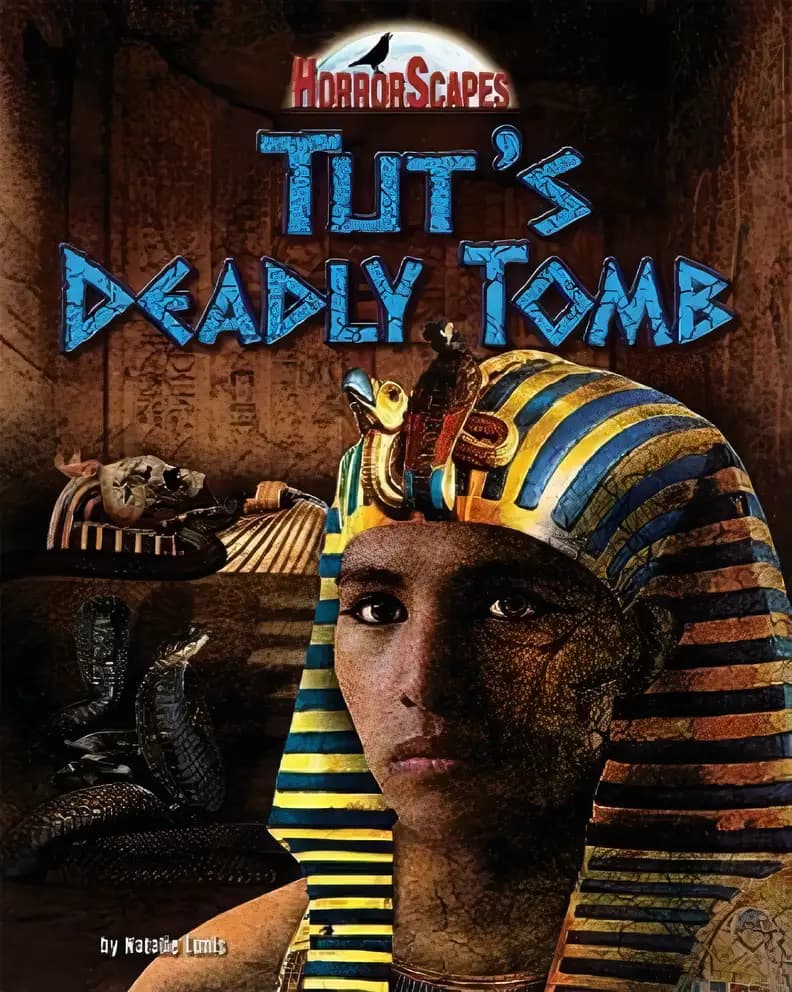
Tut's Deadly Tomb (HorrorScapes)
HorrorScapes Series
on Goodreads (13)
What’s inside...
This book explores the illnesses and deaths of people who entered King Tut's tomb in 1922, presenting a 'Then and Now' section with historical information. The narrative details the discovery of King Tutankhamun's tomb by Howard Carter and his team, the initial excitement, and the subsequent mysterious deaths that fueled rumors of a curse. With engaging text, chilling photos, and illustrations, the book brings ancient Egyptian history to life while satisfying young horror fans eager to learn about the mummy's tomb secrets.
Series reading
Non-Sequential
Age
8-9
Length
32 pages
Text complexity
Discussion points
What do you think motivated the characters to explore Tut's tomb, despite the dangers?
How would you have reacted if you were in the same situation as the characters in the book?
Do you think there could be a real curse like the one in Tut's tomb, or is it just a story? Why?
What lessons can we learn about bravery and caution from the characters' experiences?
How do you think the setting of the tomb adds to the suspense in the story?
Tip: Role play these questions
Start by asking your child what they found most exciting or scary about the story to gauge their emotional response. Use comparisons to real-life to help them connect with the characters' decisions and feelings. Discuss the historical aspect of King Tut and his tomb to deepen their contextual understanding of the story. Encourage them to imagine alternative endings or different choices the characters might have made to foster creative thinking.
Key lessons
Example Lesson: Courage in facing fears
Explanation: The characters in 'Tut's Deadly Tomb' confront scary and unexpected challenges as they explore the ancient tomb, showcasing bravery.
Real-World Application: Children learn to face their own fears, whether it's trying something new or standing up for themselves.
Example Lesson: Teamwork and cooperation
Explanation: Throughout their journey in the tomb, the characters must work together to solve puzzles and face obstacles, illustrating the power of collaboration.
Real-World Application: Encourages children to work cooperatively in group settings, such as in classroom projects or sports teams, emphasizing the success achieved through teamwork.
Example Lesson: Respect for history and culture
Explanation: The story delves into the rich history of Tutankhamun’s tomb, encouraging an appreciation for archaeology and ancient civilizations.
Real-World Application: Promotes an interest in learning about different cultures and historical contexts, helping children develop a global perspective.
Example Lesson: Problem-solving skills
Explanation: Characters in the book often encounter riddles and traps that require logical thinking and quick decision-making to navigate successfully.
Real-World Application: Inspires children to apply critical thinking and problem-solving in their daily challenges, enhancing their decision-making skills.
Example Lesson: Curiosity and exploration
Explanation: The protagonists' adventure in exploring unknown territories sparks curiosity and a quest for knowledge.
Real-World Application: Motivates children to explore new subjects and areas of interest, fostering a lifelong love of learning.