
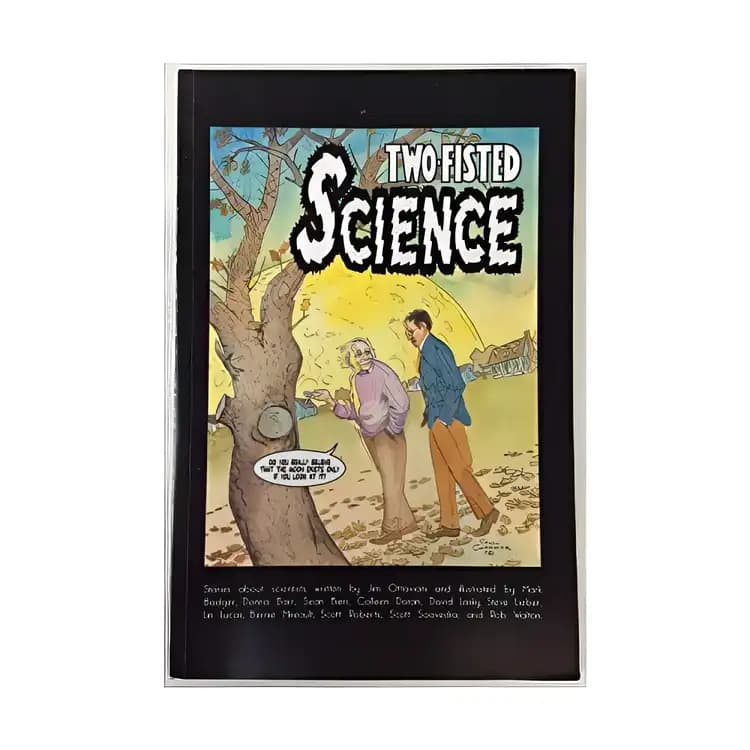
Two-Fisted Science
illustrations by
on Goodreads (151)
What’s inside...
Two-Fisted Science is a graphic novel by Jim Ottaviani that explores the lives and contributions of notable physicists like Albert Einstein, Richard Feynman, Niels Bohr, and Werner Heisenberg. Through illustrated stories, the book portrays their personal challenges and the human side of their scientific achievements. It blends factual history with humor and drama to make the subject of physics engaging and accessible. Additionally, the book celebrates the intellectual bravery and spirit of inquiry of these scientists, making it an educational tool for understanding the physical universe. The new edition of this Xeric Award-winning graphic novel also includes tales of other influential figures like Galileo and Isaac Newton, highlighting how their unique personalities influenced their scientific discoveries.
Age
13-16
Length
128 pages
Text complexity
Discussion points
What did you find most interesting about the scientists’ discoveries in the book?
How do you think the work of these scientists has changed the way we live today?
Which scientist would you like to learn more about and why?
How do the comic illustrations help you understand the science concepts presented?
If you could ask any of the scientists a question, what would you ask?
Tip: Role play these questions
Prior to discussing, skim through the book to familiarize yourself with the scientists and their contributions.
Connect the scientific concepts to everyday life to make them more relatable for your child.
Use the illustrations in the book as a visual aid to explain complex science concepts.
Encourage your child to think critically by asking them how they think different scientific discoveries have impacted their own life.
Praise your child’s curiosity and encourage them to research more about a scientist or topic that particularly interests them.
Key lessons
Example Lesson: The importance of curiosity and questioning
Explanation: This graphic novel showcases famous scientists who made significant discoveries by asking questions and exploring curiosity-driven research.
Real-World Application: Children are encouraged to ask questions about the world around them, fostering a lifelong passion for learning and discovery.
Example Lesson: Teamwork in scientific endeavors
Explanation: The book highlights collaborations among scientists like Albert Einstein and Niels Bohr, demonstrating that teamwork can lead to groundbreaking discoveries.
Real-World Application: Children learn the value of working together and sharing ideas, which they can apply in group activities at school or in their community.
Example Lesson: Perseverance through challenges
Explanation: The stories depict scientists who confronted and overcame numerous obstacles in their pursuit of knowledge.
Real-World Application: This teaches children the importance of persistence and resilience in the face of difficulties, whether in academics or personal endeavours.
Example Lesson: Ethical responsibility in science
Explanation: The narrative touches on the ethical dimensions of scientific work, prompting readers to consider the consequences of scientific discoveries.
Real-World Application: Children learn to think critically about the moral implications of their actions and the importance of responsible decision-making.