
Ultrawild
on Goodreads (36)
What’s inside...
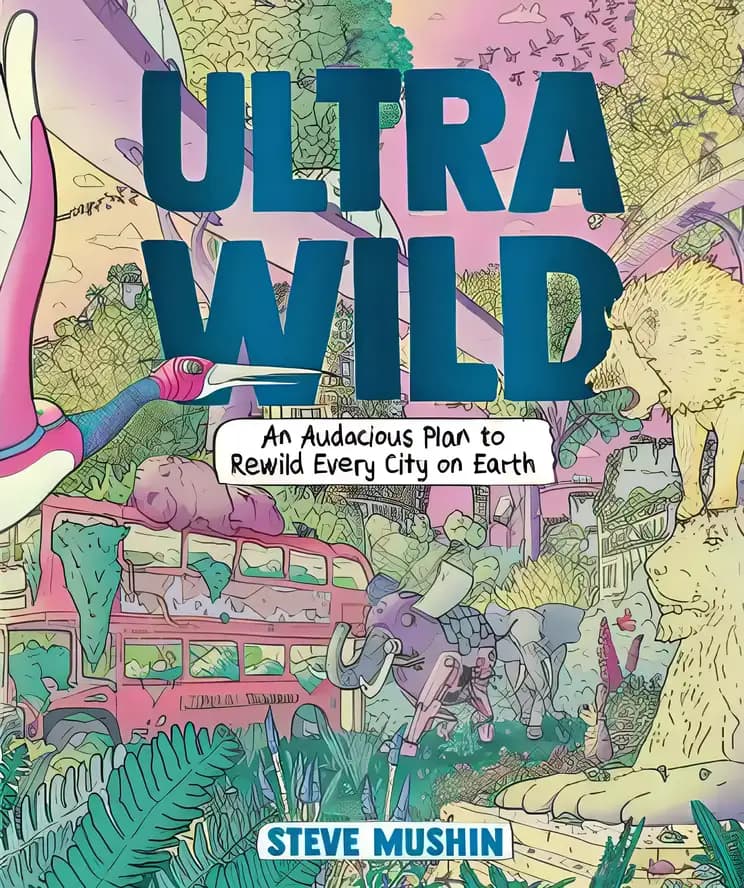
Join maverick inventor Steve Mushin as he tackles climate change with an avalanche of mind-bending, scientifically plausible inventions to rewild cities and save the planet. Jump into his brain as he designs habitat-printing robot birds and water-filtering sewer submarines, calculates how far compost cannons can blast seed bombs (over a kilometre), brainstorms biomaterials with scientists and engineers, studies ecosystems and develops a deadly serious plan to transform cities into jungles, rewilding them into carbon-sucking mega-habitats for all species, and as fast as possible. Through marvellously designed and hilarious engineering ideas, Mushin shares his vision for super-high-tech urban rewilding, covering the science of climate change, futuristic materials and foods, bio reactors, soil, forest ecosystems, mechanical flight, solar thermal power and working out just how fast we could actually turn roads into jungles, absorb carbon and reverse climate change. Developed over seven years, 'Ultrawild' is an optimistic book about creative thinking, science, technology, engineering and maths (STEM) and the potential for massive change. Filled with laugh-out-loud design-ridiculousness, it aims to empower and excite a new generation of designers, scientists, engineers and ultra-wild thinkers.
Age
9-12
Length
34 pages
Text complexity
Discussion points
What is your favorite animal in 'Ultrawild' and why do you think it’s special?
How do the characters in the book work together to solve problems? Can you think of a time when you worked with others to solve a problem?
What would you do if you found yourself in a similar adventure as the characters in 'Ultrawild'?
If you could add one more character to the story, who or what would it be and why?
How do you think the animals in the book feel about their environment? What can we do to help protect wildlife habitats?
Tip: Role play these questions
Encourage your child to visualize the story by asking them to draw their favorite scene or character from the book.
Use expressive voices for different characters to make the reading experience more immersive and fun.
After reading, connect the story to real-world examples of wildlife conservation and discuss the importance of protecting animal habitats.
Ask your child to predict what might happen next in the story before turning the page, fostering their imagination and anticipation.
Link the teamwork shown by characters in the book to everyday situations, such as working together in family or school activities.
Key lessons
Example Lesson: Respect for nature
Explanation: In 'Ultrawild', the characters embark on adventures that showcase the importance of preserving natural environments and respecting wildlife.
Real-World Application: Children can apply this lesson by engaging in activities like recycling, conserving water, or participating in community clean-ups to help protect their local environment.
Example Lesson: Teamwork and collaboration
Explanation: The characters in the book often work together to overcome obstacles and solve problems, highlighting the value of teamwork.
Real-World Application: This lesson encourages children to collaborate with their peers during group activities at school, sports, or play, fostering a spirit of cooperation and mutual support.
Example Lesson: Courage and facing fears
Explanation: Throughout 'Ultrawild', the protagonists confront various challenges that require bravery and courage, teaching children to face their fears.
Real-World Application: Children can embrace this lesson by trying new activities that may seem intimidating, like learning to swim or public speaking, demonstrating resilience and bravery.
Example Lesson: Importance of curiosity and discovery
Explanation: The book encourages exploring unknown territories and seeking knowledge, which fuels the characters' thrilling expeditions.
Real-World Application: Kids can be inspired to explore new subjects, ask questions, and conduct simple experiments, enhancing their understanding of the world around them.
Example Lesson: Creative problem-solving
Explanation: In several scenarios, the characters use inventive methods to navigate dilemmas, promoting creative thinking.
Real-World Application: This lesson can be incorporated into a child’s life by encouraging them to think of unique solutions in their daily challenges, such as devising a new game or finding a way to organize their toys.