
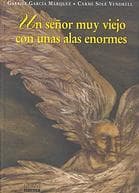
Un señor muy viejo con unas alas enormes
What’s inside...
Un señor muy viejo con unas alas enormes, a short story by Gabriel García Márquez, tells the tale of Pelayo and Elisenda, a couple who find an old man with enormous wings in their backyard after a storm. Believed to be an angel, the man is caged and becomes a spectacle for onlookers. Despite his poor condition and inability to communicate, visitors from far and wide come to witness the 'angel', seeking miracles. The couple profits from the situation, but the novelty eventually fades. The story explores themes of human nature, faith, and the exploitation of the extraordinary. As time passes, the old man recovers and, one day, flies away, leaving the couple with their changed lives.
Age
7-9
Length
28 pages
Text complexity
Character compass
The Old Man With Enormous Wings
Pelayo
Elisenda
The Angel
Father Gonzaga
Discussion points
How do you think the old man with enormous wings felt when he arrived in the village?
What would you do if you found someone with wings? Would you help them or be afraid of them?
Why do you think the villagers treated the old man the way they did?
What does this story teach us about kindness and understanding towards others who are different?
Can you think of a time when you felt misunderstood by others? How did that make you feel?
Tip: Role play these questions
Start the conversation with a gentle tone and an open mind to make your child feel comfortable sharing their thoughts.
Encourage your child to imagine themselves in the story, asking how they would feel and react in similar situations to deepen empathy and understanding.
Highlight the contrasts in human behavior shown in the book, discussing the potential reasons behind each character’s actions and the consequences.
Use follow-up questions to probe deeper into your child’s thoughts and feelings about the themes, helping them to connect the story to their own experiences.
Praise your child for their insights and encourage them to think about how the story’s lessons might apply in their own life.
Key lessons
Example Lesson: Empathy and Understanding
Explanation: In the story, the old man with enormous wings evokes different reactions from the people in the village, reflecting varying levels of understanding and kindness towards someone who is different. This mirrors the importance of accepting and empathizing with others regardless of appearances or differences.
Real-World Application: Children can apply this lesson by engaging with peers who may seem different from them, fostering an inclusive environment at school or in playgroups.
Example Lesson: The consequences of exploitation
Explanation: The townspeople's choice to capitalize on the old man's unique characteristics for profit illustrates the detrimental impacts of exploiting others for personal gain.
Real-World Application: This highlights the importance of respecting others’ dignity and rights in everyday interactions, teaching children to value people over profit.
Example Lesson: Resilience in the face of adversity
Explanation: Despite being mistreated and misunderstood, the old man maintains a quiet dignity and eventually, manages to fly away. This demonstrates resilience and the ability to overcome challenges.
Real-World Application: Children can learn to stay strong during difficult times, understanding that perseverance can lead to overcoming obstacles in life.
Example Lesson: Curiosity and the quest for knowledge
Explanation: The villagers’ initial curiosity about the old man spurs a variety of reactions and inquiries, underscoring the human drive to understand the unknown.
Real-World Application: This lesson can encourage children to seek knowledge and ask questions about the world around them, promoting a lifelong love of learning.
Example Lesson: The power of compassion
Explanation: The few individuals who show kindness towards the old man instead of fear or greed demonstrate the positive impact of compassionate acts.
Real-World Application: Children can be encouraged to act kindly and considerately, understanding that their actions can significantly affect others’ lives in positive ways.