
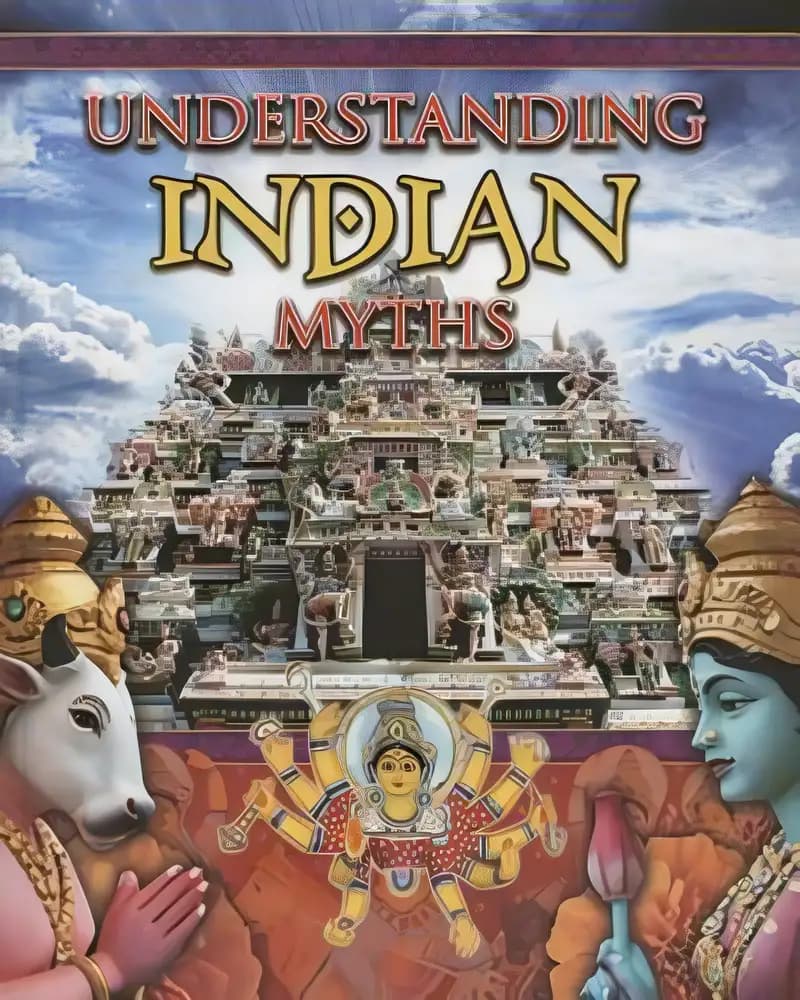
Understanding Indian Myths (Myths Understood, 5)
#5 in Myths Understood Series
on Goodreads (7)
What’s inside...
This interesting title examines the mythology and folklore of India, discussing its importance in Hinduism. It presents the greatest myths of India, drawn from sacred texts and traditions of Hinduism, Buddhism, and Jainism. It explores the roles of Indian gods and goddesses as creators, protectors, warriors, and destroyers when fighting demons. Supported by beautiful Indian artworks and full-color photography, the book helps readers understand how these ancient tales explain creation, birth, death, love, and the purpose of human life. Topics include Vishnu, Shiva, and Asuras.
Discussion points
What similarities do you notice between Indian myths and stories from other cultures we've read about?
How do you think these myths helped people understand the world around them in ancient times?
Can you think of any characters or events in this book that teach important life lessons? What are they?
Why do you think myths are an important part of every culture’s history?
How would you use the power if you were a character in one of these myths?
Tip: Role play these questions
Start the discussion with a brief overview of what myths are and their significance in various cultures.
Encourage your child to express their thoughts and ideas about the stories, affirming their interpretations and perspectives.
Compare and contrast the myths in the book with familiar stories or films to make them more relatable and engaging.
Ask follow-up questions to delve deeper into your child’s thoughts about the morals and themes within the myths.
Create a comfortable and open atmosphere that invites curiosity and exploration of the book’s content.
Key lessons
Example Lesson: Understanding Cultural Diversity
Explanation: The book delves into various Indian myths, exposing children to diverse narratives and characters intrinsic to Indian culture.
Real-World Application: Children can learn to appreciate and respect cultural differences, fostering a more inclusive mindset as they interact with peers from diverse backgrounds.
Example Lesson: The Importance of Storytelling
Explanation: Through the exploration of myths, the book highlights how stories can be used to pass down traditions, morals, and lessons through generations.
Real-World Application: Children can be encouraged to share their own stories or family histories, understanding the value of preserving and sharing cultural heritage.
Example Lesson: Moral Values
Explanation: Indian myths often contain moral lessons about virtues such as bravery, loyalty, and wisdom. The book helps children understand these concepts through engaging narratives.
Real-World Application: This teaching aids children in recognizing right from wrong and empowers them to make ethical decisions in their interactions with others.
Example Lesson: Critical Thinking
Explanation: The book encourages readers to analyze the myths and discern underlying messages and themes.
Real-World Application: Children can apply critical thinking skills not only in academic settings but also in interpreting daily situations and making informed decisions.
Example Lesson: Creativity and Imagination
Explanation: The mythical stories filled with fantastical elements can spark imagination and creativity in young minds.
Real-World Application: Engaging with mythical stories can inspire children to engage in creative pursuits such as drawing, writing, or dramatizing their own interpretations of the stories.