
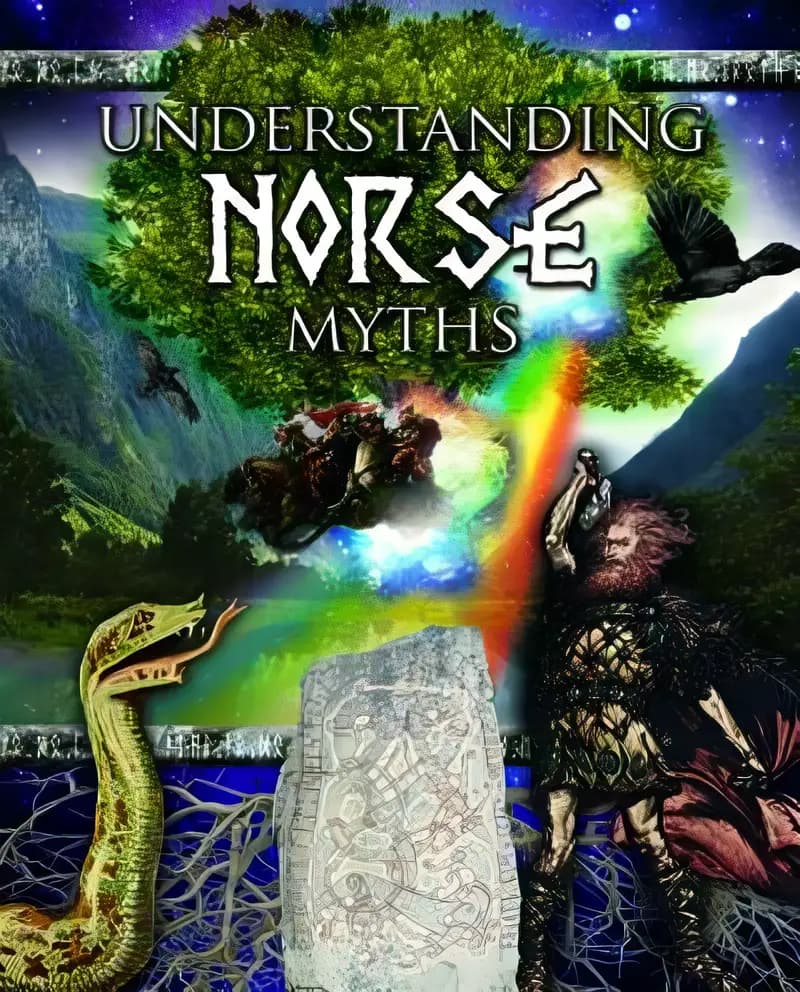
Understanding Norse Myths (Myths Understood)
#1 in Myths Understood Series
What’s inside...
Understanding Norse Myths (Myths Understood) by Brian Williams provides an in-depth exploration of Norse mythology, examining ancient tales of gods, goddesses, heroes, and monsters through primary sources such as the Poetic Edda and the Prose Edda. The book explores the cultural significance, themes, and cosmology of Norse myths, including their impact on modern culture. Readers will also learn about key topics such as Ragnarök, Beowulf, and Fenrir, and understand how Scandinavian geography influenced the mythology.
Discussion points
What do you think motivated the Norse gods in their adventures?
How do you think the world would look if it was shaped by Norse myths today?
What lessons can we learn from the conflicts and resolutions in the Norse myths?
Which Norse god do you find most interesting, and why?
How do the themes of fate and destiny play out in these stories?
Tip: Role play these questions
Use visuals from the book to help explain complex parts of the myths, making it easier for your child to grasp.
Relate the characters and their journeys to real-life scenarios or family stories to make the content more relatable.
Encourage your child to imagine alternative endings to some of the myths. This can help develop their analytical and creative thinking skills.
Draw parallels between the moral lessons in Norse myths and the values you want to instill in your child, such as bravery, wisdom, and resilience.
Key lessons
Example Lesson: The importance of courage and bravery
Explanation: Through the adventurous tales of Norse gods and heroes, children learn about the significance of being brave in the face of challenges.
Real-World Application: Kids can draw parallels to their own lives, standing up against bullies or trying new activities despite fears.
Example Lesson: Understanding the consequences of actions
Explanation: Norse myths often demonstrate how the actions of gods and mortals have consequences, emphasizing thoughtful decision-making.
Real-World Application: This teaches children to think about the outcomes of their choices, whether it's in sharing with siblings or completing school tasks.
Example Lesson: The value of teamwork
Explanation: Stories where gods work together to overcome obstacles highlight the power of cooperation and collaborative effort.
Real-World Application: Children learn the importance of working with others in group projects or in sports teams to achieve common goals.
Example Lesson: Respect for nature
Explanation: Many Norse myths include themes of nature and its forces, teaching children to respect and appreciate the natural world.
Real-World Application: This can encourage environmentally friendly practices like recycling and conserving water at home or school.
Example Lesson: Perseverance in adversity
Explanation: Characters in Norse myths often face severe trials, yet their persistence teaches resilience.
Real-World Application: Children can apply this lesson by not giving up easily, whether in learning a new skill or overcoming a personal challenge.