
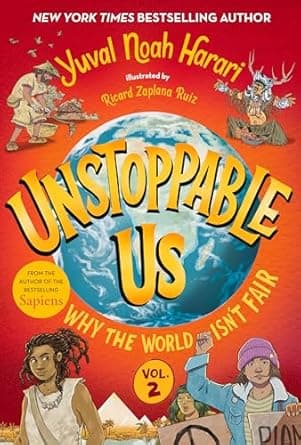
Unstoppable Us, Volume 2: Why the World Isn't Fair
#2 in Unstoppable Us Series
What’s inside...
Yuval Noah Harari’s second Unstoppable Us volume picks up where the first left off, guiding middle-grade readers through the rise of farming, cities, kingdoms, money, writing, religions, and empires. Using lively anecdotes, maps, and humorous illustrations, Harari explains how unequal societies emerged, why some groups gained power over others, and how cooperation, imagination, and sometimes sheer luck shaped our shared past. The book mixes global history with everyday examples, encouraging young readers to question why the modern world is often unequal—and how they might help build a fairer future.
Discussion points
Why did farming create both opportunities and problems?
Which ancient invention do you think changed the world most, and why?
How can stories make people cooperate—even if they’ve never met?
Do you see any unfair systems in your own community?
What small action could you take to promote fairness?
Tip: Role play these questions
Create a ‘fairness jar’: family members note unfair moments and brainstorm fixes.
Compare ancient empires’ rules with modern classroom rules to spot similarities.
Key lessons
Example Lesson: Cooperation over competition
Explanation: Historic successes often resulted from working together, not just fighting.
Real-World Application: Teamwork on school projects or sports yields better outcomes.
Example Lesson: Question unfair rules
Explanation: Empires set laws benefitting elites; progress came when people challenged them.
Real-World Application: Students can petition for fairer classroom policies.
Example Lesson: Small inventions, big impact
Explanation: Simple tools like coins transformed economies.
Real-World Application: Creative problem-solving can improve everyday life.
Example Lesson: Stories shape reality
Explanation: Shared myths built trust among strangers.
Real-World Application: Positive narratives can unite school communities.