
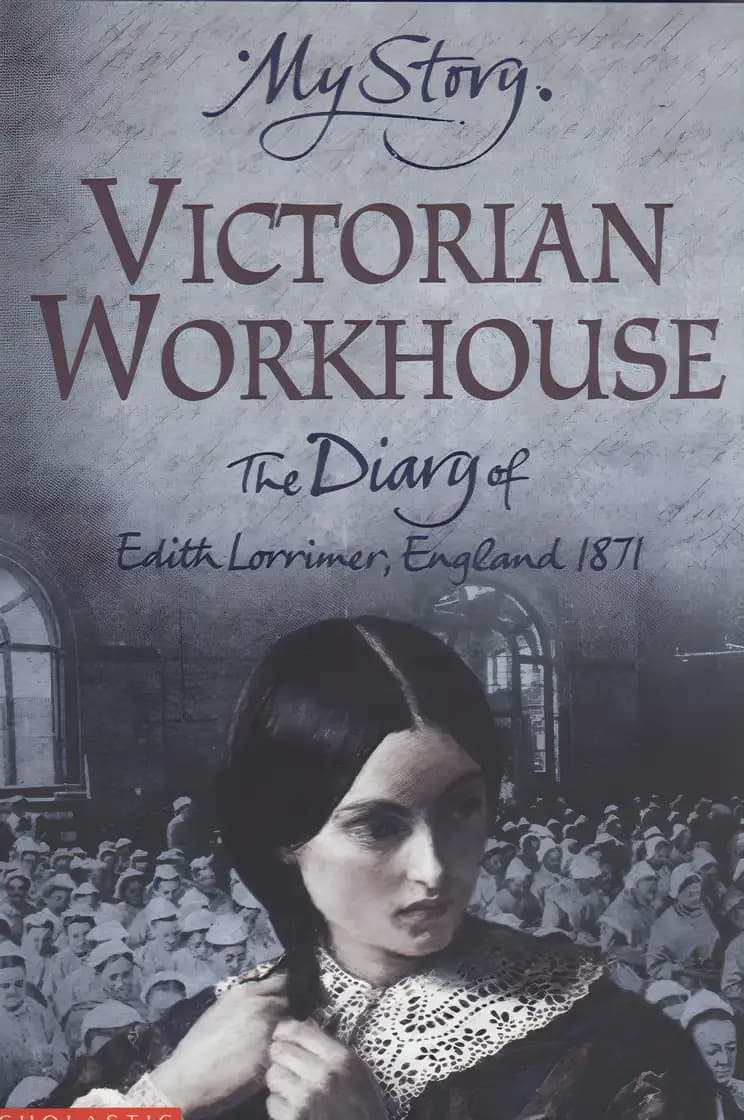
Victorian Workhouse
#2 in My Royal Story, My Story: Girls Series
on Goodreads (398)
What’s inside...
In 1871 England, Edith Lorrimer, the sheltered daughter of a wealthy widow, documents her visit to a workhouse in her diary. She describes the harsh conditions in the laundry room, where women toil over washing clothes in a steam-filled, sunless environment. Edith is particularly moved by the plight of Rosie Chubb, a troubled orphan who works at the workhouse. The encounter fills Edith with profound sadness as she reflects on the difficult lives of those less fortunate.
Discussion points
How do you think the children in the workhouse felt about their daily tasks and living conditions?
What similarities and differences can you find between your life and the lives of children in the Victorian era?
Why do you think it was important for the author to share the story of the Victorian Workhouse?
How do you think the story would change if it was set in today's world?
What did you learn about resilience and hope from the characters in the book?
Tip: Role play these questions
To foster a deeper understanding of the book's themes, focus on empathetic listening. Allow your child to fully express their thoughts and feelings about the book without interruption. Highlight the historical context of the story by comparing it to modern-day standards. This not only enhances comprehension but also critical thinking. Encourage your child to imagine alternative endings or scenarios to stimulate creative thinking. Lastly, relate discussions to personal experiences to make the conversation more relatable and meaningful.
Key lessons
Example Lesson: Empathy and Compassion
Explanation: The book vividly describes the difficult conditions faced by the characters within the Victorian Workhouse, inducing readers to feel empathy and compassion towards those less fortunate.
Real-World Application: Children can apply these feelings of empathy and compassion in their daily interactions, learning to be considerate and kind towards others regardless of their circumstances.
Example Lesson: Value of Perseverance
Explanation: Characters in the book frequently face challenges and adversities but demonstrate resilience and determination to overcome these obstacles.
Real-World Application: This lesson teaches children the importance of not giving up despite difficulties, encouraging them to persevere through their own challenges in school or personal life.
Example Lesson: Understanding History
Explanation: The historical setting of the book provides a realistic depiction of life in a Victorian Workhouse, offering insights into the past and how it shaped society.
Real-World Application: This understanding of history can help children appreciate their present circumstances and learn the importance of social progress and historical context.
Example Lesson: Social Awareness
Explanation: Through the depiction of various social classes and their interactions, the book teaches about societal structures and the implications of inequality.
Real-World Application: Children can become more aware of social dynamics and develop a sense of fairness and justice, helping them engage more thoughtfully with the world around them.