
Waking Up Wendell
What’s inside...
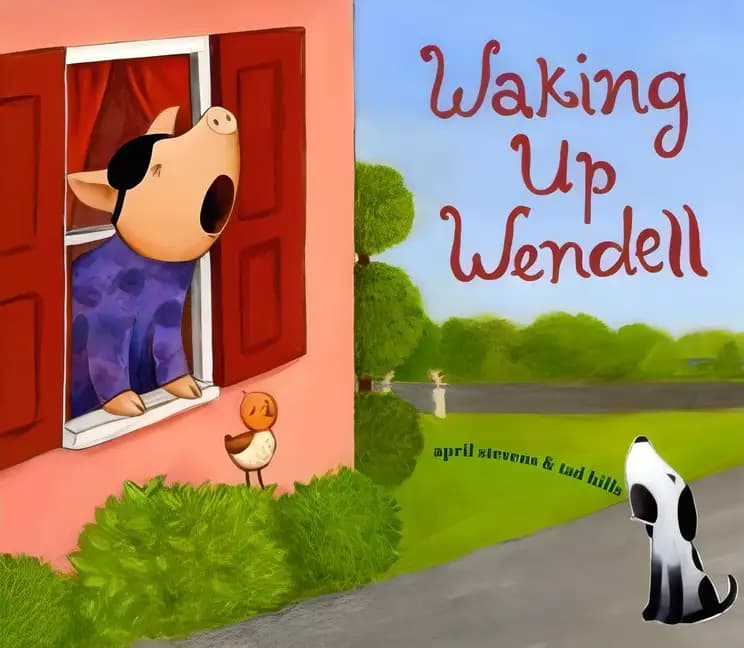
EARLY IN THE MORNING, a little bird at #1 Fish Street hops out of her nest, takes a deep breath, and begins to sing a very loud and whistley song, TWEEEEEET-TWEEEEEET-TA-TA-TA-TWEEEEEET-TWEEEEET! This starts a chain of events on the street where each resident's morning actions awaken the next, from Mr. Krudwig grumbling at #2, to Leopold the dog barking at #3, and so forth, until Lilah Hall's singing in the shower at #9 awakens the last sleeping resident, baby Wendell Willamore at #10.
Age
4-8
Length
40 pages
Text complexity
Character compass
Wendell
Discussion points
What do you think Wendell dreams about when he's sleeping?
How do all the different sounds in the book help Wendell wake up?
Why do you think everyone in the neighborhood helps to wake Wendell?
What is your favorite part of your morning routine and why?
How do you think Wendell feels when he finally wakes up?
Tip: Role play these questions
While reading, pause after each new sound that tries to wake Wendell, and ask your child to guess if it will wake him up or not.
Discuss the importance of community with your child by pointing out how everyone in the neighborhood contributes to helping Wendell wake up.
After reading, encourage your child to draw a picture of their own ideal morning wake-up scenario.
Key lessons
Example Lesson: The importance of a morning routine
Explanation: In 'Waking Up Wendell,' the narrative follows the titular character and his neighbors as they go through their unique morning routines, emphasizing the structure and rhythms of starting the day.
Real-World Application: Children can apply this lesson by establishing and following their own morning routines, which can help them feel more organized and prepared for the day ahead.
Example Lesson: Consideration for others
Explanation: The book highlights how Wendell’s loud morning activities wake up his neighbors, showcasing the impact of one's actions on others within a community.
Real-World Application: Children learn the value of being considerate towards family and friends, understanding that their actions affect others.
Example Lesson: The diversity of lifestyles
Explanation: Each character in the book has a different morning routine, illustrating the diversity of habits and lifestyles people can have.
Real-World Application: This lesson encourages children to appreciate and respect different cultures and routines that exist within their own communities.
Example Lesson: Problem-solving
Explanation: As the story progresses, Wendell and his neighbors find ways to resolve the disturbances caused by each other’s morning routines.
Real-World Application: Children learn to think critically and find solutions when conflicts arise, fostering effective problem-solving skills in real-world situations.