
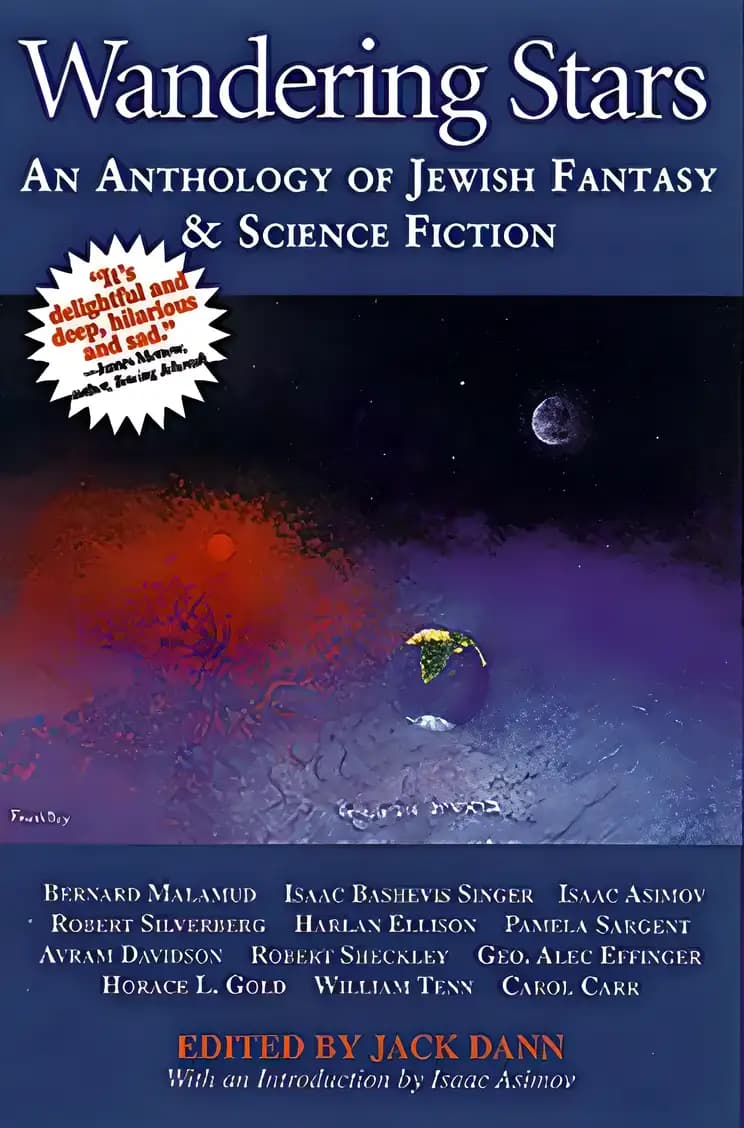
Wandering Stars: An Anthology of Jewish Fantasy and Science Fiction
illustrations by
on Goodreads (235)
What’s inside...
Wandering Stars is an anthology of Jewish fantasy and science fiction stories, featuring works from influential authors like Isaac Asimov, Harlan Ellison, and Robert Silverberg. The collection explores various themes related to identity, faith, and the human condition through a lens that admits both humor and deep reflection. Each story delves into different aspects of Jewish life and culture, asking poignant questions and offering unique perspectives. Notable entries include William Tenn's exploration of Jewish identity in the future and Avram Davidson's humorous take on the Golem legend set in modern Hollywood.
Age
16-19
Length
252 pages
Text complexity
Character compass
Schwartz
Harry Cohen
Discussion points
What similarities and differences do you notice between the various stories in the anthology?
How do the characters’ journeys help them understand their identity or heritage?
Which story resonated with you the most and why?
How do you think combining elements of fantasy and science fiction with Jewish themes affects the stories?
Tip: Role play these questions
Start by sharing your own impressions of a story before asking your child about theirs. This can make the conversation feel more like an exchange of ideas.
Encourage your child to think about how the characters’ backgrounds and experiences shape their actions and decisions, fostering a deeper understanding of cultural diversity.
Ask your child to draw or write about their favorite scene or character. This can help them express their thoughts and feelings about the story more concretely.
Link discussions to real-life scenarios or current events when appropriate, to help your child make connections between the stories and the world around them.
Key lessons
Example Lesson: Embracing diversity
Explanation: The anthology features diverse narratives rooted in Jewish culture and mythology, showcasing a variety of perspectives and experiences.
Real-World Application: Children can learn to appreciate and respect different cultures and traditions, fostering inclusivity in their interactions with others.
Example Lesson: Questioning and exploring
Explanation: The stories encourage readers to think deeply about existential and philosophical questions, stimulating intellectual curiosity.
Real-World Application: This promotes critical thinking and encourages children to explore and question the world around them, enhancing their problem-solving skills and understanding.
Example Lesson: Moral integrity
Explanation: Characters in various stories often face ethical dilemmas, reflecting on their choices and the impact of their actions.
Real-World Application: Readers learn about the importance of maintaining ethical standards and making morally sound decisions, which is applicable in everyday interactions and personal growth.
Example Lesson: Resilience through adversity
Explanation: Many narratives depict characters overcoming challenges or adversity, often drawing strength from their cultural heritage.
Real-World Application: Children learn the value of perseverance and resilience in overcoming obstacles, inspired by the characters' courage and determination.
Example Lesson: Importance of storytelling
Explanation: The book celebrates the rich tradition of storytelling in Jewish culture, conveying its power to educate, entertain, and preserve heritage.
Real-World Application: Encourages children to appreciate and engage in storytelling, understanding its role in cultural expression and personal development.