
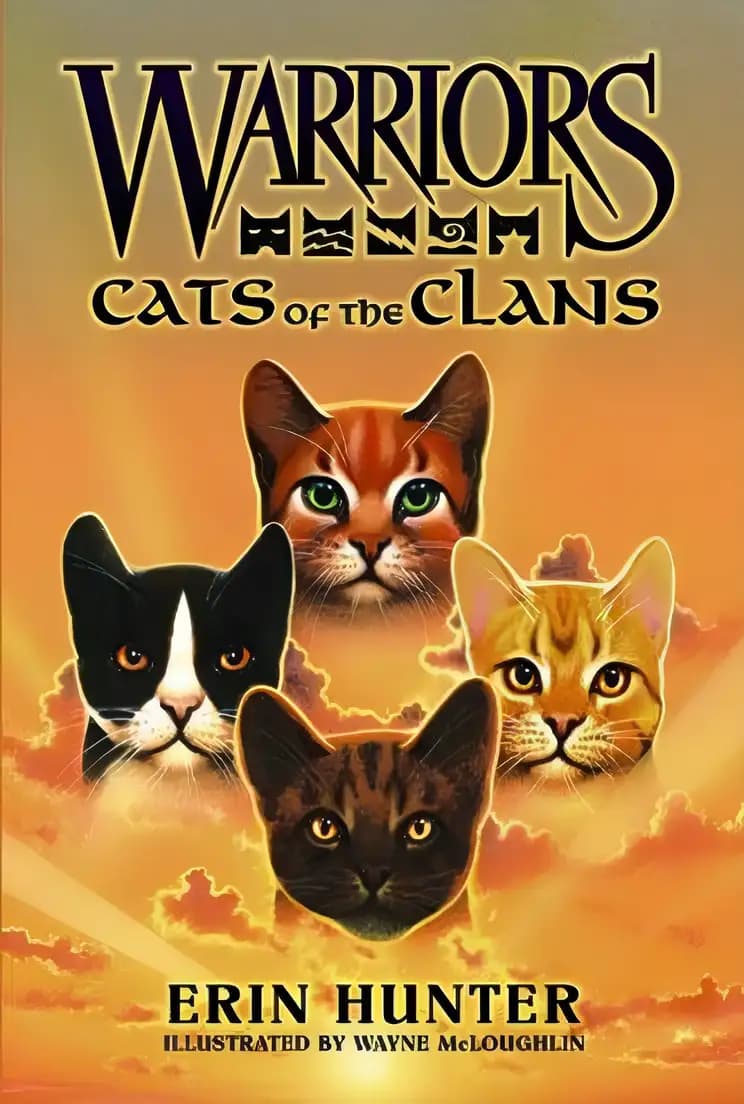
Warriors: Cats of the Clans
#2 in Warriors: Field Guide Series
What’s inside...
Warriors: Cats of the Clans is a field guide that provides profiles on the various cat characters from the Warrior Cats series. It offers insight into the personalities, affiliations, and histories of each cat, along with rich illustrations. This guide is an essential volume for fans of the series, offering a deeper understanding of the Warriors universe. Hear the stories of the great warriors as they've never been told before! Cats of the Clans is chock-full of visual treats and captivating details, including full-color illustrations and in-depth biographies of important cats—from fierce Clan leaders to wise medicine cats to the most mischievous kits, as well as loners, rogues, and kittypets. This collectible guide is a great introduction to the Warriors series for new fans and is indispensable for those already hooked!
Character compass
Firestar
Sandstorm
Brambleclaw
Graystripe
Squirrelflight
Bluestar
Tigerstar
Discussion points
Which Clan do you think you would belong to and why?
What qualities do you admire in the leaders of the Clans?
How do the cats resolve conflicts between the Clans? What can we learn from their methods?
What role does loyalty play in the story? Can you think of a time when you had to be loyal to a friend or a family member?
Tip: Role play these questions
Encourage your child to compare their own experiences with those of the characters, fostering empathy and deeper understanding.
Discuss the decision-making process of the Clan leaders. It’s a great way to explore the concepts of leadership and responsibility with your child.
Create parallels between the events in the book and real-life situations to help your child connect with the story on a personal level.
Use examples from the book to discuss the importance of teamwork and how working together can lead to success.
Key lessons
Example Lesson: Leadership and Responsibility
Explanation: In 'Warriors: Cats of the Clans,' characters like Firestar and Bluestar demonstrate leadership by making tough decisions for the benefit of their clans. They show young readers how leaders must sometimes prioritize others' needs over their own desires.
Real-World Application: Children can apply these ideas by taking initiative in group projects at school or being responsible for chores at home, understanding that their actions impact others.
Example Lesson: Teamwork and Collaboration
Explanation: Throughout the book, the clans must work together to survive and prosper. This highlights the importance of collaboration and supporting one another to achieve common goals.
Real-World Application: This lesson encourages children to engage collaboratively in sports teams, group studies, and community activities, promoting a spirit of unity and cooperation.
Example Lesson: Dealing with Loss and Grief
Explanation: Characters in the book deal with the loss of clan members, which addresses the themes of grief and healing. It's an important aspect of the story that reflects the process of dealing with emotional pain.
Real-World Application: Children learn that it is okay to feel sad and that talking about their feelings, and sharing their grief with family or friends can help them heal.
Example Lesson: Courage and Bravery
Explanation: The cats often face dangerous situations that require bravery, such as defending their territory. These moments teach young readers about the courage needed to face fears and stand up for what is right.
Real-World Application: Kids can relate this to facing their own fears like trying out for a sports team, standing up to a bully, or defending a peer, understanding that bravery is not the absence of fear but the ability to act despite it.
Example Lesson: Respect for Nature and Environment
Explanation: The cats’ deep connection with their territory and nature is a constant theme in 'Warriors: Cats of the Clans'. It encourages a respect for the environment and the importance of living in harmony with it.
Real-World Application: This can inspire children to participate in environmental conservation efforts such as recycling, planting trees, or cleaning up local parks, teaching them the importance of protecting and respecting nature.