
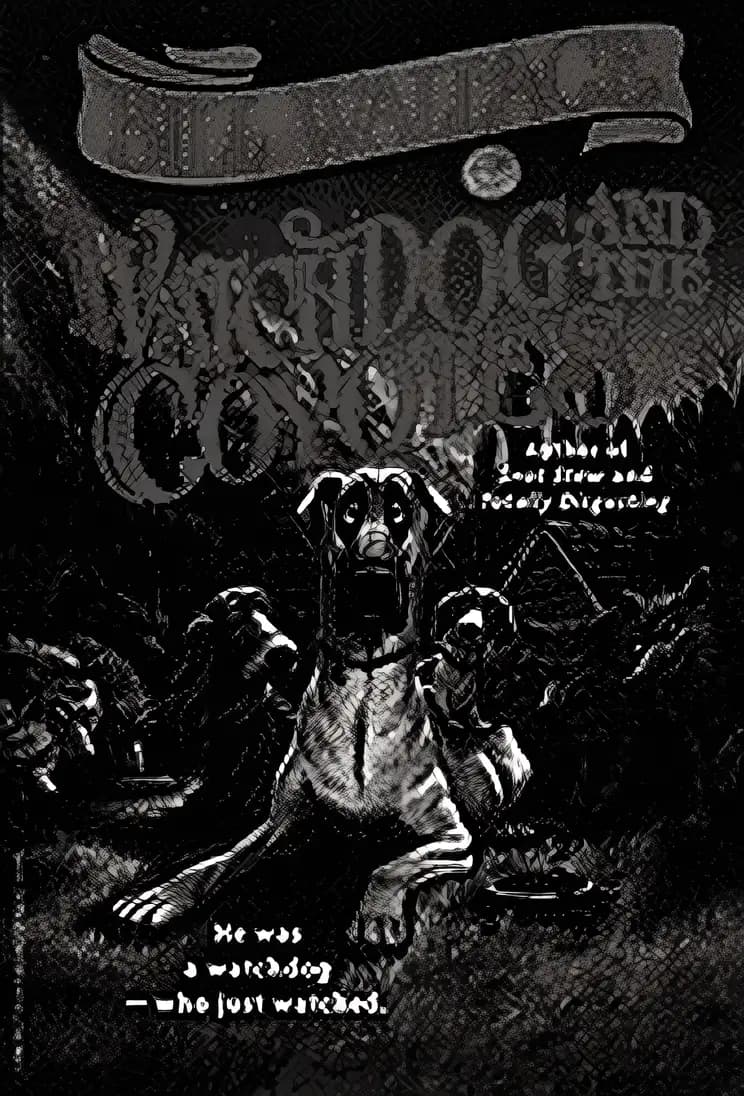
Watchdog and the Coyotes
What’s inside...
Sweetie, a Great Dane, has already been through three masters due to his nipping behavior, and faces being sent to the pound if he acts out again. He encounters a burglar and coyotes but restrains himself from barking or biting. The coyotes threaten to return and eat his food, his friends Red and Poky, and Sweetie himself. Sweetie must figure out how to protect everyone without resorting to aggression and outsmart the twelve hungry coyotes to keep them all safe.
Age
8-12
Length
104 pages
Text complexity
Discussion points
How do you think Watchdog felt when he met the coyotes?
What are some ways Watchdog tried to protect the other animals?
Why do you think the coyotes behaved the way they did?
Can you think of a time when you had to be brave like Watchdog?
What do you think is the main message of the story?
Tip: Role play these questions
Use expressive reading to convey the emotions of Watchdog and the coyotes, enhancing your child's understanding of the characters' feelings.
Pause at key moments in the story to ask your child what they think might happen next, fostering predictive skills.
Encourage your child to relate the story to their own experiences, which can help them connect personally with the themes and characters.
Discuss the outcomes of the story and what different choices the characters could have made, promoting critical thinking and moral reasoning.
Key lessons
Example Lesson: The importance of teamwork
Explanation: In the story, Watchdog and the Coyotes, the protagonist, Watchdog, learns to collaborate with others to protect the farm, demonstrating that teamwork can achieve goals that might be impossible alone.
Real-World Application: Children can apply this lesson by working together with their peers in school projects or sports, learning to value each other’s strengths and contributions.
Example Lesson: Courage and facing fears
Explanation: Watchdog faces his fears by confronting the coyotes, teaching readers that bravery can lead to positive outcomes even in intimidating situations.
Real-World Application: This can encourage children to face their own fears, such as trying new activities or standing up for themselves and others in difficult situations.
Example Lesson: Problem-solving skills
Explanation: Throughout the book, Watchdog encounters various challenges and learns to think critically and creatively to solve them, highlighting the importance of problem-solving skills.
Real-World Application: Children learn to use their thinking skills to navigate challenges in their daily lives, such as resolving conflicts with friends or finding solutions to obstacles in their learning.
Example Lesson: Empathy and understanding
Explanation: Watchdog learns to understand the coyotes rather than just fearing them, showcasing how empathy can lead to better outcomes.
Real-World Application: This teaches children to empathize with others and view situations from different perspectives, leading to more harmonious interactions in the playground and at home.