
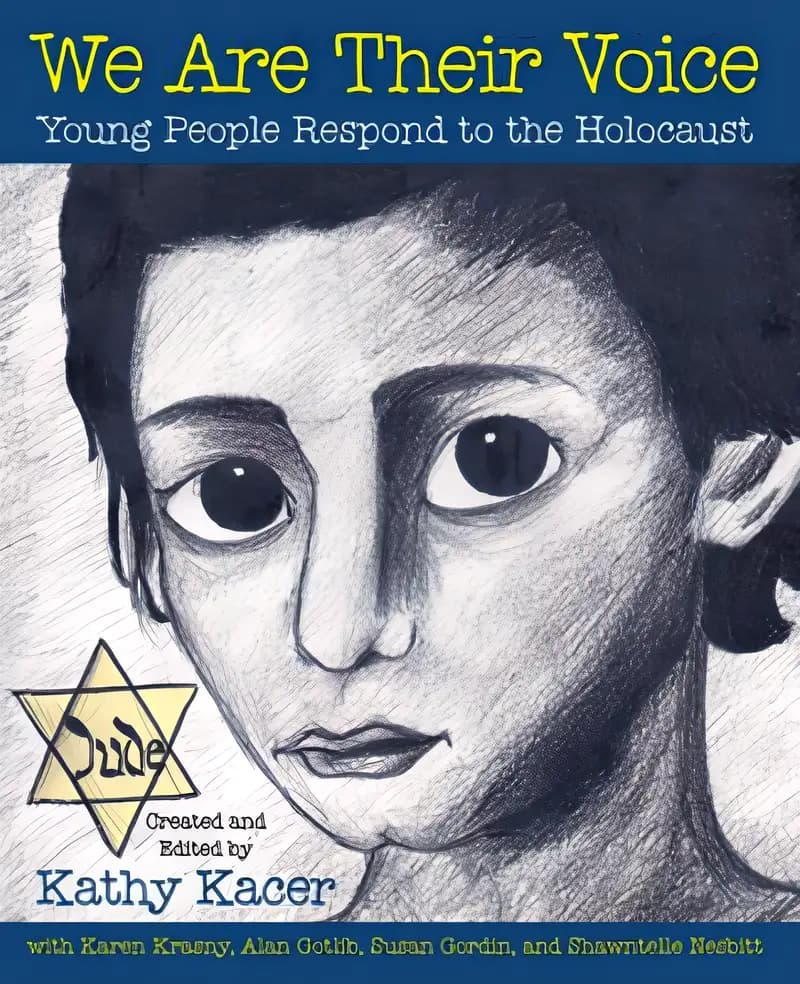
We Are Their Voice: Young People Respond to the Holocaust (The Holocaust Remembrance Series for Young Readers Book 13)
#13 of 18 in The Holocaust Remembrance Series For Young Readers
on Goodreads (11)
What’s inside...
A writing project across North America, Italy, and Australia asked young people to share their ideas about the Holocaust. Some students wrote short stories, others discussed books, interviewed survivors, or created works of art. The project revealed that young people can make a meaningful connection to the Holocaust, and their contributions give hope for a more peaceful and tolerant future.
Discussion points
What emotions did you feel while reading the stories of young people during the Holocaust?
Why do you think it is important to learn about the experiences of others during historical events like the Holocaust?
How can we honor the memories of those who suffered during the Holocaust today?
What can we learn from the bravery and the voices of the young people featured in this book?
How do you think hearing these stories can impact our actions towards others in our daily lives?
Tip: Role play these questions
Start the conversation by sharing your own feelings and thoughts about the Holocaust to create an open, respectful dialogue.
Encourage your child to express their feelings and thoughts without interruption, showing empathy and understanding to their responses.
Highlight the importance of history and learning from it, discussing how knowledge can lead to better decisions and actions in the future.
Connect the themes of the book to current events or situations when possible, to make the discussion relevant and impactful.
After the discussion, consider engaging in a reflective activity together, such as drawing, writing a poem, or visiting a historical museum virtually or in person to deepen the understanding and connection to the topic.
Key lessons
Example Lesson: Empathy and Compassion
Explanation: Through personal narratives and reflections by young people during the Holocaust, readers gain a deep emotional understanding of the struggles faced by individuals.
Real-World Application: Children learn to put themselves in others' shoes, fostering empathy towards classmates and friends who might be different from them or facing hardships.
Example Lesson: Historical Awareness
Explanation: The book provides historical insights about the Holocaust, narrated by young voices, enhancing children’s understanding of significant world events.
Real-World Application: This awareness can help children appreciate the importance of history in shaping societies and the necessity of tolerance and peace.
Example Lesson: The Power of Voice and Advocacy
Explanation: The narratives show how young people’s voices were crucial in documenting and responding to their experiences during the Holocaust.
Real-World Application: Children can learn to use their own voices to stand up against injustice and advocate for what they believe is right in their communities.
Example Lesson: Resilience in Adversity
Explanation: Stories in the book highlight the resilience of individuals and communities during the challenges of the Holocaust.
Real-World Application: This can inspire children to develop resilience in the face of their own challenges, understanding that overcoming obstacles is possible.