
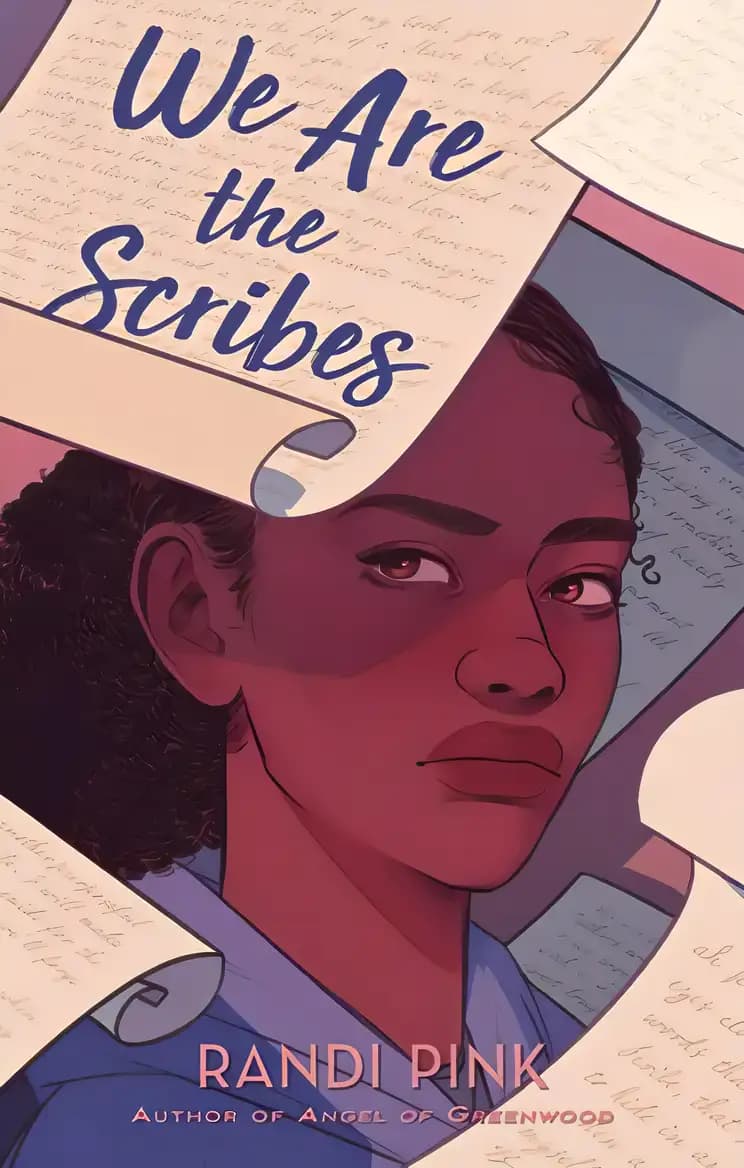
We Are the Scribes
on Goodreads (207)
What’s inside...
A young adult novel by Randi Pink follows teenage activist Ruth Fitz, who comes from a family deeply involved in activism. Her life changes when she starts receiving letters from the ghost of Harriet Jacobs, an enslaved woman and author from 1861. The story blends Ruth's modern-day struggles with historical insights, as she learns from the past to find her place in the fight for social change amid family tragedy and personal growth.
Age
13-18
Length
304 pages
Text complexity
Character compass
Ruth Fitz
Discussion points
What do you think being a 'scribe' means in the context of this story?
How do the characters in the book show courage and creativity?
How would you help the characters in the story if you were there?
What did you learn about the importance of storytelling from this book?
Can you imagine a different ending to the story? What would it be?
Tip: Role play these questions
Before reading, give your child some background on what a scribe does. This helps set the context for the story.
Pause at climactic points in the story to ask your child to predict what might happen next.
Relate the story’s themes to your child’s experiences, asking them if they've ever faced similar situations.
After completing the book, encourage your child to draw or write a scene that represents their favorite part of the story.
Discuss the book's illustrations and ask your child how they think the pictures help tell the story.
Key lessons
Example Lesson: The power of teamwork
Explanation: Throughout the narrative, characters collaborate to overcome obstacles, demonstrating that working together can lead to success.
Real-World Application: Children can apply this lesson by engaging in group activities at school or with friends, learning to value each other's input and strengths.
Example Lesson: The importance of perseverance
Explanation: The characters in the book face various challenges but show resilience and determination, teaching that persistence is key to accomplishing goals.
Real-World Application: This lesson encourages children to keep trying in the face of difficulties, whether it be in completing homework, learning a new skill, or resolving conflicts.
Example Lesson: Respect for diversity
Explanation: The story includes a diverse cast of characters, each with unique perspectives and talents, highlighting the strength found in differences.
Real-World Application: Children learn to appreciate and respect individual differences among their peers, promoting inclusivity in their daily interactions.
Example Lesson: Creativity and imagination
Explanation: The characters use their imagination to solve problems creatively, which illustrates the importance of thinking outside the box.
Real-World Application: This can inspire children to use their creativity in various aspects of life, such as in their play, problem-solving, and expressing themselves artistically.