
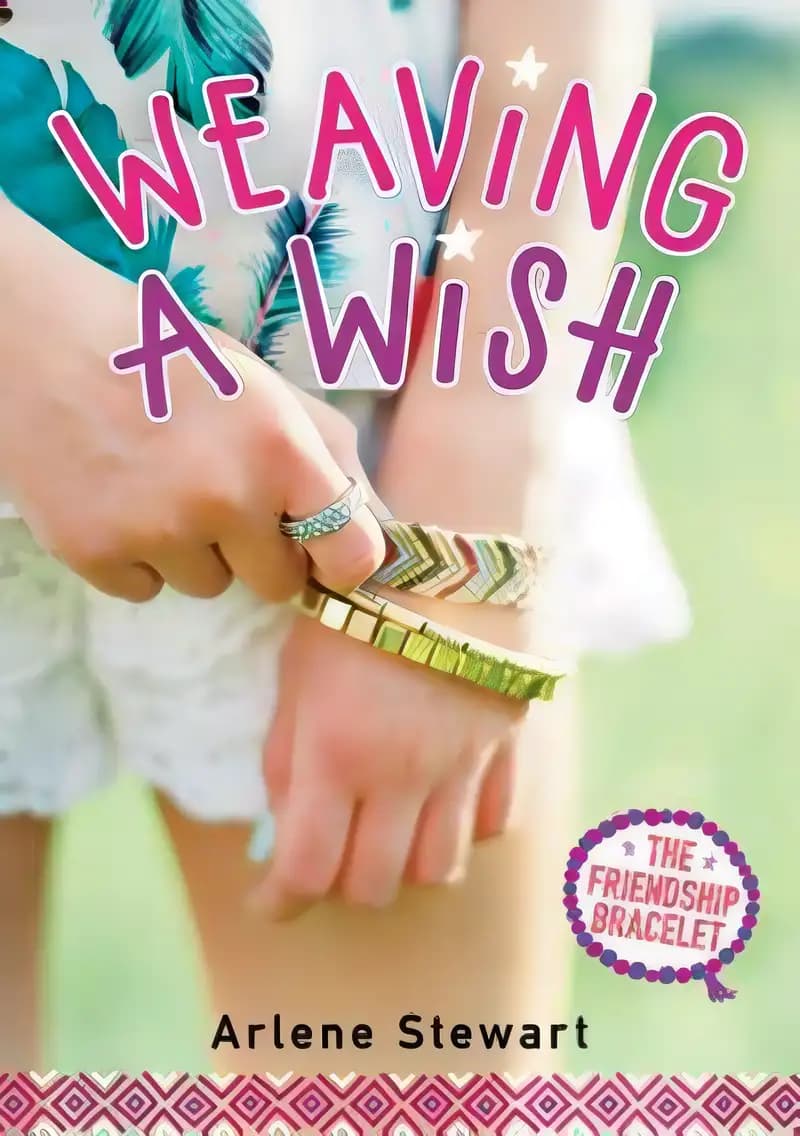
Weaving a Wish (The Friendship Bracelet, 2)
#2 in The Friendship Bracelet Series
on Goodreads (39)
What’s inside...
The members of Threads have had an awesome summer making friendship bracelets with the patients at a local hospital. But with school starting, they are worried they won't have time to continue their volunteer work. And with Olivia out of commission with a broken finger, Ethan dealing with friend drama and Mu Mu struggling to accept his parents' separation, the group seems like it may unravel. How can the members untangle their problems?
Character compass
Lily
Hannah
Abby
Discussion points
What did you think about Lily's approach to solving her problem? How would you handle a similar situation?
How do the friendship bracelets in the story symbolize the characters' relationships? What do your friendships mean to you?
How did the characters change from the beginning to the end of the story? Did any character's journey stand out to you?
What role does creativity play in 'Weaving a Wish'? How does being creative help you in your daily life?
Tip: Role play these questions
Encourage your child to relate the story to their own life by asking them to share personal experiences that connect with the book's themes.
Foster empathy by discussing how different characters might have felt during key events.
Highlight the importance of problem-solving and creativity, discussing how these skills can be applied in real-life scenarios.
Facilitate a craft activity where your child can create their own friendship bracelet, using it as a tool to further discuss the theme of friendship within the book.
Key lessons
Example Lesson: The importance of teamwork
Explanation: In 'Weaving a Wish', the characters collaborate to create friendship bracelets, showcasing how working together can help achieve a common goal.
Real-World Application: Children can apply this lesson by participating in group activities at school or in sports, learning to cooperate and value each team member's contribution.
Example Lesson: Creativity and self-expression
Explanation: The book highlights the characters' use of different colors and patterns in their bracelets, demonstrating personal expression through creativity.
Real-World Application: This encourages children to explore their own creative outlets whether it be through art, music, or writing, helping them express their individuality.
Example Lesson: The power of giving
Explanation: Characters in the story make bracelets as gifts, emphasizing the joy and value in creating something for others as an act of kindness.
Real-World Application: This lesson can be mirrored in real life when children make gifts or cards for family and friends, teaching them the importance of thoughtfulness and generosity.
Example Lesson: Resilience in the face of challenges
Explanation: As the characters encounter difficulties in making their bracelets, they learn to persevere and not give up.
Real-World Application: Children learn that encountering obstacles is a natural part of any process and that persistence and resilience are key to overcoming them.
Example Lesson: The value of friendship
Explanation: Through the shared activity of making bracelets, the characters strengthen their bonds, illustrating the importance of supportive friendships.
Real-World Application: This can encourage children to nurture their own friendships through shared interests and activities, understanding the role of give-and-take in healthy relationships.