
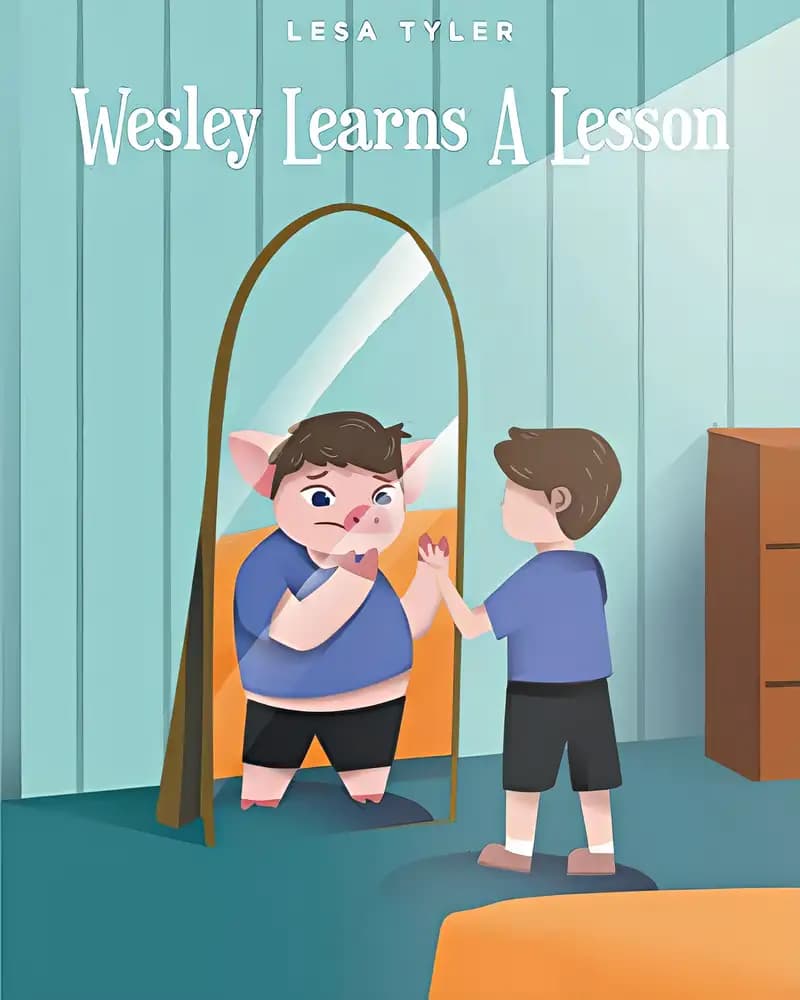
Wesley Learns A Lesson
What’s inside...
Wesley can sometimes be a ball hog on the playground with his friends. He doesn't realize this until one day he starts growing hog parts. Will Wesley be a hog forever, or will he learn a valuable lesson on how to be a good friend and share?
Age
5-9
Length
34 pages
Text complexity
Discussion points
What do you think Wesley learned in this story?
How did Wesley feel when he faced a challenge, and how did he overcome it?
Can you think of a time when you learned a similar lesson to Wesley? What happened?
Why do you think it's important to keep trying even when things are difficult?
How did Wesley's friends and family help him in the story?
Tip: Role play these questions
Encourage your child to relate the story to their own experiences. This helps deepen their understanding of the book’s themes.
Ask your child to describe the emotions of the characters at different points in the story, promoting empathy and emotional literacy.
Discuss the outcomes of Wesley's decisions and actions, guiding your child to consider the consequences of choices.
Use examples from the book to talk about perseverance and the importance of learning from mistakes.
After reading, let your child draw a scene from the book that they found interesting or important, and discuss why they chose it.
Key lessons
Example Lesson: Responsibility
Explanation: Throughout 'Wesley Learns A Lesson,' Wesley takes on tasks that teach him the importance of being responsible. He learns to manage his time and resources effectively, seeing the value of commitment.
Real-World Application: Children can apply this lesson by taking care of their belongings, completing homework on time, and helping out with chores at home.
Example Lesson: Empathy
Explanation: Wesley interacts with friends who face challenges, teaching him to understand and share the feelings of others. This emotional growth enhances his relationships and decision-making.
Real-World Application: Children can demonstrate empathy by being considerate of their peers' feelings and viewpoints, and offering support where needed.
Example Lesson: Perseverance
Explanation: Faced with difficulties, Wesley persists through trials and errors. This narrative arc showcases the importance of continuing efforts despite obstacles.
Real-World Application: Children learn to keep trying through setbacks in school projects or sports, understanding that persistence is key to achieving goals.
Example Lesson: Honesty
Explanation: When Wesley makes mistakes, he learns the importance of honesty by telling the truth. This helps him maintain trust with his peers and adults.
Real-World Application: Children are encouraged to be truthful in their dealings with friends and family, reinforcing trust and building strong relationships.