
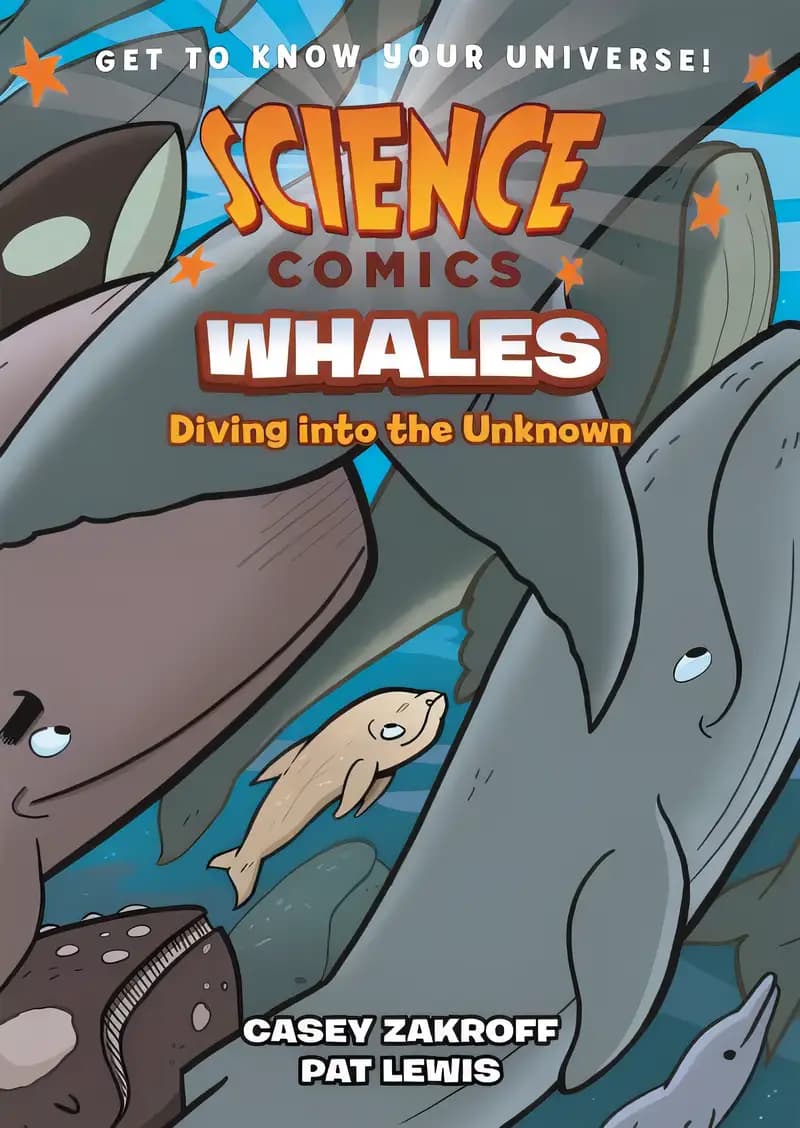
Whales: diving into the unknown
Science Comics Series
What’s inside...
Zip, an enthusiastic beaked whale, starts an undersea podcast to explore and share the marvels of whale pods. Traveling across the global ocean, he interviews various species of whales and dolphins, delving into their behaviors, habitats, and interactions with the human world. This volume of 'Science Comics: Whales' is part of a nonfiction graphic novel series, offering a comprehensive introduction to topics like dinosaurs, the solar system, and more, suitable for all ages.
Series reading
Non-Sequential
Age
9-13
Length
128 pages
Text complexity
Discussion points
What do you think it feels like to be a whale swimming in the ocean?
Why do whales need to come up to the surface to breathe?
How do you think the whales communicate with each other?
What can we do to help protect the whales and their habitat?
How do you think the ocean is different from the world we live in on land?
Tip: Role play these questions
Encourage your child to imagine the vastness of the ocean and the life of whales through creative questions. Validate their thoughts and feelings about the underwater world. Connect their answers to the information presented in the book to deepen understanding. Use a soft and curious tone to make the discussion enjoyable and engaging. Highlight the importance of marine conservation and the role whales play in the ecosystem to foster empathy and responsible behavior.
Key lessons
Example Lesson: Curiosity and Exploration
Explanation: The book follows the journey of a young whale and its pod as they navigate the vast ocean, encountering various challenges and wonders. This narrative encourages children to be curious about the natural world and to explore new things.
Real-World Application: Children can apply this lesson by asking questions, exploring their surroundings, and trying out new activities to learn and grow.
Example Lesson: Importance of Conservation
Explanation: As the whales face threats like pollution and fishing nets, the book teaches the importance of protecting marine life and the environment.
Real-World Application: This lesson can inspire children to participate in environmental protection activities, such as recycling, conserving water, and joining clean-up drives.
Example Lesson: Resilience in Adversity
Explanation: The protagonist whale demonstrates resilience by navigating through various obstacles, showcasing the strength to overcome difficulties.
Real-World Application: Children learn to persevere through their own challenges, whether it be solving a difficult puzzle, learning a new skill, or dealing with social situations at school.
Example Lesson: Teamwork and Collaboration
Explanation: The whale pod collaborates to tackle challenges, emphasizing teamwork. This highlights how working together can achieve greater results than working alone.
Real-World Application: This lesson can be incorporated into a child's life by encouraging them to participate in group activities and teaching them how cooperation can lead to success.
Example Lesson: Empathy and Understanding
Explanation: Throughout the story, interactions between the whales and other ocean creatures teach empathy and understanding towards different species.
Real-World Application: Children can learn to apply empathy in their interactions with peers and animals, fostering a kind and understanding attitude towards others.