
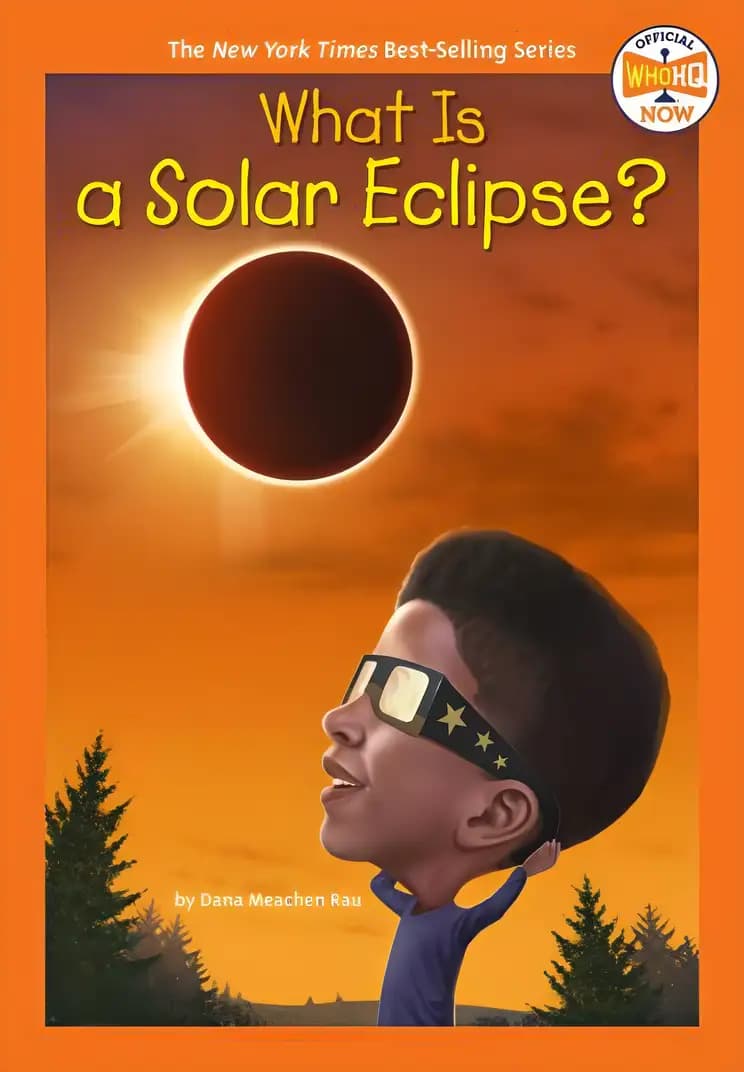
What Is a Solar Eclipse? (Who HQ Now)
Who Was . . . ? Series, Who HQ Now
What’s inside...
Learn about the phenomenon of a solar eclipse just in time for the Great American Eclipse on April 8, 2024. This book from the Who HQ Now series explores how to safely observe solar eclipses, the duration of eclipses, and why they cause a blackout during the day. It also delves into the effects of solar eclipses on the energy in our atmosphere and provides the latest eclipse information for young space enthusiasts curious about the moon, the sun, and our earth.
Series reading
Non-Sequential
Age
8-12
Length
56 pages
Text complexity
Discussion points
What do you think causes a solar eclipse to happen?
Can you describe how you imagine the view of a solar eclipse from space?
Why do you think it's important for people to learn about solar eclipses?
How do you feel when you think about the phenomenon like a solar eclipse occurring in nature?
What are some safety measures we should take while observing a solar eclipse?
Tip: Role play these questions
Encourage your child to express their thoughts and imaginations about solar eclipses with drawings or stories.
Use simple analogies or household items to demonstrate how a solar eclipse occurs, making the scientific concept more accessible.
Discuss the cultural and historical significance of solar eclipses to broaden the conversation beyond science.
Watch a video of a solar eclipse together after reading the book to reinforce learning through visual aids.
Encourage questions and let your child lead the conversation to gauge their understanding and curiosity levels.
Key lessons
Example Lesson: Understanding natural phenomena
Explanation: The book explains the scientific concept of a solar eclipse in simple terms that children can understand.
Real-World Application: This knowledge helps children grasp basic astronomy and can spark an interest in science, leading to more questions and discoveries about the world around them.
Example Lesson: Curiosity and learning
Explanation: The story encourages children to ask questions and learn more about how and why solar eclipses happen.
Real-World Application: Fostering curiosity helps children develop critical thinking skills and a love for learning that can be applied in their academic journey and beyond.
Example Lesson: Safety awareness
Explanation: It highlights the importance of viewing a solar eclipse safely, showing the necessary precautions to take.
Real-World Application: Children learn the importance of safety measures and how to apply them in different scenarios, including looking after their own well-being during unusual or exciting events.