
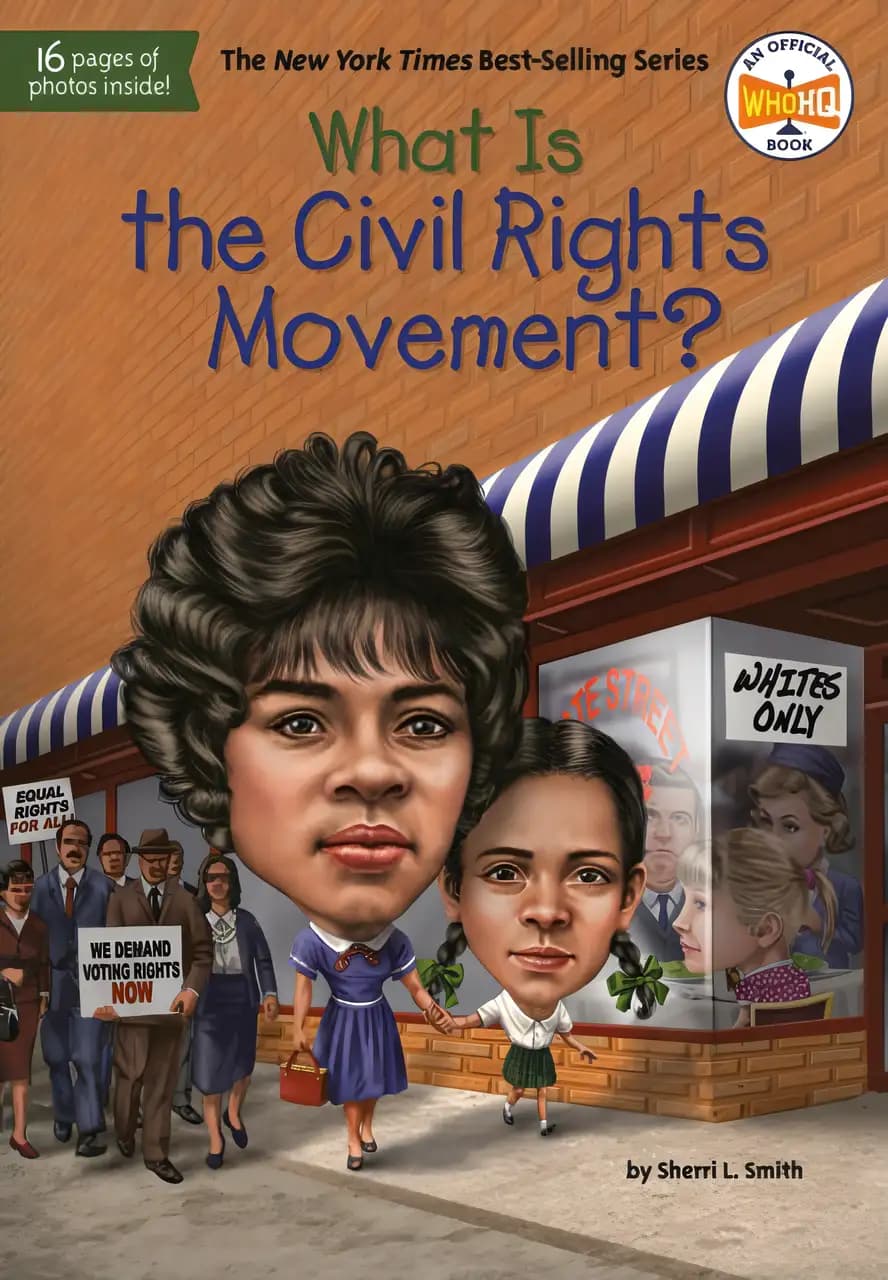
What Is the Civil Rights Movement?
What was...? Series
What’s inside...
Relive the moments when African Americans fought for equal rights, and made history. Even though slavery had ended in the 1860s, African Americans were still suffering under the weight of segregation a hundred years later. They couldn't go to the same schools, eat at the same restaurants, or even use the same bathrooms as white people. But by the 1950s, black people refused to remain second-class citizens and were willing to risk their lives to make a change. Author Sherri L. Smith brings to life momentous events through the words and stories of people who were on the frontlines of the civil rights movement of the 1950s and 1960s. This book also features fun black-and-white illustrations and engaging 16-page photo insert that readers have come to love about the What Was? series!
Series reading
Non-Sequential
Age
8-12
Length
112 pages
Text complexity
Discussion points
What do you think life was like for kids your age during the Civil Rights Movement?
Why do you think people fought for civil rights, and what methods did they use to protest?
How do you think the Civil Rights Movement changed America?
Can you think of a time when you stood up for something you believed in? How did it make you feel?
What are some ways we can continue to work for equality today?
Tip: Role play these questions
Encourage your child to express their feelings and thoughts as they relate to the stories and historical events discussed in the book.
Relate the struggles and achievements of the Civil Rights Movement to current events and situations in your child’s life where they may see or experience inequalities.
Highlight the importance of understanding history to appreciate the rights and freedoms they enjoy today, and how they can contribute to a more just society.
Use additional resources like documentaries, museums, and online articles to broaden the conversation and provide a more in-depth understanding of the topic.
Praise your child's insights and encourage them to ask questions and seek more knowledge about social justice and civil rights.
Key lessons
Example Lesson: Equality and justice
Explanation: The book details the diverse array of individuals who fought for civil rights, emphasizing the importance of equality and justice throughout the movement.
Real-World Application: Children can apply this by treating everyone equally, regardless of their background or differences, fostering a more inclusive environment at school and in their community.
Example Lesson: Courage in adversity
Explanation: Through the stories of civil rights activists facing immense challenges, the book showcases the courage needed to stand up for one's rights and beliefs.
Real-World Application: Kids can learn to face their own challenges boldly, whether it’s standing up against bullying or speaking out about what they believe in.
Example Lesson: Importance of teamwork
Explanation: The book highlights how collaborative efforts were crucial in the civil rights movement, showing that teamwork can lead to monumental changes.
Real-World Application: In real life, this encourages children to work cooperatively with others to achieve common goals, be it in group projects or community services.
Example Lesson: Resilience
Explanation: Characters in the book continually push forward despite setbacks, teaching children the power of resilience.
Real-World Application: Children can emulate this resilience by not giving up when facing difficulties in their studies, hobbies, or personal goals.