
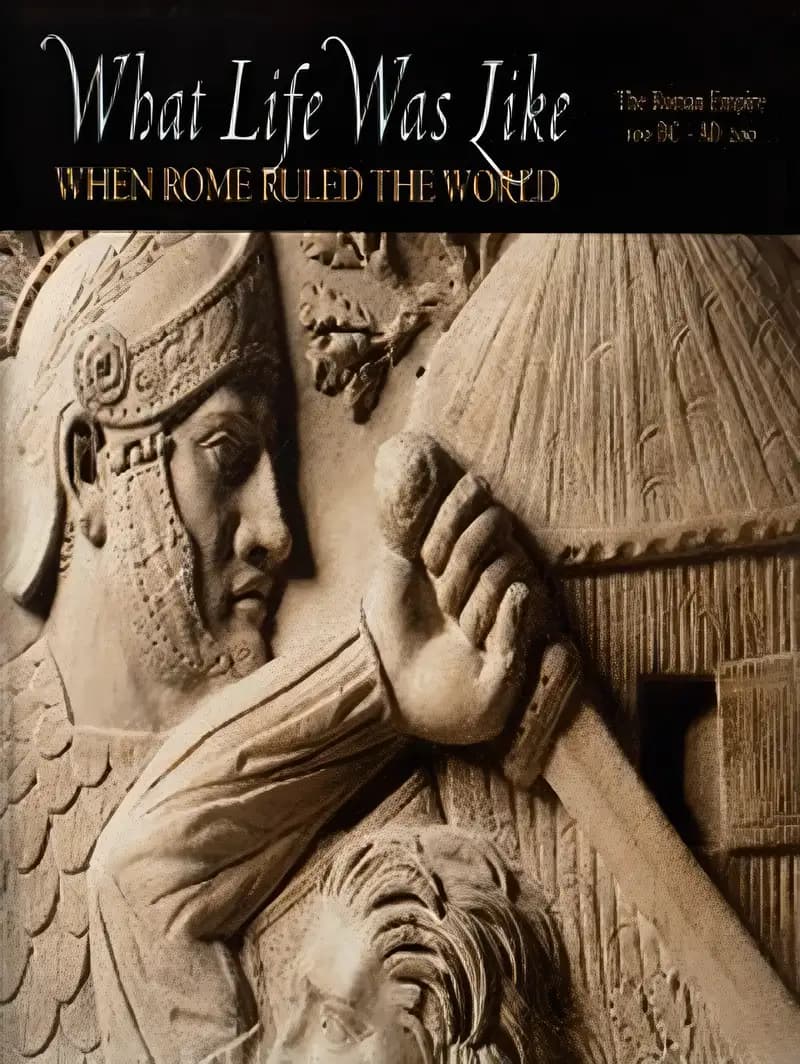
What Life Was Like: When Rome Ruled the World : The Roman Empire 100 Bc-Ad 200
What Life Was Like Series
What’s inside...
This is a look at everyday lives in the Roman Empire of 100 BC-AD 200. From court records, letters, literary funerary inscriptions and other historical sources, come the stories of emperors, slaves, artisans, legionaries, gladiators and poets.
Series reading
Non-Sequential
Age
12-15
Length
168 pages
Text complexity
Discussion points
How do you think daily life in ancient Rome was different from our life today?
What roles did the leaders play in the Roman Empire, and why were they important?
Can you imagine what it would be like to be a child in Rome 2000 years ago? What might your day look like?
What did you find most surprising about the customs or beliefs of the Roman people?
How do you think the inventions and ideas from the Roman Empire still impact us today?
Tip: Role play these questions
Start by asking your child what they know about the Roman Empire before reading to gauge their prior knowledge and build from there.
Encourage your child to visualize scenes from the book by asking them to describe what they imagine Rome looked like.
Relate the historical content to your child’s everyday life by comparing modern and ancient tools, government, and culture.
Highlight the importance of leadership and community in the Roman era and discuss how these themes are still relevant today.
After reading, use a globe or map to locate Rome and discuss how the Empire expanded over time.
Key lessons
Example Lesson: Understanding the Importance of Governance
Explanation: The book explores how the Roman Empire was structured and governed, teaching children about different forms of leadership and organization.
Real-World Application: Children can appreciate the value of rules and leadership roles in their schools and communities, promoting a foundational understanding of governance.
Example Lesson: Cultural Diversity and Integration
Explanation: As Rome ruled a vast and culturally diverse empire, the book showcases various societies and how they were integrated into the empire.
Real-World Application: Promotes tolerance and respect for different cultures in everyday interactions, emphasizing the strength that comes from diversity.
Example Lesson: Technological and Architectural Innovation
Explanation: This book highlights Roman engineering and architectural accomplishments, such as roads, aqueducts, and arenas.
Real-World Application: Encourages an interest in science, technology, engineering, and mathematics (STEM) fields by showing the impact of innovation on society.
Example Lesson: Impact of Military Strategy and Conquest
Explanation: Details the military tactics and expansion strategies used by Rome, underlining the implications of warfare and conquest.
Real-World Application: Teaches the consequences of conflict, urging children to resolve disputes peacefully and understand the importance of diplomacy.