
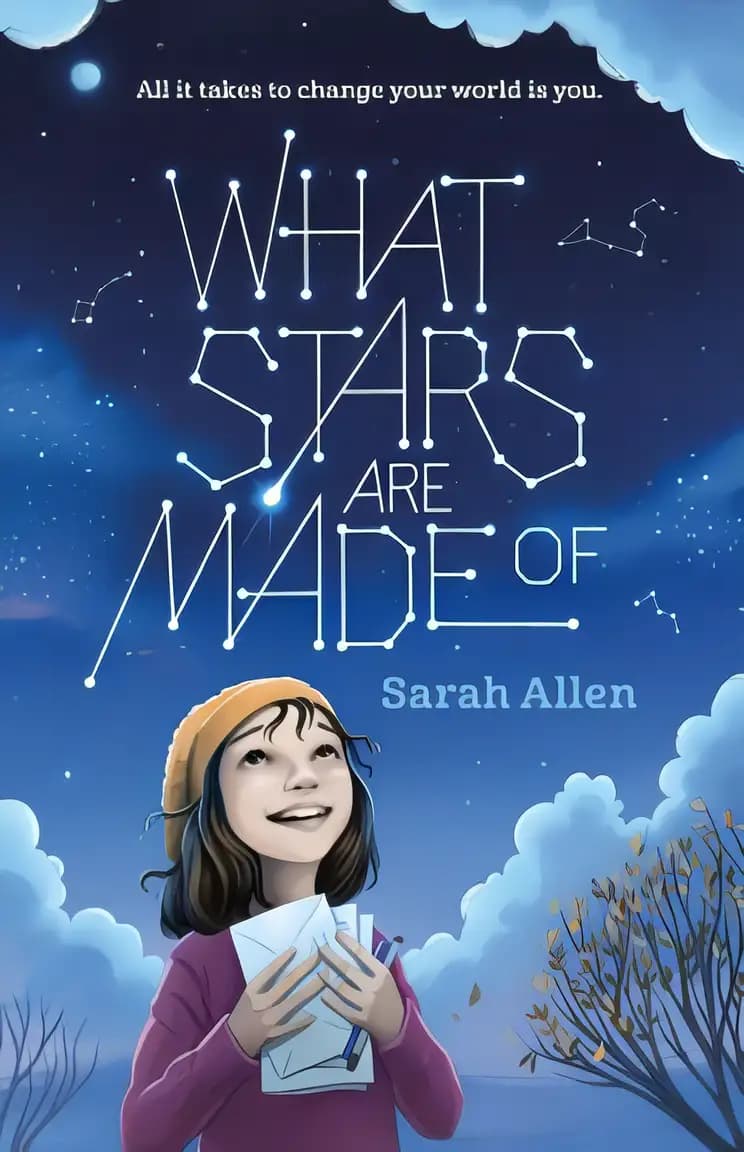
What Stars Are Made Of
on Goodreads (988)
What’s inside...
Twelve-year-old Libby Monroe, who was born with Turner Syndrome, is great at science and being optimistic. When her sister Nonny announces her pregnancy, Libby worries about the financial burden and the baby's health. She decides to enter a contest with a project about Cecelia Payne, hoping to win the grand prize and help Nonny's family. As she navigates her challenges, Libby learns about caring for others and the power of perseverance. From debut author Sarah Allen comes What Stars Are Made Of, a pitch-perfect, heartwarming middle grade novel about growing up, finding yourself, and loving people with everything you’re made of. Libby is great at science, being optimistic, and talking to her famous, accomplished friends (okay, maybe that last one is only in her head). She struggles with playing piano, sitting still, or figuring out how to say the right thing at the right time in real life. Libby was born with Turner Syndrome, and that makes some things hard, but she has lots of people who love her, and that makes her feel lucky. When Nonny tells her she’s pregnant, Libby is thrilled but worried. Nonny and her husband are in a financial black hole, and Libby knows that babies aren’t always born healthy. So she strikes a deal with the universe to enter a contest with a project about Cecelia Payne, the first person to discover what stars are made of. If she wins the grand prize and gives all that money to Nonny’s family, then the baby will be perfect. She wonders if she has what it takes to care for the sister that has always cared for her, and what it will take for the universe to notice.
Age
8-12
Length
208 pages
Text complexity
Character compass
Libby Monroe
Talia
Nonny Monroe
Discussion points
Why do you think Libby is so passionate about science and the stars?
How did Libby's condition, Turner Syndrome, affect her journey in the story? Do you think it changed how others viewed her?
What does friendship mean in the book? How do Libby's friends support her dreams?
How do the challenges Libby faces help her grow? Can you think of a difficult situation that helped you learn something new?
What does the title 'What Stars Are Made Of' signify in the story? What do you think it means in our own lives?
Tip: Role play these questions
Encourage your child to express their thoughts and feelings about the book, validating their responses and connecting them to the themes of perseverance and curiosity.
Use the discussion to explore the concept of diversity and differences, drawing parallels to people they know who are unique or overcoming personal challenges.
Invite your child to imagine and share what they are passionate about, just like Libby is passionate about science. Discuss ways they can explore and nurture their interests.
Engage with the scientific elements of the story, perhaps looking at the stars together or doing a simple science project to stoke their curiosity.
Discuss the importance of friendship and support as depicted in the book, asking your child about their friendships and how they help each other.
Key lessons
Example Lesson: Embracing Differences
Explanation: The protagonist, Libby, is born with Turner Syndrome, which makes her different physically and medically from her peers. Throughout the book, she demonstrates that her differences are a part of her strength.
Real-World Application: This lesson teaches children to appreciate and embrace their own unique qualities as well as those of others around them, fostering a more inclusive environment at school and in social settings.
Example Lesson: Perseverance
Explanation: Libby faces various challenges due to her condition, but she consistently remains determined to achieve her goals, such as helping her sister's wedding dreams come true.
Real-World Application: Children learn the importance of determination and hard work in overcoming obstacles and reaching their objectives, which is a valuable trait for personal and academic achievements.
Example Lesson: Importance of Family Support
Explanation: The strong and supportive relationship between Libby and her family plays a crucial role in her ability to cope with and overcome daily challenges.
Real-World Application: This can help children understand the value of family bonds and encourage them to seek support and comfort within their family unit during tough times.
Example Lesson: Empathy
Explanation: Libby’s condition and experiences teach her to be empathetic towards others who are also facing their own struggles.
Real-World Application: Children can learn to be more understanding and responsive to the feelings and hardships of others, which can enhance their social interactions and friendships.
Example Lesson: Courage
Explanation: Despite her fears and the difficulties posed by her condition, Libby takes brave steps towards achieving personal and family goals, providing an example of courage in action.
Real-World Application: This lesson imparts the value of facing fears and taking risks, which can be applied in various aspects of life including trying new activities or standing up for what is right.