
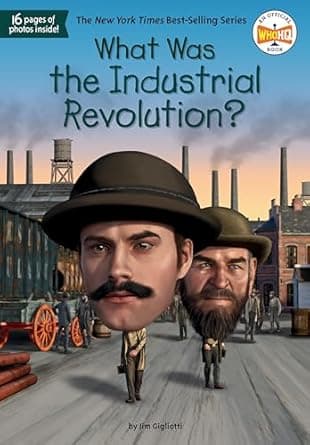
What Was the Industrial Revolution? (What Was?)
What Was? Series
illustrations by
What’s inside...
Part of the best-selling Who HQ series, this illustrated non-fiction title introduces 8- to 12-year-olds to the sweeping social and technological changes that began in Britain in the mid-1700s and reshaped the modern world. Jim Gigliotti explains how new machines, steam power, and factory systems forever altered the way people worked, lived, and traveled. Through clear storytelling, timelines, maps, and engaging black-and-white art, young readers see how inventions such as the spinning jenny, the steam engine, and the locomotive triggered rapid urban growth, global trade, and new ideas about labor, while also raising questions about child workers, pollution, and economic fairness.
Series reading
Non-Sequential
Age
8-12
Length
112 pages
Text complexity
Character compass
James Watt
Eli Whitney
Samuel Slater
Sir Richard Arkwright
Discussion points
How did new machines change where people lived?
What costs came with faster production?
Which invention do you think was most important, and why?
How might future inventions solve today’s problems?
Tip: Role play these questions
Create a simple timeline together of key inventions.
Compare a child’s daily routine now to one in 1800.
Visit a local museum or virtual exhibit on industry.
Key lessons
Example Lesson: Curiosity drives progress.
Explanation: Inventors asked how to spin yarn faster and kept testing ideas.
Real-World Application: Encourage kids to tinker with simple DIY projects.
Example Lesson: Progress has consequences.
Explanation: Pollution and child labor followed new factories.
Real-World Application: Discuss recycling and responsible tech use at home.
Example Lesson: Teamwork multiplies success.
Explanation: Factories needed coordinated workers to meet demand.
Real-World Application: Practice group projects where each child has a role.