
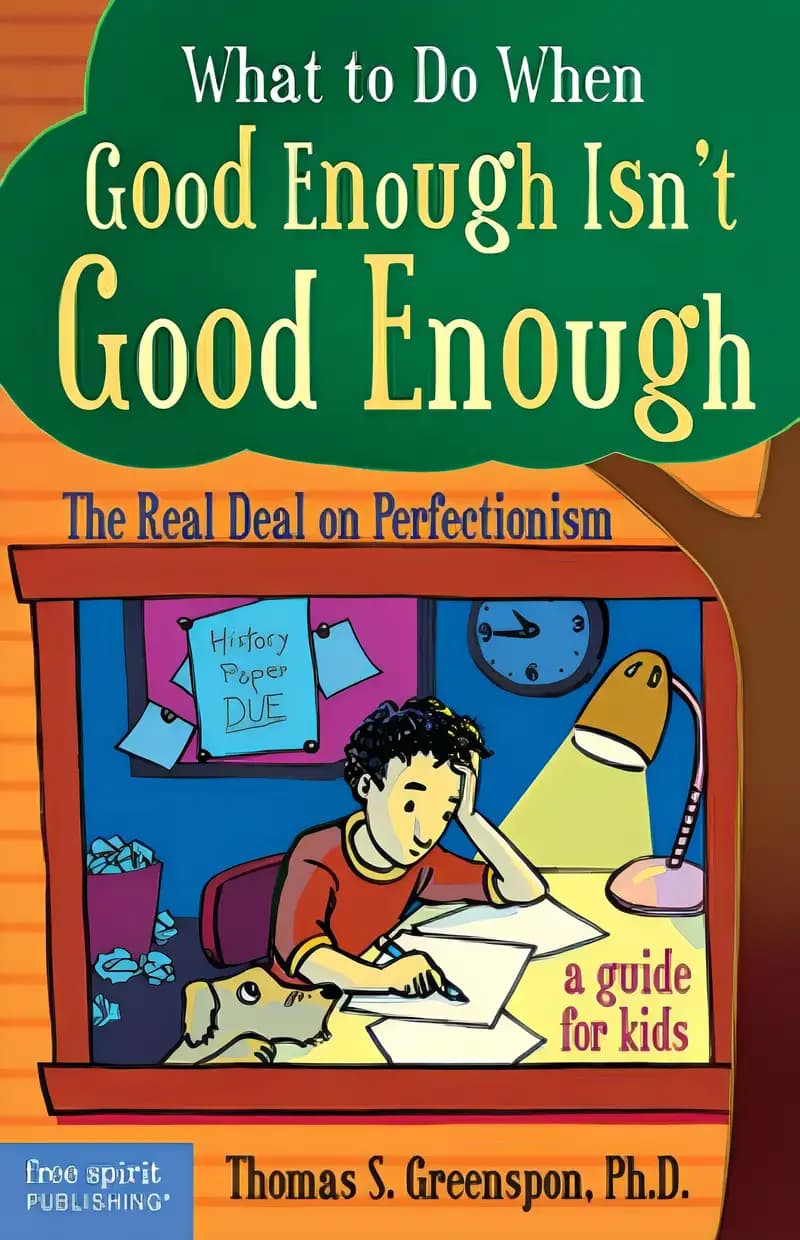
What to Do When Good Enough Isn't Good Enough: The Real Deal on Perfectionism
What Do You Do When….? Series
on Goodreads (86)
What’s inside...
Perfectionism may seem like a worthy goal, but it's actually a burden. When you believe you must be perfect, you live in constant fear of making mistakes. Most children don't know what perfectionism is, yet many suffer from it. Nothing they do is ever good enough. School assignments are hard to start or hand in. Relationships are challenging, and self-esteem is low. Written to and for ages 9–13, this book helps kids understand how perfectionism hurts them and how to free themselves. Includes true-to-life vignettes, exercises, and a note to grown-ups.
Series reading
Non-Sequential
Age
9-13
Length
144 pages
Text complexity
Discussion points
How does striving for perfection make you feel inside?
Can you think of a time when you were too hard on yourself? What happened and how did you handle it?
What do you think are some good ways to handle mistakes?
Who is someone you admire who isn’t perfect? What do you admire about them?
How can focusing on effort rather than perfection help you in school and other activities?
Tip: Role play these questions
Start the conversation after a relaxed family activity to ensure your child feels comfortable and open to sharing.
Affirm your child’s feelings and experiences as they share, reinforcing that it’s a safe space to express themselves.
Relate personal experiences dealing with perfectionism to help your child feel understood and not alone.
Encourage reflection by asking how they might apply the book’s lessons in their own life, reinforcing the learning.
Highlight the importance of effort and growth over perfection to foster a healthier, more balanced outlook.
Key lessons
Example Lesson: Understanding Perfectionism
Explanation: The book helps children recognize the signs and impacts of perfectionism by presenting scenarios and feelings they might encounter.
Real-World Application: Children can identify their perfectionist tendencies in school or during extracurricular activities and learn to manage them.
Example Lesson: Setting Realistic Goals
Explanation: Through stories and examples, children are taught how to set achievable and meaningful goals.
Real-World Application: Kids can apply this by breaking larger tasks into smaller, manageable parts, helping them to succeed without feeling overwhelmed.
Example Lesson: Accepting Imperfections
Explanation: The narrative encourages children to understand and accept that mistakes are a part of learning and growing.
Real-World Application: In their daily activities, children can remember that it's okay to make mistakes and that each mistake is a step towards improvement.
Example Lesson: Coping with Anxiety
Explanation: This book provides strategies for handling the anxiety that often accompanies the need to be perfect.
Real-World Application: Children can use these strategies during tests, presentations, or social situations to calm themselves and focus on doing their best instead of being perfect.
Example Lesson: Embracing Challenges
Explanation: It inspires children to take on challenges without fear of failure, illustrating the growth that comes from stepping out of one’s comfort zone.
Real-World Application: Kids can be encouraged to try new activities or subjects that may seem difficult, helping them to grow and discover new talents.