
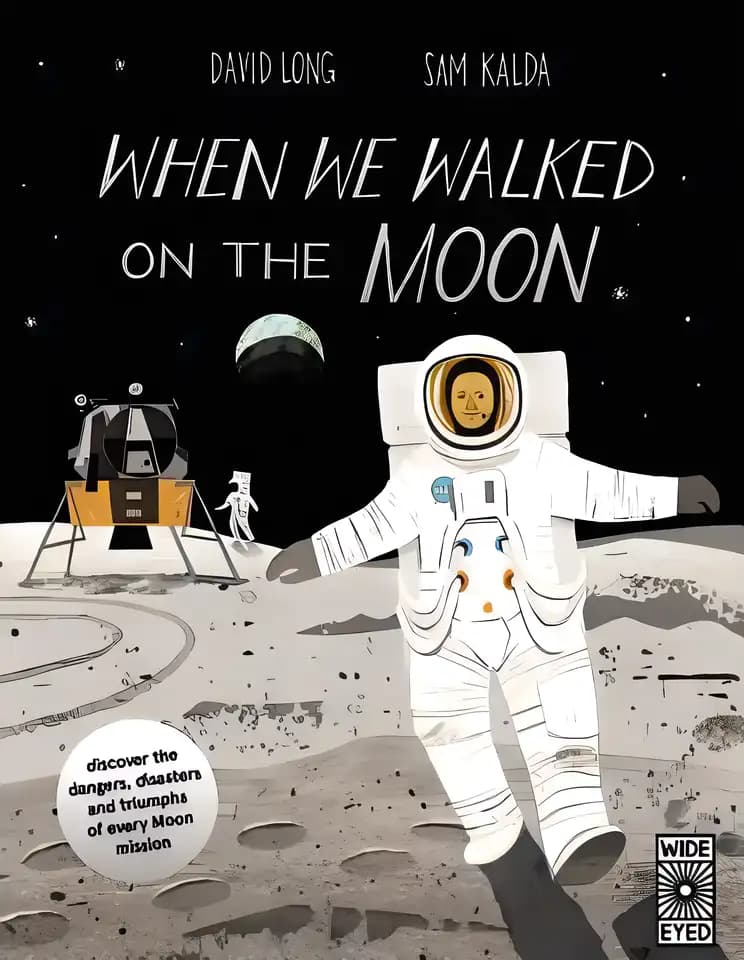
When We Walked on the Moon
What’s inside...
When We Walked on the Moon gives a detailed account of the Apollo 11 mission, from the extensive preparation and training to the extraordinary innovation that enabled Neil Armstrong and Buzz Aldrin to become the first humans to step on the Moon in 1969. The book also highlights the other Apollo missions, including the thrilling rescue of Apollo 13 and amusing anecdotes such as the astronauts of Apollo 12 who were so excited they had to be calmed by Mission Control, and Alan Shepard from Apollo 14 who smuggled a golf club to the Moon. With captivating illustrations and a vivid narrative, David Long brings this significant historical event to life and celebrates its 50th anniversary.
Age
8-10
Length
80 pages
Text complexity
Discussion points
What do you think it felt like for the astronauts to walk on the moon for the first time?
Why do you think exploring space is important?
How do you think the astronauts prepared for their journey to the moon?
Can you imagine what you would do if you were an astronaut on the moon?
What lessons can we learn from the teamwork shown by the astronauts and their support teams?
Tip: Role play these questions
Encourage your child to express their thoughts and emotions about the moon landing by asking them to draw a picture or describe a scene from the book.
Use the book as an opportunity to discuss the values of courage, perseverance, and curiosity by identifying moments in the story where these were exhibited.
Ask your child to think about modern-day explorations and how they compare to the moon missions, fostering a conversation about advancements in technology and exploration.
Connect the story to your child’s experiences by discussing a time when they tried something challenging and how they felt during and after the experience.
After reading, watch a short documentary or video clip about the moon landing with your child to reinforce the information and make the experience more vivid and engaging.
Key lessons
Example Lesson: Perseverance and dedication
Explanation: The book showcases the journey of astronauts who trained rigorously and overcame numerous challenges to walk on the moon.
Real-World Application: Children learn the value of hard work and persistence in achieving their goals, no matter how big or small.
Example Lesson: Teamwork and collaboration
Explanation: The astronauts' success was dependent on their ability to work effectively as a team, highlighting the importance of cooperation.
Real-World Application: This teaches children the importance of working together and supporting each other to accomplish common objectives in group activities or team sports.
Example Lesson: Curiosity and exploration
Explanation: The story emphasizes the astronauts' curiosity about space and their pursuit of knowledge, leading to one of the most significant explorations in history.
Real-World Application: Children are encouraged to explore and learn about the world around them, fostering a lifelong love for learning and discovery.
Example Lesson: Handling failure positively
Explanation: The book details the setbacks faced during the space missions and how the astronauts handled them professionally and learned from them.
Real-World Application: It teaches children that setbacks are natural, and the key to success is resilience and learning from mistakes.
Example Lesson: Inspiration and dream-building
Explanation: The narrative of achieving what once seemed impossible—walking on the moon—serves to inspire and motivate.
Real-World Application: Children are inspired to dream big and understand that with effort and dedication, they can achieve extraordinary things.