
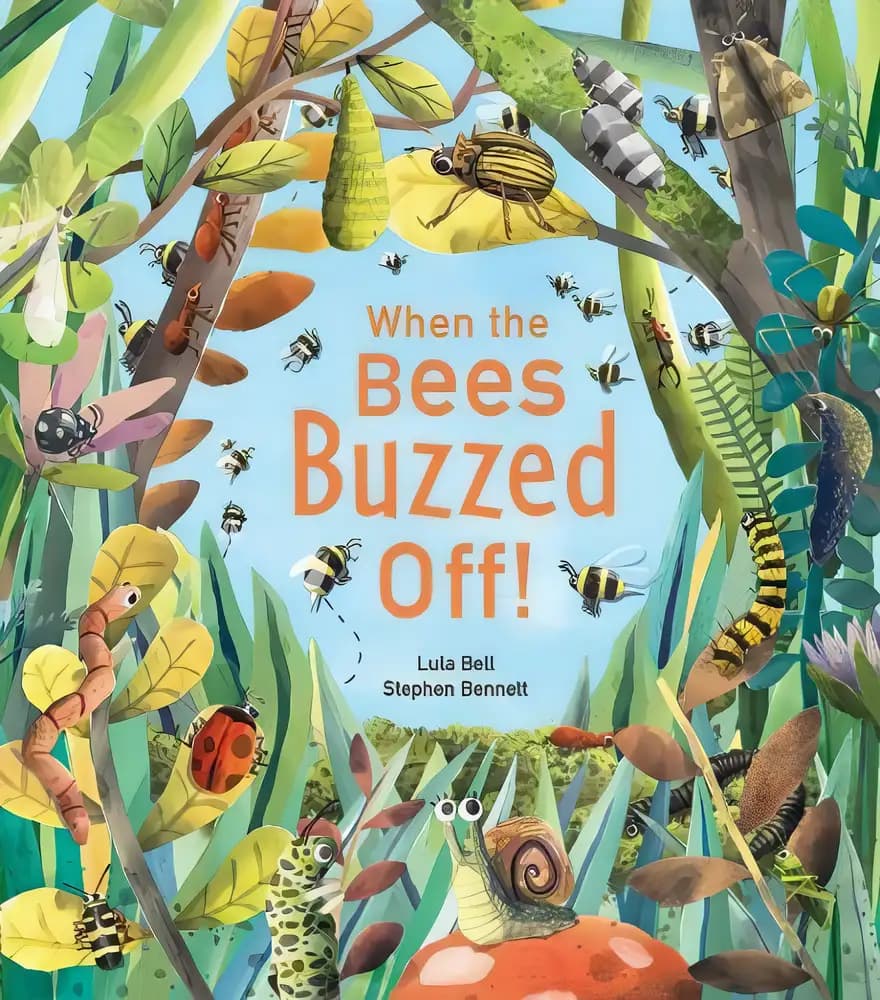
When the Bees Buzzed Off!
on Goodreads (32)
What’s inside...
In the book 'When the Bees Buzzed Off!', the bees have disappeared, leaving the minibeasts in a dilemma about who will pollinate the fruit and flowers. It’s up to three courageous bugs to bring the bees back. The book is filled with fun flaps, fascinating facts, and humorous commentary to engage young readers and encourage them to think about environmental issues and explore nature. The lively adventure is enhanced by vivid illustrations from Stephen Bennett.
Age
3-7
Length
24 pages
Text complexity
Discussion points
Why do you think the bees buzzed off in the story?
What role do the bees play in our environment?
How do you think the other animals felt when the bees went missing?
What can we do to help bees in our own garden?
How did the story end and what can we learn from it?
Tip: Role play these questions
Begin by asking your child what they know about bees and their importance to our ecosystem. This can help contextualize the story's themes.
Encourage your child to think about the feelings and reactions of the characters in the book. It promotes empathy and understanding.
Discuss the problem-solving aspect of the story. Ask your child how they would solve a similar problem if they encountered it.
Use the illustrations in the book as a visual aid to engage your child further. Ask them to describe what they see and how it relates to the story.
After reading, relate the fictional scenario to real-world actions they can take, like planting bee-friendly flowers or creating a bee water station.
Key lessons
Example Lesson: Importance of teamwork
Explanation: In 'When the Bees Buzzed Off!', the characters work together to solve the mystery of the missing bees. This collaborative effort highlights how teamwork is essential to accomplish goals.
Real-World Application: Children can apply this lesson by participating in group activities at school or with friends, learning to cooperate and value each other's input to achieve a common objective.
Example Lesson: Understanding ecosystems
Explanation: The story educates young readers about the critical role bees play in our ecosystem, particularly in pollination. It emphasizes how all creatures, big and small, have important roles in nature.
Real-World Application: This can lead children to become more aware and caring about their environment, encouraging them to participate in activities like planting flowers or trees that support local wildlife.
Example Lesson: Problem-solving skills
Explanation: As the characters in the book encounter challenges in their quest to find the bees, they demonstrate problem-solving skills by thinking critically and creatively.
Real-World Application: Children can use similar problem-solving approaches when faced with challenges, whether in academic tasks or personal issues, helping them to develop critical thinking skills.
Example Lesson: The virtue of curiosity
Explanation: The quest to discover why the bees have buzzed off sparks curiosity among the characters, driving them to learn more and seek solutions.
Real-World Application: This can inspire children to ask questions and seek out new knowledge in all areas of their life, fostering a lifelong love of learning.