
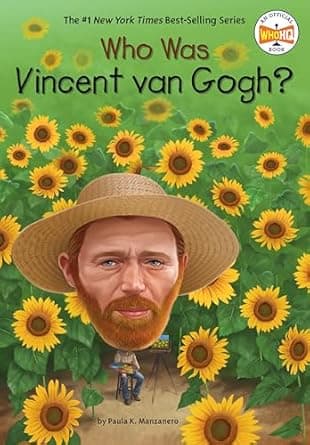
Who Was Vincent van Gogh? (Who Was?)
Who was? Series
illustrations by
What’s inside...
This illustrated biography from the popular Who Was? series introduces children to the extraordinary, and at times tragic, life of Dutch painter Vincent van Gogh. From his childhood in a quiet village in the Netherlands to his final, frenetic years in France, the book traces how Vincent’s passion for art, his struggles with poverty, and his battle with mental illness shaped some of the most recognizable paintings in the world. Short chapters, black-and-white illustrations, a time line, and factual sidebars help young readers grasp the cultural context of nineteenth-century Europe while seeing how perseverance and self-expression can bloom even in adversity.
Series reading
Non-Sequential
Age
8-12
Length
112 pages
Text complexity
Character compass
Vincent Van Gogh
Theo Van Gogh
Paul Gauguin
Discussion points
What kept Vincent painting even when no one bought his work?
How might Vincent's life have changed with today’s mental health care?
Which painting mentioned in the book did you find most interesting and why?
How did Vincent’s brother Theo influence his journey?
Tip: Role play these questions
Look up images of the paintings together for visual context.
Visit a local museum or virtual gallery to connect art with real life.
Encourage children to draw their own 'sunflower' picture after reading.
Key lessons
Example Lesson: Perseverance Pays Off
Explanation: Vincent kept painting despite poverty and rejection.
Real-World Application: Children can continue practicing skills even when progress feels slow.
Example Lesson: Express Your Feelings
Explanation: Vincent used art to convey emotions he couldn’t voice.
Real-World Application: Kids might draw or write to process their own feelings.
Example Lesson: Support Matters
Explanation: Theo’s letters and funding sustained Vincent’s work.
Real-World Application: Recognize and appreciate family and friends who help.
Example Lesson: Seek Help for Mental Health
Explanation: Vincent’s struggles show the importance of care and understanding.
Real-World Application: Children learn it’s okay to ask adults for help when sad or anxious.