
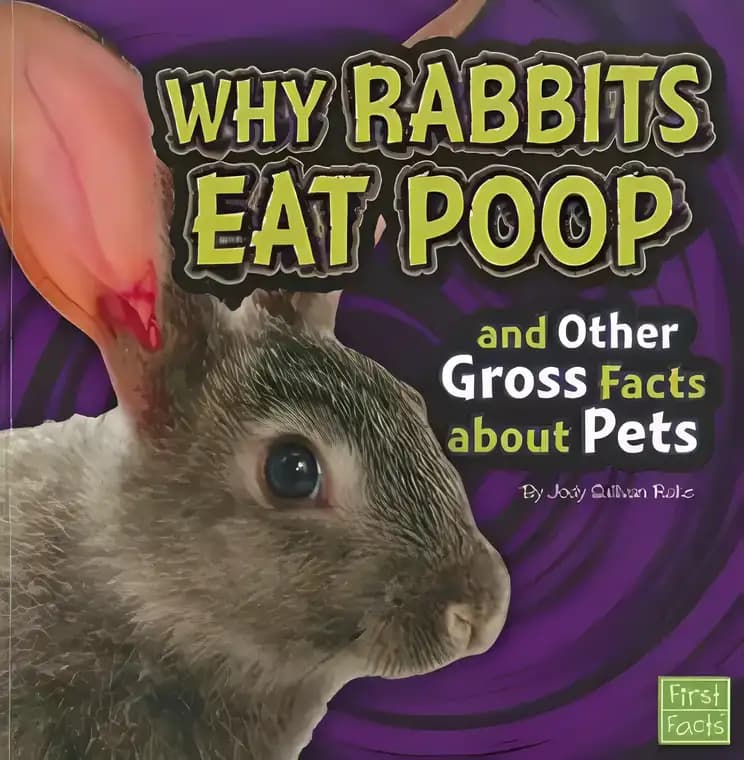
Why Rabbits Eat Poop and Other Gross Facts about Pets
#2 of 3 in Gross Me Out Series
on Goodreads (40)
What’s inside...
This book explores the fascinating, and sometimes gross, world of pets. Filled with surprising information about various pets and their habits, it's perfect for children who want to learn more about the pets they love. Did you know that some pets eat poop? It's true. And there's even one pet that will eat its own tank mates! Learn more about the gross things pets do and why they do them. You'll never look at your pets the same way again!
Discussion points
Why do you think animals have such different habits from humans?
What can we learn about responsibility and care from pets, even with their weird habits?
How does understanding these gross facts help us better care for our pets?
Can you think of any gross human habits that might seem weird to animals?
Tip: Role play these questions
While discussing the book, maintain an open and nonjudgmental tone to help your child feel comfortable exploring these unusual topics. Use humor and light-hearted comments to keep the conversation enjoyable. Relate the facts to the child’s experiences with pets or animals to make the content more relatable and engaging. Encourage empathy by discussing how understanding these facts can lead to better care for pets.
Key lessons
Example Lesson: Understanding natural animal behaviors
Explanation: The book explains peculiar animal habits like why rabbits eat poop, educating children on natural biological processes.
Real-World Application: This lesson helps children develop a respect and understanding for animals, promoting responsible pet care and empathy towards wildlife.
Example Lesson: Importance of hygiene
Explanation: Through discussing gross facts, the book highlights the importance of cleanliness around animals.
Real-World Application: Children can apply this by maintaining good hygiene practices, such as washing hands after playing with pets or cleaning up after them responsibly.
Example Lesson: Curiosity and learning
Explanation: The intriguing facts presented in the book encourage children to ask questions and seek answers, fostering a love for learning.
Real-World Application: This curiosity can extend to other areas of study, enhancing their overall educational experience and encouraging lifelong learning.
Example Lesson: Critical thinking
Explanation: By debunking myths and providing scientific explanations, the book helps children differentiate between fact and fiction.
Real-World Application: Children learn to question information and think critically before accepting it, which is a valuable skill in navigating the vast amounts of information they encounter daily.