
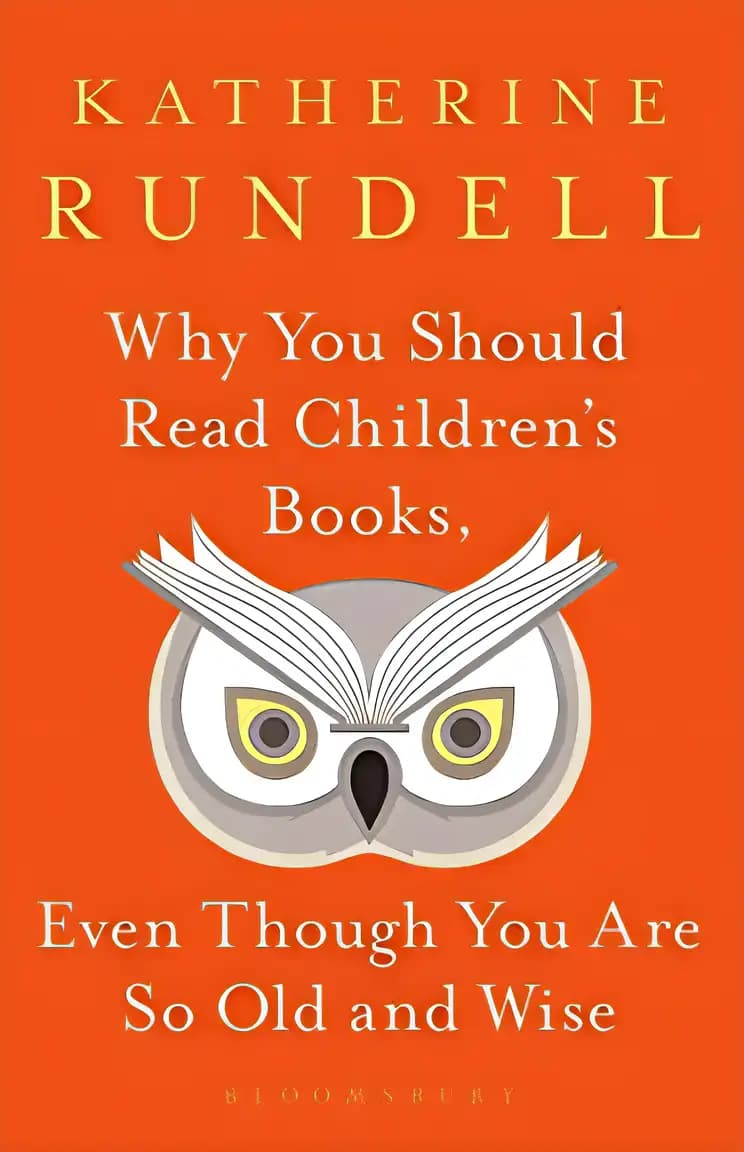
Why You Should Read Children's Books, Even Though You Are So Old and Wise
The Explorer Series
on Goodreads (3,159)
What’s inside...
In 'Why You Should Read Children's Books, Even Though You Are So Old and Wise', Katherine Rundell delves into the art of storytelling and the remarkable universe of children's literature. She presents a compelling case for why children's books are an essential element of our literary culture, providing distinctive insights and viewpoints that enhance our comprehension of the world. Rundell explores how children's books ignite, and can re-ignite, the imagination; how children's fiction, with its unabashed emotion and playfulness, can awaken old hungers and create new perspectives on the world. This delightful and persuasive essay is designed for adult readers.
Series reading
Non-Sequential
Age
14-18
Length
76 pages
Text complexity
Discussion points
What was your favorite part of the book and why?
How do you think reading children's books can also be fun for adults?
Can you think of a story you would like to share with someone older?
What ideas from the book can we use in our daily lives?
How do the stories in children's books make you feel?
Tip: Role play these questions
Use expressive tones and voices for the different characters to make the reading session lively and engaging.
Share personal stories that relate to the events or themes in the book to help bridge connections between generations.
Encourage your child to imagine their own ending to the story or think of alternative scenarios to deepen understanding.
Invite your child to draw or act out their favorite scene, as this enhances comprehension and makes the discussion more interactive.
Prompt reflective thinking by asking your child how they would feel or respond in similar situations depicted in the book.
Key lessons
Example Lesson: The value of curiosity
Explanation: Katherine Rundell explores the idea that children's books rekindle the curious spirits of adults, reminding them of the wonders of a curious mind.
Real-World Application: Children can be encouraged to ask questions and explore the world around them, fostering a lifelong love for learning.
Example Lesson: The importance of imagination
Explanation: The book champions the role of imagination, showing how children’s literature stimulates creative thinking.
Real-World Application: Kids can use their imagination to solve problems creatively and view the world from multiple perspectives, enhancing critical thinking.
Example Lesson: Empathy and understanding
Explanation: Through diverse characters and stories, children's books promote understanding and empathy among readers.
Real-World Application: Children learn to empathize with others, understanding different emotions and perspectives, which aids in social interactions.
Example Lesson: Resilience in adversity
Explanation: Many children’s books feature characters who overcome challenges, teaching resilience.
Real-World Application: Children can learn to face their own challenges with courage and determination, understanding that setbacks can be overcome.
Example Lesson: Joy of reading
Explanation: Rundell illustrates how children's books are designed to be enjoyable, encouraging adults to reconnect with the joy of reading.
Real-World Application: Instilling a love for reading from a young age can lead to better literacy skills and a habit of lifelong learning.