
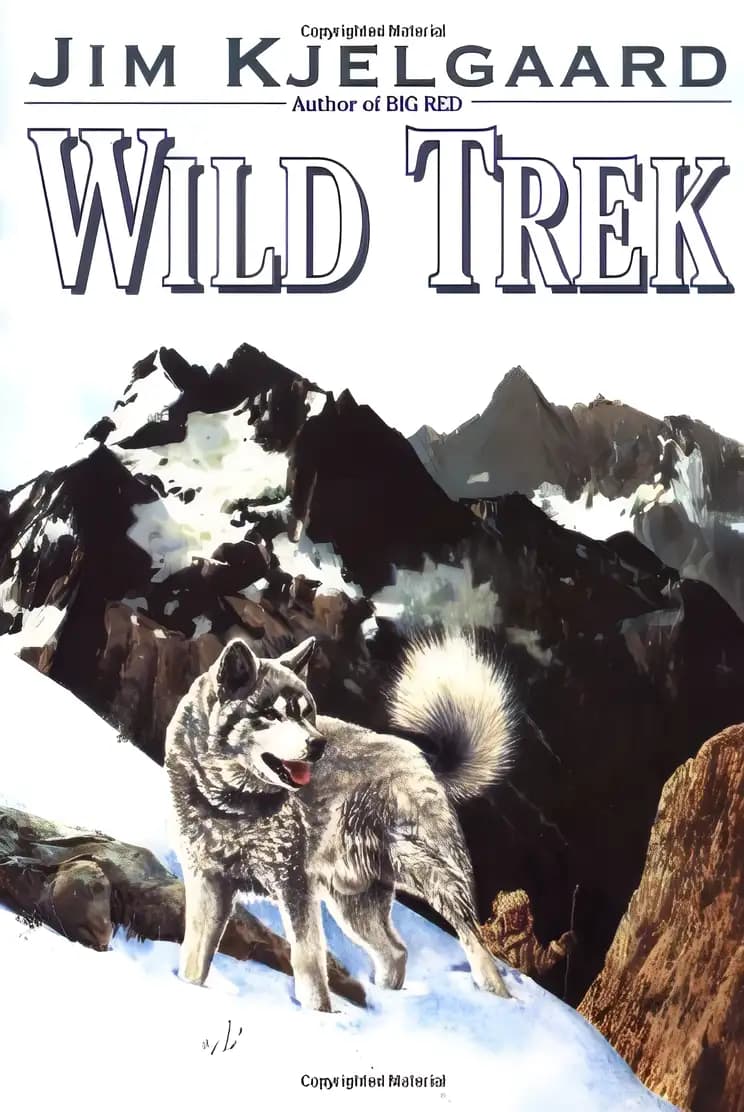
Wild Trek
#2 in Chiri Series
on Goodreads (555)
What’s inside...
A trapper and his dog travel into the Caribou Mountains to rescue a naturalist and a pilot whose plane has been downed in the rugged wilderness of northern Canada. This is the story of the trapper, Link Stevens, and his fearless snow dog, Chiri. It began when the trapper and his dog set out to rescue a naturalist stranded in the perilous Caribou mountains--the impenetrable storm-blasted heights from which no man has ever returned. Forced to live by Stone Age methods, they relied on every resource of the dog's wild cunning and the trapper's woodlore. How they battled a killer cougar and bloodthirsty wolves, yet brought their man to safety, is a gripping, action-packed saga. It is also the stirring tale of the deep love between a loyal snow dog and his courageous trapper master.
Character compass
Link Stevens
Chiri
Ab Hawkins
Discussion points
What did you think about the relationship between the boy and his dog in 'Wild Trek'? How did they depend on each other during their journey?
How would you feel if you were on a wild adventure like the characters? What challenges do you think you would face?
What lessons do you think the characters learned about nature and survival by the end of the book?
If you could change one part of the story, what would it be and why?
Which character in 'Wild Trek' did you relate to the most and what about them made you feel that way?
Tip: Role play these questions
Encourage your child to imagine themselves in the story’s setting while discussing the book. Ask them how they would feel and react in similar situations.
Highlight the importance of teamwork and trust as demonstrated between the boy and his dog, and relate it to everyday situations your child might face.
Discuss the natural habitat and wildlife described in the book. This can be an opportunity to educate your child about different environments and the importance of protecting them.
Use descriptive scenes from the book to ask your child to visualize and describe their own version. It helps build their descriptive and imaginative skills.
After discussing the changes they would make to the story, encourage your child to think about the consequences of these changes to understand cause and effect relationships.
Key lessons
Example Lesson: Resilience in the face of challenges
Explanation: In 'Wild Trek', the characters often face harsh natural conditions and must learn to persevere and adapt in order to survive.
Real-World Application: Children can apply this lesson by understanding the importance of persistence and creativity when they encounter difficulties, be it in their studies, sports, or personal relationships.
Example Lesson: Respect for nature
Explanation: The book vividly describes the wilderness and emphasizes the significance of the natural environment, promoting a respect for wildlife and natural habitats.
Real-World Application: This can encourage children to be conscientious about their environment, promoting activities like recycling, conserving water, and protecting wildlife.
Example Lesson: The value of teamwork
Explanation: Throughout 'Wild Trek', characters must collaborate to overcome obstacles, highlighting the power of working together.
Real-World Application: This lesson can be mirrored in a child's life through participating in team sports, group projects in school, and collaborating in family activities.
Example Lesson: Courage and bravery
Explanation: The protagonists of the story often face daunting challenges but show courage in the face of danger, teaching children the importance of bravery.
Real-World Application: Children can learn to face their fears, whether it’s trying out for a new sport, standing up against bullying, or making new friends at school.
Example Lesson: Problem-solving skills
Explanation: As the characters navigate through their journey, they frequently come up against problems that require thoughtful solutions.
Real-World Application: This encourages children to think critically and develop problem-solving skills that are applicable in their everyday decision-making processes.