
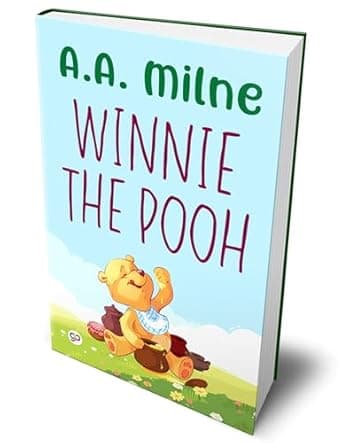
Winnie-the-Pooh
#1 of 14 in Winnie-the-Pooh Series
What’s inside...
First published in 1926, A. A. Milne’s classic introduces young readers to Winnie-the-Pooh, Piglet, Eeyore, and the rest of the inhabitants of the Hundred Acre Wood—a fictional woodland inspired by Ashdown Forest in England. Told over ten self-contained chapters, the gentle adventures center on friendship, imaginative play, and everyday problem-solving as the animals hunt honey, search for lost tails, brave floods, and celebrate one another. E. H. Shepard’s iconic illustrations complement Milne’s playful language, creating a warm, humorous world that encourages empathy, curiosity, and resilience in early readers.
Character compass
Winnie-The-Pooh
Roo
Eeyore
Piglet
Kanga
Owl
Rabbit
Christopher Robin
Discussion points
Why do Pooh and Piglet set a trap for something they’ve never seen?
How do the friends show kindness to Eeyore on his birthday?
What does the flood teach about helping others in emergencies?
How do the characters welcome Kanga and Roo?
Tip: Role play these questions
Act out voices to enhance emotional cues.
Relate each problem to real-life situations at school or home.
Encourage children to draw their own map of the Hundred Acre Wood.
Key lessons
Example Lesson: Friendship requires patience and understanding.
Explanation: Pooh waits days while stuck in Rabbit’s doorway, and friends keep him company.
Real-World Application: Children learn to support peers facing difficulties.
Example Lesson: Help others in need.
Explanation: Pooh braves flooding to rescue Piglet.
Real-World Application: Encourages offering help during classmates’ tough moments.
Example Lesson: Welcome and accept differences.
Explanation: Forest animals overcome fear of Kanga and Roo.
Real-World Application: Promotes inclusivity toward new students or neighbors.
Example Lesson: Think before acting on assumptions.
Explanation: Woozle hunt reveals tracks were their own.
Real-World Application: Teaches critical thinking and fact-checking.