
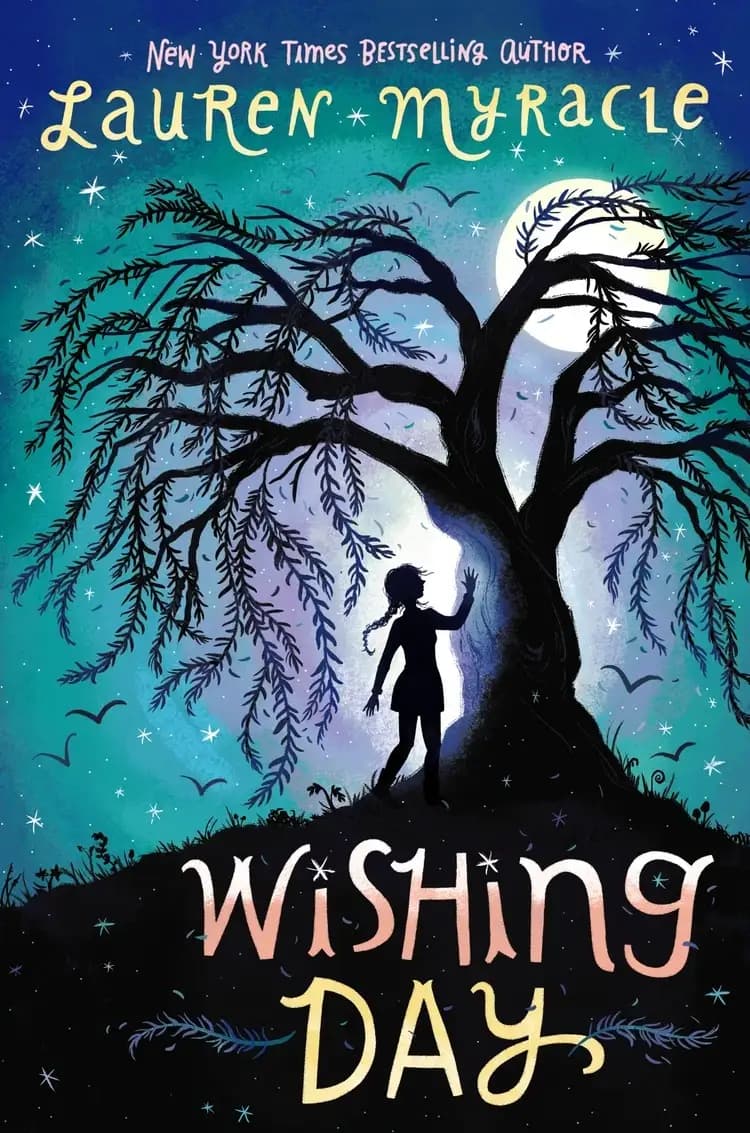
Wishing Day
#1 of 3 in Wishing Day Series
What’s inside...
On the third night of the third month after a girl’s thirteenth birthday, every girl in the town of Willow Hill makes three wishes: an impossible wish, a wish she can make come true herself, and the deepest wish of her secret heart. Natasha, the oldest child in a family steeped in magic, wishes under a willow tree for her missing mother, a first kiss from her crush, and to be noticed amidst her chaotic family. This magical and heartwarming adventure, part of an enchanting trilogy by Lauren Myracle, explores the power of hope and traditions, perfect for fans of Rebecca Stead and Ingrid Law.
Character compass
Natasha Blok
Darya Blok
Ava Blok
Discussion points
What would you wish for if you had the chance, and why?
How do the characters in the story handle the consequences of their wishes?
What did you learn about friendship from Natasha's interactions with her friends and family?
How does the story show the importance of being careful what you wish for?
In what ways do the characters change from the beginning to the end of the book?
Tip: Role play these questions
Encourage your child to imagine their own wishing day by asking them to think deeply about their desires and the potential outcomes.
Discuss the moral lessons in the story, emphasizing how choices and wishes can impact others.
Relate the story to personal experiences by sharing a time when you wished for something and the outcome of that wish.
Highlight the significance of communication and honesty in friendships, drawing parallels to your child’s relationships with their peers.
Use the character's development throughout the book to talk with your child about how people can change and grow from their experiences.
Key lessons
Example Lesson: The importance of self-discovery
Explanation: In 'Wishing Day', the protagonist, Natasha, embarks on a journey of self-discovery as she navigates the complexities of her wishes and the realities of her world.
Real-World Application: Children can learn to embrace their personal journeys, understanding their unique qualities and learning to make choices that reflect their true selves.
Example Lesson: The impact of choices
Explanation: Throughout the book, Natasha makes choices based on her wishes, which leads to various outcomes. This highlights the consequences of decisions and the importance of thoughtful consideration.
Real-World Application: This lesson teaches children to think critically about the consequences of their actions and to make decisions that align with their values and the effects they may have on others.
Example Lesson: The value of hope and resilience
Explanation: Natasha faces challenges but remains hopeful and resilient, which ultimately helps her to cope and find solutions.
Real-World Application: Children can learn to maintain hope and resilience in the face of difficulties, understanding that challenges are part of life but can be overcome with perseverance and a positive attitude.
Example Lesson: The strength of family bonds
Explanation: The story emphasizes the importance of family support and connections, as Natasha relies on her sisters and reflects on her mother's teachings.
Real-World Application: This encourages children to appreciate and nurture their family relationships, recognizing the essential support system that family provides.
Example Lesson: Understanding the power of empathy
Explanation: Natasha learns to understand and empathize with others' feelings and situations, which enriches her relationships and personal growth.
Real-World Application: Children can learn the importance of empathy, helping them build stronger, more understanding relationships with others and aiding in their social and emotional development.