
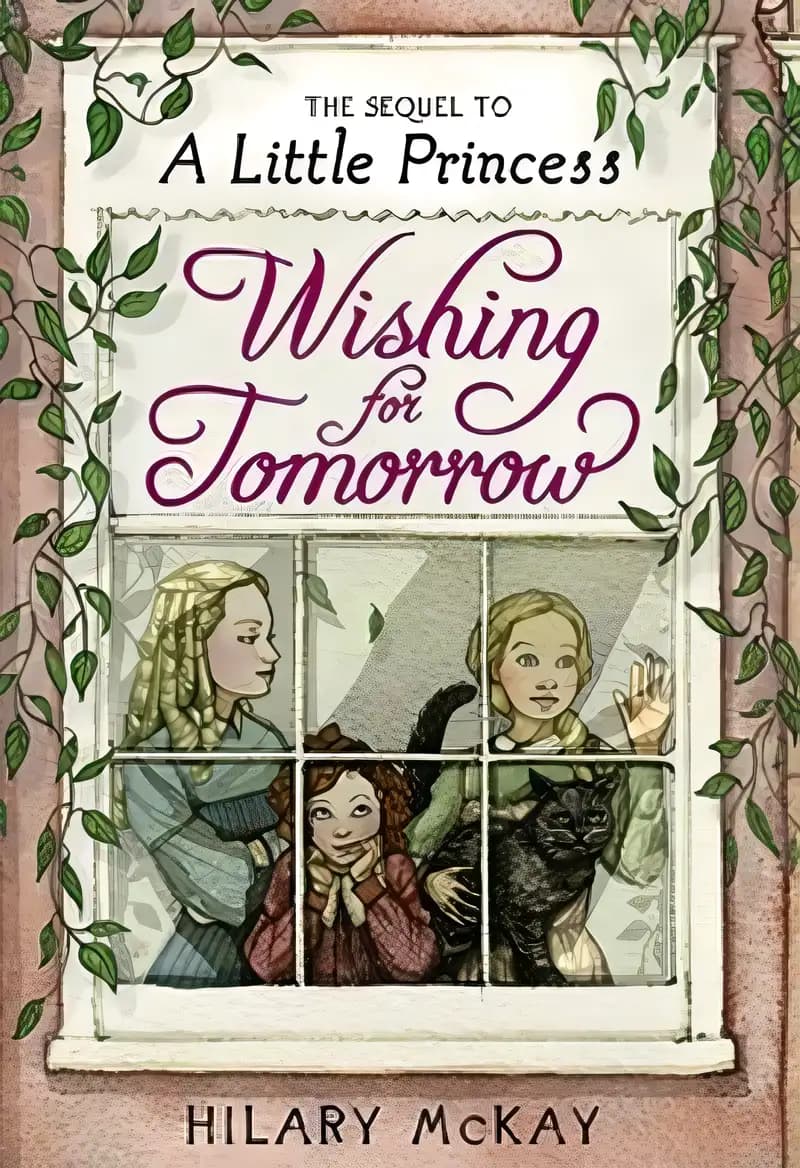
Wishing for Tomorrow: The Sequel to A Little Princess
A Little Princess Legacy Series
What’s inside...
Relates what becomes of Ermengarde and the other girls left behind at Miss Minchin's School after Sara Crewe leaves to live with her guardian, the Indian gentleman. An enchanting sequel to Frances Hodgson Burnett's A Little Princess, written by the award-winning Hilary McKay.
Series reading
Non-Sequential
Age
8-12
Length
288 pages
Text complexity
Character compass
Ermengarde St. John
Lottie Legh
Miss Amelia Minchin
Lavinia Herbert
Miss Minchin
Jessica Rawlins
Maria Minchin
Sara Crewe
Lavinia
Lottie
Discussion points
How do you think the characters felt when they had to face changes at the school?
What qualities do you admire in the main character, Elinor, and why?
If you could change one thing about the story, what would it be and why?
How does friendship play a role in this story? Can you share a personal experience about friendship?
What lesson did you learn from the book that you can apply in your own life?
Tip: Role play these questions
Encourage your child to express their feelings about the characters’ experiences to help them connect personally with the story. Ask them to imagine alternative endings or actions for different scenarios within the book to foster creative thinking. Relate the themes of the book, such as resilience and friendship, to real-life situations your child might encounter, enhancing their understanding and empathy. Lastly, recognize and validate your child’s feelings and thoughts as they express them, creating a supportive environment for discussion.
Key lessons
Example Lesson: Empathy and Understanding
Explanation: This sequel to 'A Little Princess' dives deeper into the lives and backgrounds of the characters, illustrating their struggles and triumphs, which fosters empathy and understanding.
Real-World Application: Children can apply this lesson by learning to appreciate the diverse backgrounds and experiences of their peers, which can enhance social interactions and friendships.
Example Lesson: Resilience in Adversity
Explanation: Characters in 'Wishing for Tomorrow' face various challenges, yet they demonstrate resilience and perseverance, showing that difficulties can be overcome.
Real-World Application: This can motivate children to stay positive and resilient when facing their own challenges, whether at school or in their personal lives.
Example Lesson: Importance of Hope
Explanation: The theme of hope runs throughout the book, encouraging characters to look forward to better times and work towards their goals.
Real-World Application: Children learn the value of maintaining hope and working towards their aspirations, regardless of the immediate difficulties they face.
Example Lesson: Value of Friendship
Explanation: Strong friendships are portrayed as a source of support and joy, as characters help and rely on each other throughout the story.
Real-World Application: This lesson highlights the importance of building and maintaining friendships, teaching children to be supportive friends and rely on their social circles in times of need.