
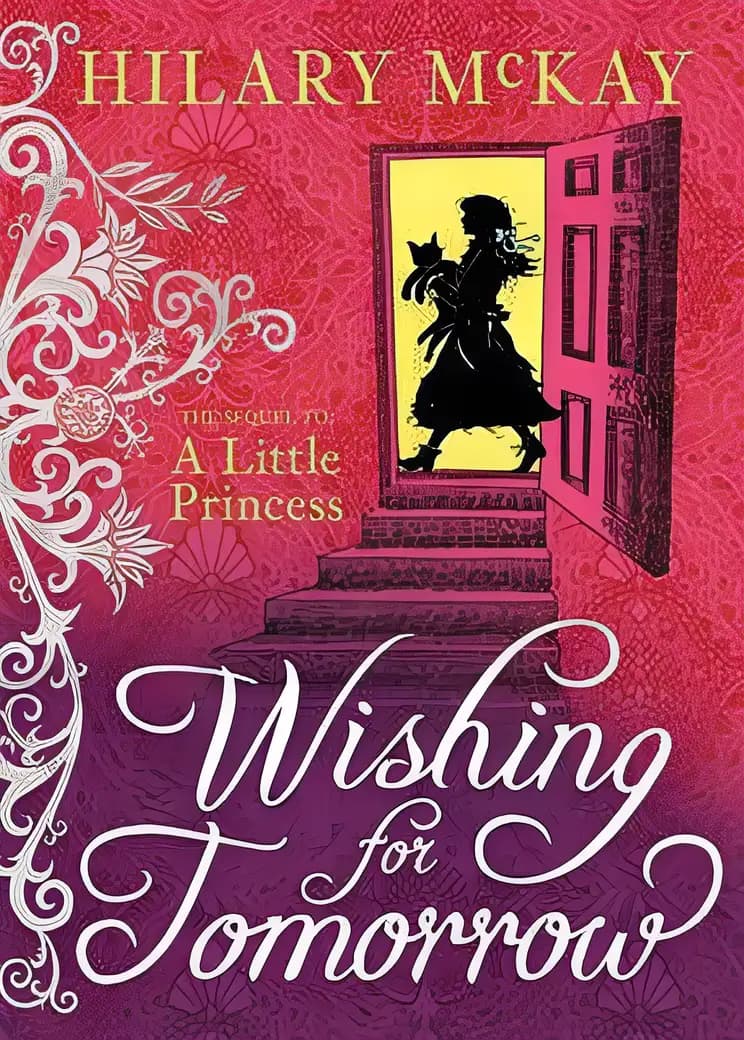
Wishing for Tomorrow
#2 in A Little Princess Legacy Series
on Goodreads (820)
What’s inside...
Hilary McKay revisits Miss Minchin's Select Seminary for Young Ladies after the events of A Little Princess and Sara Crewe's happily ever after. But Sara is much missed - and most acutely by best friend Ermengarde, who laments that 'nothing is the same as it was before'. But life must go on at Miss Minchin's as new friendships are made, rivalries continued, lessons learned and, most importantly, fairytale endings are had.
Character compass
Ermengarde St. John
Miss Amelia Minchin
Lottie Leigh
Miss Minchin
Lavinia Herbert
Jessica Rawlins
Maria Minchin
Sara Crewe
Lavinia
Lottie
Discussion points
How do you think the characters felt when they faced challenges in the story?
What would you have done differently if you were in the main character's shoes?
Why do you think the author chose this ending? What other endings could there have been?
What did you learn about friendship from this book?
How can we apply the lessons from the book to our everyday lives?
Tip: Role play these questions
Encourage your child to express their feelings about the story and relate them to their own experiences.
Ask open-ended questions that prompt deeper thinking rather than simple yes or no answers.
While discussing the book, connect the themes to real-life situations to enhance comprehension.
Create a comfortable and inviting reading environment to make the discussion more enjoyable.
Praise your child’s insights and contributions to the conversation to boost their confidence and engagement.
Key lessons
Example Lesson: Perseverance and Resilience
Explanation: The characters face various challenges and difficulties but show determination to overcome them. Their resilience is portrayed through their actions and decisions throughout the story.
Real-World Application: Children can learn to persist through their own challenges, whether in school assignments, learning new skills, or building relationships with peers.
Example Lesson: Importance of Friendship
Explanation: The characters in the story support each other, demonstrating the value of having good friends. The story illustrates how companionship can provide emotional support and help overcome obstacles.
Real-World Application: This can encourage children to nurture friendships, be supportive friends themselves, and recognize the positive impact of healthy relationships.
Example Lesson: Creativity and Problem Solving
Explanation: The book showcases how characters use innovative thinking to solve problems they encounter. These creative solutions are crucial to advancing the story.
Real-World Application: Children are motivated to think creatively in their daily lives, learning not to give up when faced with a problem but to think of different ways to tackle it.
Example Lesson: Empathy and Understanding
Explanation: Characters in the book occasionally face misunderstandings, and the story explores how empathy is needed to resolve conflicts and understand others better.
Real-World Application: This teaches children the importance of considering other people's feelings and viewpoints, which is essential in developing social skills and emotional intelligence.
Example Lesson: Responsibility
Explanation: Characters in the book take on responsibilities and learn the consequences of their actions, leading to personal growth and maturity.
Real-World Application: Children learn the importance of being responsible and accountable, which aids them in becoming dependable individuals in both personal and communal settings.