
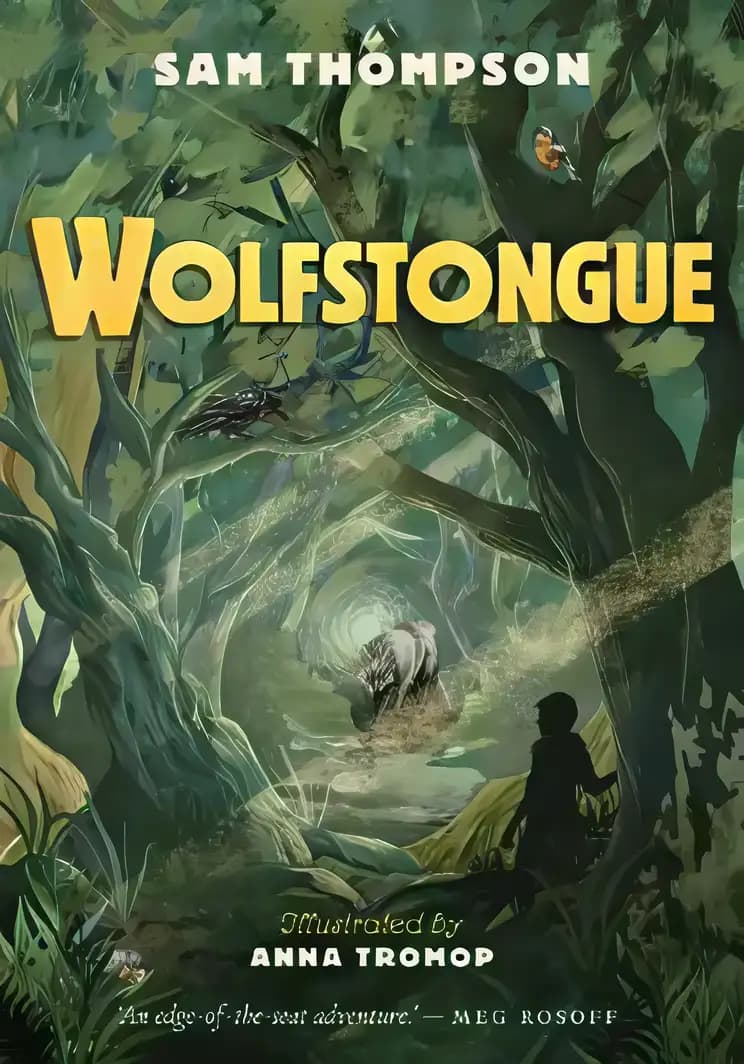
Wolfstongue
#1 of 2 in Wolfstongue Saga Series
What’s inside...
The Times children's debut by Booker-longlisted author Sam Thompson, 'Wolfstongue', is a beautifully written narrative exploring profound themes such as communication, neurodiversity, and acceptance. The story follows a young boy, Silas, who is bullied for his speech difficulties and longs for a world where speech isn't necessary. In a thrilling adventure into a secret forest world, Silas encounters a society of foxes and wolves, where he learns that language holds great power. As he becomes embroiled in their struggles, Silas must find his voice to save his new wolf friends and earn his place as the Wolfstongue. Praised as reminiscent of 'Watership Down', this gripping tale delivers a thoughtful message on accepting differences and finding one's strength.
Character compass
Silas
Isengrim
Hersent
Reynard
Discussion points
What do you think the wolves represent in the story?
How does the character of Silas change from the beginning to the end of the book?
Can you think of a time when you, like Silas, had to overcome a challenge using your voice?
Why do you think the forest is important to the animals in the story?
What does the story teach us about friendship and bravery?
Tip: Role play these questions
Use expressive reading tones to mirror the emotions in the story, making the narrative more engaging to your child.
Pause at key moments in the story to ask your child what they think might happen next, encouraging them to think critically about the plot.
After reading, connect themes from the book to real-life situations that your child may encounter, enhancing their understanding and empathy.
Discuss the illustrations in the book and ask how they help to tell the story, which enhances visual literacy.
Celebrate your child’s responses and insights, no matter how small, to build their confidence in expressing their thoughts and opinions.
Key lessons
Example Lesson: Courage and Resilience
Explanation: In 'Wolfstongue', the protagonist Silas displays bravery and resilience in the face of daunting threats by speaking up and standing strong against the wolves' tyranny.
Real-World Application: Children can learn to face their own fears and stand up for themselves and others in challenging situations, whether at school or in other social settings.
Example Lesson: The Power of Communication
Explanation: Silas, who struggles with speech, finds his voice and power through communication. He learns to articulate his thoughts to influence positive changes in the woodland society.
Real-World Application: This encourages children to understand the importance of expressing themselves clearly and effectively to resolve conflicts and contribute to community well-being.
Example Lesson: Importance of Friendship
Explanation: Throughout his journey, Silas forms bonds with various forest creatures who support and guide him. These relationships are pivotal in overcoming the adversities he faces.
Real-World Application: Children are reminded of the value of building and maintaining friendships as a source of support and joy in their lives.
Example Lesson: Empathy and Understanding
Explanation: Silas learns to understand and empathize with the animals' unique perspectives and challenges, which helps him navigate his adventure more effectively.
Real-World Application: This lesson highlights the importance of empathy in understanding people's feelings and viewpoints, fostering better interpersonal relationships and a more inclusive attitude.
Example Lesson: Resilience against Adversity
Explanation: Silas continually overcomes obstacles throughout the book, adapting to new challenges and growing stronger.
Real-World Application: This teaches children the value of perseverance and resilience, encouraging them to keep trying and adapting, no matter the difficulty of the situation.