
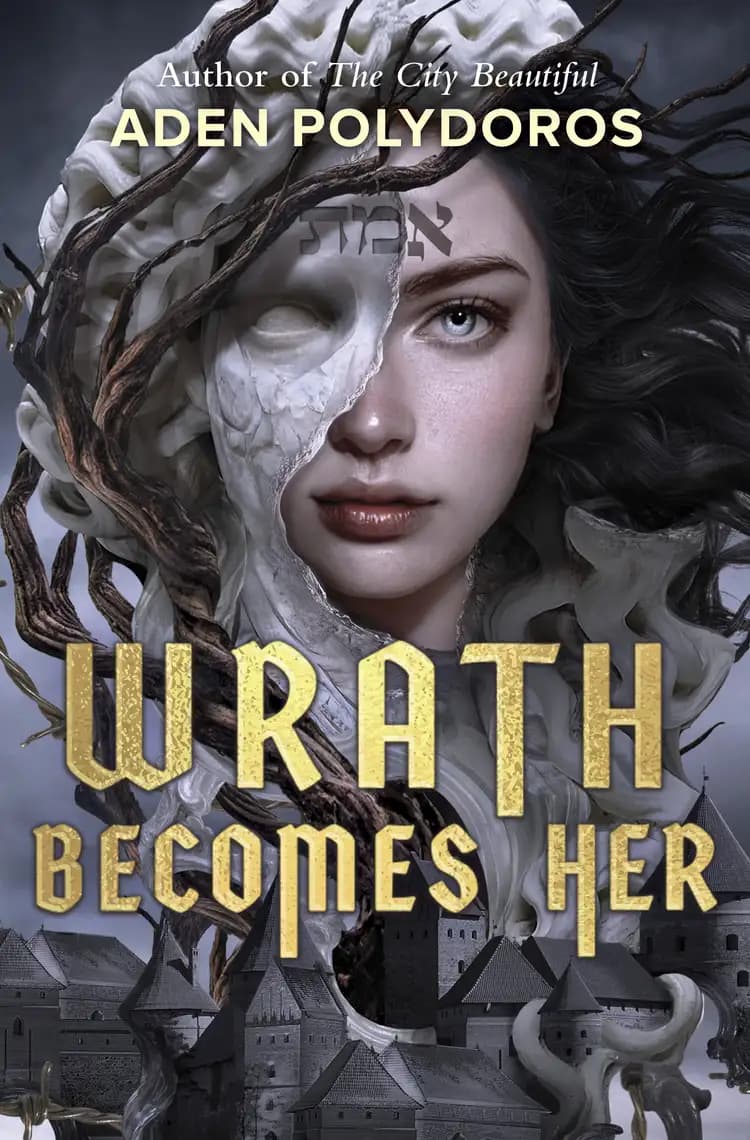
Wrath Becomes Her
#2 in The Hanged God Trilogy Series
on Goodreads (892)
What’s inside...
In the historical horror novel set in Lithuania, 1943, a father creates a golem named Vera using ancient magic to avenge the death of his daughter killed by Nazis. Vera awakens with a singular purpose for vengeance but also with glimpses of a past life and memories not her own. As she navigates her existence, she meets Akiva, a figure from these memories, and confronts other forces misusing magic. Vera must find meaning beyond her creation to truly live, a journey honored by the 2024 Sydney Taylor Book Award for Young Adult.
Discussion points
How did the main character's actions show their feelings and motivations?
Can you think of a time when you felt like the main character? How did you handle it?
What would you have done differently if you were in the main character’s situation?
How do the other characters in the story influence the main character's journey?
What do you think was the main message of the story, and why is it important?
Tip: Role play these questions
Encourage children to express their thoughts and emotions freely by sharing your own interpretations and feelings about the story, modeling open communication.
Use specific scenes or dialogue from 'Wrath Becomes Her' as examples when discussing the questions, helping the child recall and connect more deeply with the material.
Praise the child’s insights and contributions to the discussion to boost their confidence and encourage further participation.
Relate the themes or situations from the book to real-life scenarios the child may encounter, enhancing their understanding and empathy.
After the discussion, encourage creative activities like drawing a scene from the book or writing a letter to the main character, reinforcing comprehension and engagement.
Key lessons
Example Lesson: The importance of empathy
Explanation: In 'Wrath Becomes Her', the protagonist navigates complex relationships and learns to understand the feelings and perspectives of others.
Real-World Application: Children can apply this lesson by learning to recognize and respect the emotions of their peers and family members, fostering healthier and more understanding relationships.
Example Lesson: Standing up for what is right
Explanation: The main character in the book challenges unfair situations and fights for justice, serving as a model for moral courage.
Real-World Application: This encourages children to speak up against wrongdoings and advocate for fairness in their own lives, be it at school or within their community.
Example Lesson: Resilience in the face of challenges
Explanation: Throughout the story, the characters encounter various obstacles but continue to persevere, demonstrating the power of resilience.
Real-World Application: Children learn that setbacks are a part of life and that persistence and determination are key to overcoming difficulties.
Example Lesson: Importance of self-discovery
Explanation: The protagonist's journey highlights the value of understanding one's identity and abilities, which is crucial for personal growth.
Real-World Application: This teaches children the importance of self-reflection and encourages them to explore their own interests, strengths, and values.
Example Lesson: The power of teamwork
Explanation: Characters in the book often collaborate to solve problems, showing that teamwork can lead to better solutions and outcomes.
Real-World Application: By learning the value of cooperation, children can improve their ability to work effectively in group settings, whether in school projects or during playtime.